

Audio By Carbonatix
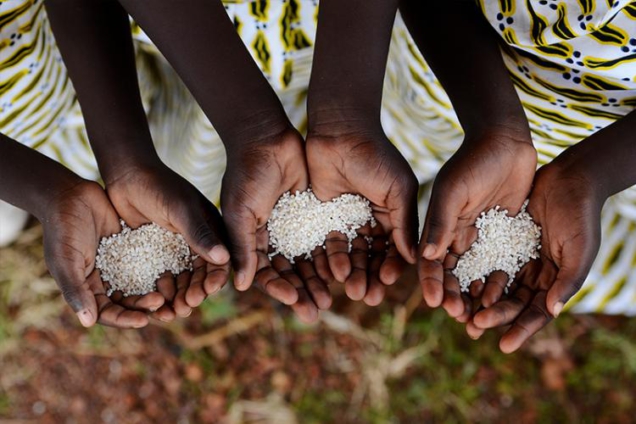
The International Monetary Fund (IMF) is warning of impending food security issues for Ghana and other African countries due to the ongoing war between Russia and Ukraine.
The Fund said Russia’s invasion of Ukraine has pushed food and energy-related commodities to record levels on the global market.
The captured concern is in the IMF’s Regional Economic Outlook Report released on Thursday. The Fund was worried that development could hurt economies in the region already struggling.
IMF on food security concerns
IMF, in the report, maintained that food prices, which account for about 40 per cent of consumer spending in the region, are rising rapidly.
Around 85 per cent of the region’s wheat supplies are imported. Higher fuel and fertiliser prices also affect domestic food production.
The Fund added, “Together, these factors will disproportionately hurt the poor, especially in urban areas, and will increase food insecurity.”
On fuel prices, the IMF noted that higher oil prices will boost the import bill for the region’s oil importers by about $19 billion, worsening trade imbalances and raising transport and other consumer costs.
Oil-importing fragile states will be hit hardest, with fiscal balances expected to be disrupted.
Impact on Economies
The shock makes an already delicate fiscal balancing act more difficult: increasing development spending, mobilising more tax revenues, and containing debt pressures.
Fiscal authorities generally aren’t well-positioned for additional shocks after the pandemic. Half of the region’s low-income countries are already in or at high risk of distress.
Rising oil prices also represent a direct fiscal cost for countries through fuel subsidies, while inflation will make reducing these subsidies unpopular.
Spending pressures will only increase as growth slows, while rising interest rates in advanced economies may make financing more costly and harder to obtain for some governments.
What Ghana and other Sub Saharan governments should do
The increase in commodity prices due to the war in Ukraine, especially for food and energy, has compounded recent inflationary pressures in many countries.
Since output levels remain well below pre-pandemic trends in most countries, central banks face a difficult balancing act between curbing inflation and supporting growth.
To navigate this trade-off, central banks will need to monitor price developments carefully, stand ready to increase rates if inflation expectations drift up, guard against the financial stability risks posed by higher interest rates, and maintain a credible policy framework underpinned by strong central bank independence and clear communication.
Some have already started to increase interest rates, and more tightening may be needed in many cases.
Latest Stories
-
$260 e-Visa fee could make Ghana less competitive – GHATOF
35 seconds -
New Supreme Court justices pledge fairness, impartiality and fidelity to Constitution
5 minutes -
Mahama urges Supreme Court to communicate decisions with ‘extreme clarity’
8 minutes -
Techiman MCE residence abandoned since 2017; Regional Minister sets December deadline
8 minutes -
Eni, Vitol sign MoUs with Ghana for two offshore blocks in Tano Basin
9 minutes -
Accra residents urged to report open waste burning
12 minutes -
Mahama tasks new Supreme Court justices to make justice more accessible
21 minutes -
African health manufacturers meet in Addis Ababa for AHMTEC 2026, focus shifts from building capacity to commercial scale
28 minutes -
Court delays can amount to denial of justice – Mahama
36 minutes -
NPP approves proxy voting for October 3 national officers elections
46 minutes -
Yemen’s Houthis reportedly seize strategic Red Sea port of Mokha
47 minutes -
Horse racing community hits Accra streets, petitions Presidency over demolished Racecourse
49 minutes -
Two remanded into Police custody over alleged plot to kill Susu collector
53 minutes -
Jirapa MP provides SHS prospectus items to 1,196 fresh graduates
57 minutes -
Ghana signs offshore deals with Eni, Vitol to revive oil exploration
58 minutes