

Audio By Carbonatix
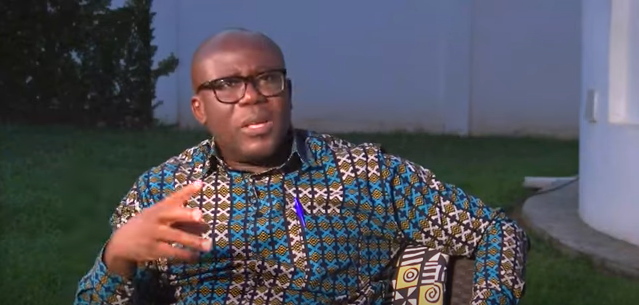
The Rector of the Ghana Institute of Management and Public Administration (GIMPA), Professor Samuel Kwaku Bonsu, says government assuming the responsibility of the private sector has fueled a sense of entitlement among the private sector.
According to him, with the government still being the largest employer in the country most people after graduating from school feel entitled to be employed in the public sector.
This, he says, has created a system which is less productive.
Speaking on JoyNews’ PM Express Personality Profile, Professor Bonsu noted that if he were an advisor to the government, he would advise them against taking in more employees.
Rather, he would encourage the government to create and support a “viable and very exciting private sector” that will entice young graduates into joining and creating their own businesses.
“We seem to have a country that has taken on the responsibility of the private sector. We can trace this back to Kwame Nkrumah and maybe even to the colonial era. Because the colonial agenda had a very different purpose than what we would like for ourselves, and somehow we have perpetuated some of those items on that agenda.
“Yeah so we have a lot of things that we can trace back to the colonial era, to the Kwame Nkrumah era, where people then began to think of a certain sense of entitlement. It was enhanced, it became even more accentuated probably in the 1980s and 1990s, so people are feeling that because they have graduated somebody owes them something.
“If you went to a private school, you paid your fees, nobody owed you that payment of fees but you paid because you saw value in it and you should be able to chase it. So when you have so many people working in the system, it’s partly because we have taken on too much responsibility. And I still insist that the government’s role is to create an environment for a viable and very exciting private sector.
“So the environment is created for people to do what they have to do. Now if a young person wants to get into the system and if I were to advise the government I will discourage them from taking them on because we have too many people who are not producing to support the economy. And it’s not just young people, there are older people too who don’t produce anything,” he explained.
He noted that the argument has been that because he is employed by the government he should not be complaining about the bloated public sector.
“So the fact that I’m part of the system is probably why I should be part of the solution and that is why I am proffering these potential bases for discussion and from which I hope that we can have emerging solutions that will address the problem for us.”
Latest Stories
-
NSMQ 2026: Kpando SHS brush aside Abor, Jukwa to storm One-Eighth stage with 32 point gap
34 minutes -
Duncan Amoah: Gov’t should create conditions for 24-hour economy, not build markets
40 minutes -
JoyNews-Republic Bank Habitat Fair finale turns homeownership dreams into real possibilities
1 hour -
Bamiri chief commissions KG block, guest house to boost education and revenue
2 hours -
NSMQ 2026: Yaa Asantewaa Girls’ going ‘beck’ to Tanoso after Bishop Herman deals them early exit
2 hours -
Data Protection Commission acquires two vehicles to strengthen data protection enforcement
2 hours -
NSMQ 2026: Holy Child School storms back from two-year NSMQ absence to book One-Eighth ticket
4 hours -
GNFS dismisses reports of unpaid 2025 rent allowance
5 hours -
Gordon Asare-Bediako steps down from NPP Communications Director race, backs Dennis Aboagye
5 hours -
GES dismisses requirement for newly promoted teachers to submit documents for salary adjustments
5 hours -
Meko Bono 2026: Vice President pledges agricultural revival as Atebubu hosts grand homecoming
6 hours -
Russian skydiver Sergey Boytcov sets world record with 11,551-metre stratosphere jump
6 hours -
Ablakwa-led committee submits five reports to Mahama ahead of 2027 AU chairmanship
6 hours -
Africa not seeking Western cash in reparations campaign – Ablakwa
7 hours -
Production decline, reserve depletion threaten Ghana’s upstream sector – Jinapor
7 hours