

Audio By Carbonatix
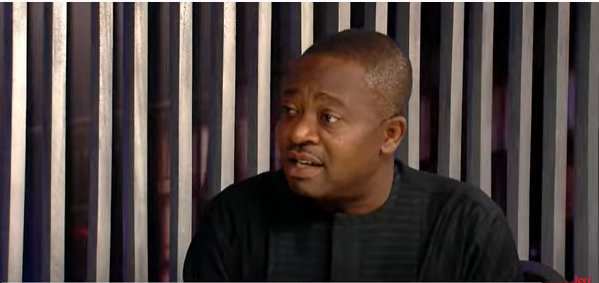
Chief Executive Officer of the Association of Ghana Industries, Seth Twum Akwaboah, says government’s revenue mobilization measures as outlined in the 2023 Budget Statement and Economic Policy are injurious to the productive sector.
According to him, the introduction of the 2.5% increment in Value Added Tax (VAT) resulting in the 21% VAT rate will place an undue burden on the productive sector while boosting importation.
He explained that while he understands the government’s need to stabilize the macroeconomic environment to raise revenue to rescue the country’s ailing economy, the measures would inadvertently cripple the productive sector proving the government’s plan counterproductive.
“In raising revenue you need to really look at your revenue handles, the tax handles that will bring you the revenue, but at the same time you’re looking at employment creation. You’re also looking at the long term. And you’re also asking yourself, why are we here? And part of the reason why we are here is because we are not producing enough to feed our system.
“We are importing so much, and therefore if you want to generate revenue and you sacrifice the productive sector to raise the revenue, in the long term it’s not going to help you. So this is the balancing act we have to do and we have to do it properly,” he said on JoyNews’ PM Express Business Edition, Thursday.
Mr. Twum Akwaboah explained that whereas producers will be expected to pay the government’s standard VAT rate, importers would merely pay the flat rate which has remained unchanged even after the VAT increment.
“The fact that you want to raise revenue does not mean you should lose sight of the productive sector you want to support. So typically you’ve increased tax rates, the VAT rate by 2.5%, but the way it is done is a bit more burden on the part of the productive sector which you’re trying to support. So that runs counter to what you want to do.
“If you look at it for example the fact that most of the well-organized companies, if you take the manufacturing sector they are all; well-organised so they pay the VAT at standard rate and all that goes with it. But the importers most of them pay flat rate. The flat rate hasn’t changed, it has remained the same and yet you’ve increased the VAT.
“So it means that those in the organized sector who are paying the VAT there’s more burden on them whiles you’re actually leaving the importers out. So you’re actually supporting importation rather than the productive sector. So you have to be very careful if you’re introducing new tax handles,” he said.
Latest Stories
-
US seeks changes to rejected $109m health compact with Ghana – Mahama
3 minutes -
Nine dead in mass shooting at Pennsylvania home
21 minutes -
‘Time for Ukraine to get new president,’ says Trump after Zelensky condemns diesel deal
23 minutes -
Hincapie injury adds to Arsenal issues after Guimaraes rescue act
32 minutes -
Henderson scores twice as Chelsea thumb Bournemouth
41 minutes -
Photos: Mentapulse Africa convenes health and labour summit to address talent retention
54 minutes -
Mahama inspects Nkokɔ Nketenkete plant, eyes Bechem as chicken capital
1 hour -
Ghana not seeking full BRICS membership, applying as Partner Country – Ablakwa
1 hour -
Woman injures three people in third Poland school knife attack in a week
1 hour -
Ghana should join BRICS as partner, not member – NPP Bono East Regional Secretary
1 hour -
Ghana High Commission warns nationals in South Africa over protests in Johannesburg, Durban
1 hour -
Mahama praises Roads Minister for keeping Big Push contractors on their toes
1 hour -
World Cup Visa Scandal: ‘My client has not collected money for visas’ – Ampofo Ankrah’s lawyer
1 hour -
US immigration officials defend ICE agents who shot man in same car as child
2 hours -
Commentator Katie Zacharia picked as new White House press secretary
2 hours