

Audio By Carbonatix
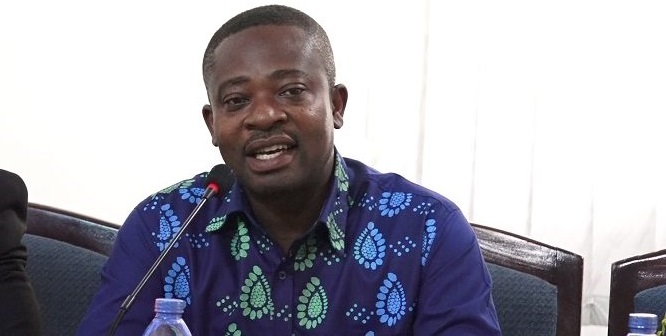
The Chief Executive Officer of the Association of Ghana Industries (AGI), Seth Twum Akwaboah, has cautioned against expectations of an immediate transformation under the government’s 24-Hour Economy policy.
He said the policy should not be judged by its name or slogan, but by the specific programmes and interventions the government puts in place to change the current state of Ghana’s economy.
Speaking on Joy News’ PM Express Business Edition on Thursday, Mr Twum Akwaboah said the 24-hour economy initiative must be assessed based on how it was developed, the level of consultation involved and the practical measures being introduced to make it work.
“For me, I don’t bother so much about the clichés you create, whether it’s 24-Hour Economy or 1D1F; that’s not really the issue for me. It is more about what you do within those policies.”
He said the effectiveness of any government policy depends largely on the processes behind its development and the activities selected to achieve its objectives.
“You can come up with any policy, but then, when you develop the policy, what has gone into the policy development? How consultative was its nature? What are the key policies or activities within the policy that you are trying to implement to change the status quo?”
Mr Twum Akwaboah acknowledged that there had initially been uncertainty about what the 24-hour economy meant, but said discussions with government have helped to bring greater clarity to the initiative.
“I think we are making good progress because now it’s becoming clearer. Government is defining.”
According to him, the policy should be viewed as a long-term vision rather than an intervention capable of producing instant results.
“When you hear a cliché, when you hear a mention of something like that, sometimes the expectation is that overnight things will change and everything will be a 24-hour economy. It doesn’t happen like that.”
He drew a comparison to the One District, One Factory (1D1F) initiative, saying that announcing a policy should not create the expectation that its ultimate goal will be achieved immediately.
“The same thing I said is that when we had the 1D1F. All of a sudden, you think that every district is going to have an industry? Government has mentioned it. It’s an intention. It’s a vision. How do we work towards it?”
He stressed that the 24-hour economy requires clear policies, programmes and activities that can gradually move the country towards the intended transformation.
“The same thing applies to the 24-hour economy. So I’m not expecting that things will change overnight like that. But then we need to define the specific activities and policies and programs we are going to do to make that happen.”
Mr Twum Akwaboah said he is encouraged by recent efforts by government to provide more detail on the policy, including the launch of a blueprint outlining some of the proposed interventions.
“And gradually they are coming to that point where now they’ve launched a blueprint, and then in it there are a lot of interesting ideas.”
He believes the success of the initiative will ultimately depend on implementation.
“If we’re able to implement it to the letter, I’m sure it will help change a lot of things.”
The AGI President said the business community remains supportive of the initiative and is engaging with government on its implementation.
“So for me, I embrace it just as we embraced the 1D1F, AGI embraces the 24-hour economy, and we are working with government.”
He said the association is also engaging the 24-hour economy secretariat on some of the measures outlined under the policy.
“We are working with the 24-hour economy secretariat to implement some of the things they said they will implement.”
Mr Twum Akwaboah said effective implementation could have a significant impact on Ghana’s economy.
“If we’re able to do it, it will be a game changer.”
Latest Stories
-
Teach consent and sexual boundaries from pre-school to prevent abuse – Gender advocate
3 minutes -
Zonda Tec launches HOWO T3M truck to support agric and logistics
12 minutes -
Obuasi SHTS scandal: Eduwatch calls for sex offenders’ register and mandatory background checks for teachers
24 minutes -
GloMeF CEO urges intensified public education on new road traffic regulations
36 minutes -
‘Any tax on ChatGPT is an attack on education and innovation’- Akim Swedru, MP
39 minutes -
Obuasi SHTS sexual abuse scandal exposes systemic failure in child protection – Moving Masculinity
40 minutes -
Hubtel CEO calls for national data-sharing framework to boost AI development
42 minutes -
Twelve Golden Rules of real estate development in Ghana, Africa
47 minutes -
Five new telephony cell sites in Ashanti Region to be activated in October 2026 – Sam George
47 minutes -
Mahama cuts sod for Afienya Industrial Park, targets 120 enterprises
52 minutes -
Rush for fuel from accident tankers is stealing, punishable by law – NPA boss, Edudzi Tamakloe
58 minutes -
GhIG pushes for legislation to regulate geoscientists’ activities
1 hour -
Mfantsipim @150: Ace Anan Ankomah leads project to preserve school’s musical heritage
1 hour -
Gov’t launches rCOMSDEP in Ahanta West, Mpohor Fiase to promote responsible community mining
1 hour -
AI is forcing professionals to rethink how they deliver value – Hubtel CEO
1 hour