

Audio By Carbonatix
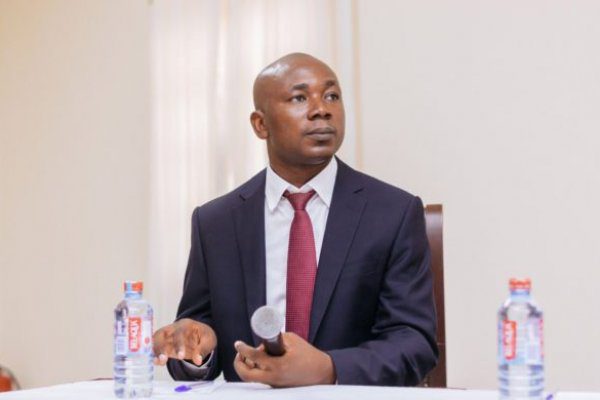
Economist and Professor of Finance at the University of Ghana Business School (UGBS), Prof Godfred Bokpin believes the government will have a difficult time convincing individual bondholders to participate in the Domestic Debt Exchange Programme (DDEP).
According to him, individual bondholders, mostly pensioners, have had their share of suffering from the economic crisis since the past year, and as a result, they were adamant about being included in the programme.
"It was always going to be difficult to include individual bondholders, especially pensioners. In such difficult times, they’ve been living through…inflation era for the past 12 months. So even these bonds that we are talking about, they having haircuts here and there, they’ve really suffered from inflationary pressures, the news is negative in real terms, and all of that."
“I think for the sake of our democracy, and social cohesion and stability, I think it is prudent that individual bondholders are excluded,” Prof Bokpin said on The Probe on Sunday.
Prof Bokpin also commended the technical committee on the debt exchange programme for proposing other alternatives on revenue and expenditure to be considered by the government.
According to him, the committee helped to clarify the quantification of many individual bondholders' grievances in terms of fiscal savings through measures such as spending cuts and other revenue enhancement.
Prof Bokpin also stressed that he believed the technical committee’s actions were quite illustrative of the level of wakefulness that has presided over Ghanaians over the years.
Ghana's economy is still recovering from the pandemic and the government is attempting to restructure its massive debt load in order to qualify for assistance from the International Monetary Fund.
Thus, the Ministry of Finance introduced a domestic debt exchange programme on December 5, 2022.
The country needs about 80% of bondholders to sign up for its domestic debt exchange programme, however, individual bondholders have since opposed the programme due to what they say is a lack of clarity about its terms.
Eventually, it was disclosed in a press release dated January 23, that the government has come to an agreement with the Ghana Association of Banks to pay a 5% coupon on its 2023 bonds, which the original debt exchange plan had said would not pay interest.
Additionally, it was stated in the deal that all other restructured bonds will pay 9% coupons rather than the variable rates originally outlined.
Latest Stories
-
In photos: Dignitaries, stakeholders gather for National Mining Dialogue 2026
6 minutes -
BoG inaugurates Financial Advisory Council to drive non-interest banking in Ghana
9 minutes -
Mineral right is a privilege, not an absolute right – Minerals Commission
10 minutes -
Ablakwa seeks Russian support for Africa-led fight against Sahel extremism
21 minutes -
Host mining communities are partners in development, not obstacles – GJA President
23 minutes -
Ghana to sign 5 new petroleum agreements soon – Energy Minister
24 minutes -
GJA President urges Ghana to weigh environmental and social costs alongside mining revenues
35 minutes -
Irresponsible mining: The land is not your own – Prof Mike Oquaye cautions
43 minutes -
62 Ghanaians killed, 15 missing in Russia-Ukraine war – Ablakwa
44 minutes -
GJA President urges responsible, sustainable mining
45 minutes -
Ghana must take charge of its mineral resources – Prof. Mike Oquaye
51 minutes -
KickedIn uses technology to connect African football talent with global opportunities
52 minutes -
GoldBod did not record GH¢22bn loss; audited accounts show GH¢5.44bn surplus – Institute of Fiscal Policy Governance
56 minutes -
Mining comes with responsibility to future generations – Ga Mantse
59 minutes -
Ga Mantse calls for measurable CSR and stronger local participation in mining communities
1 hour