

Audio By Carbonatix
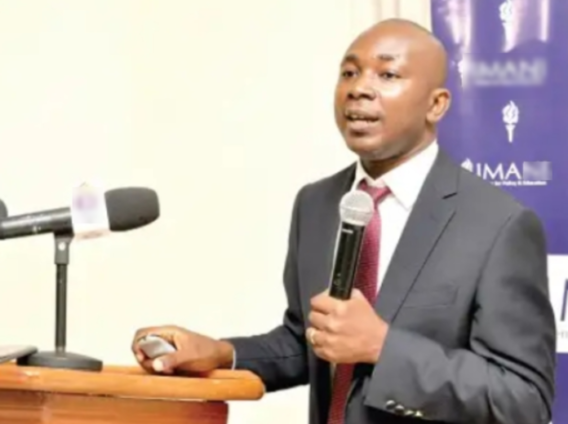
Professor of Finance and Economics at the University of Ghana, Godfred Bokpin, has warned that the country’s economic transformation depends heavily on reforms within the energy sector, particularly the Electricity Company of Ghana (ECG).
Speaking on Joy FM’s Super Morning Show on Monday, September 1, during a discussion on the annual report of the State Interests and Governance Authority on State-owned enterprises (SOEs), Prof Bokpin said that energy remains the foundation of national development.
“Nothing can happen in this country without energy. That is how fundamental it is. We currently don’t have enough power even for an eight-hour economy, and yet we are talking about scaling up to a 24-hour economy,” he said.
He explained that both industrialisation and the competitiveness of the private sector rely on “cheap and reliable energy,” adding that inefficiencies in the public sector only increase costs for businesses.
Prof Bokpin highlighted the weaknesses at ECG, pointing to poor revenue collection and high losses. “If you look at our current level, ECG revenue collection is at 85% while the global average is 98%. When it comes to losses, ECG’s losses are as high as 28% while the global benchmark is between 10 and 16%,” he said.
He warned that without “drastic reforms,” the situation will remain bleak. “Across all the indicators, there isn’t much that gives you hope. We are not seeing those reforms even under this new regime. It’s business as usual, and that comes down to governance and management failures,” he added.
According to him, political interference, procurement abuses, and poor investment decisions have worsened ECG’s inefficiencies. “You review the ECG report, and you will see over-investment in some areas and under-investment in critical areas, leading to idle inventory while deficits persist. The reason you have this idle investment is because of the procurement economy that benefits powerful people in this country,” Prof Bokpin explained.
He said that despite repeated reports of mismanagement, little action is taken. “We see this report day in day out, but nothing gets done. No arrest, no prosecution, no recovery. The next moment we'll hear is to introduce levies and pass on those inefficiencies to the ultimate taxpayer or the consumer. You can’t develop that way,” he said.
Prof Bokpin revealed the financial burden ECG’s inefficiencies place on the state. “If you look at it from now to 2029, the budgetary provision we have to make to cater for ECG alone is actually more than the annual budgetary allocation to the Ministries of Food and Agriculture, Trade, Health, and Education,” he warned.
Latest Stories
-
Four bodies found after avalanche hits Himalayan climbing group
5 minutes -
Adipa residents give government seven days to halt Agbogbloshie waste transfer
15 minutes -
Desks rotting in abandoned Kintampo South E-Block: A decade of neglect and a waste of state resources
16 minutes -
West Africa cannot simply import security models without accounting for local realities – WAMS
17 minutes -
Bono East Minister directs MCE to stop hotel project near Konkrompe SHS
40 minutes -
AGN Chair urges action-driven tracking and reporting on inclusive climate adaptation in Ghana’s agriculture
43 minutes -
Man City rule breaches not my concern – Mancini
43 minutes -
NSA releases PIN Codes for 2026/2027 national service private candidates and foreign-trained graduates
46 minutes -
GMet forecasts thunderstorms, rain across parts of Ghana this evening
48 minutes -
APRA wins Africa PR Legacy Award
50 minutes -
UN Special Rapporteur on adequate housing to visit Ghana
53 minutes -
Telecel Ghana concludes SME Month 2026 with Business Runway in Takoradi
1 hour -
Ghana must embrace AI to transform tourism — GHATOF
1 hour -
National Investment Quiz: Corpus Christi, Wesley Girls, advance to semi-finals
2 hours -
Is Ghana losing the fight to protect children online?
2 hours