

Audio By Carbonatix
In line with global trends, Kenya has seen a significant temperature increase of 0.3°C to 0.6°C per decade, impacting key sectors like agriculture and water resources. This rapid warming trend was a major focus at the inaugural Africa Climate Summit (ACS23) in Nairobi last month; which among others, highlighted the link between climate change, regional food systems and economic transformation. The ACS23 emphasized the consequences of inaction on food security and economic sovereignty, rallying Africa's unified climate agenda ahead of the 28th UN climate change conference (COP28) in the UAE.
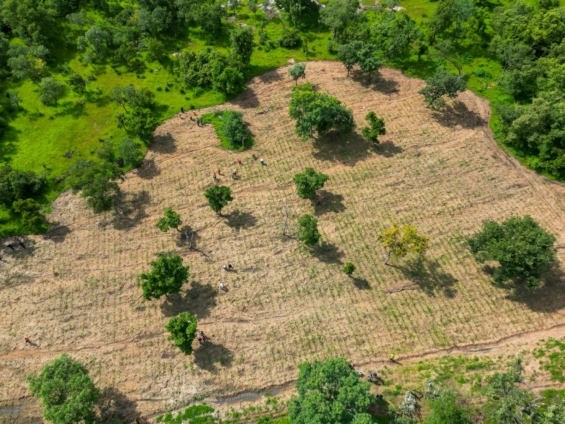
Concurrently, the 2023 Africa Food Systems Forum (AFS Forum 23) in Dar es Salaam, Tanzania, stressed the urgent need for climate-responsive solutions by African governments to address the continent’s food system challenges. Kenya's President, Dr William Ruto, has since come through on his promise to explore more green and environmentally friendly fertilizers alongside a 10-year initiative to grow 15 billion trees by 2032, raising Kenya's tree cover to 30%, enhancing carbon sequestration, restoring 5.1 million hectares of deforested areas, and benefiting households as 30% of these trees will be fruit, nut, and fodder species.
President Ruto has also banned single-use plastic bags and initiated trials for biodegradable tubing bags in line with a United Nations resolution from UNEA 5.2. Meanwhile, Kenya is at the forefront of climate change efforts in Africa, with the Climate Change Act of 2016, and recent amendments to enhance its carbon market regime, driving its responses. The government is also actively implementing the third cycle of the National Climate Change Action Plan (NCCAP III) to promote low-carbon, climate-resilient development.
Yet even as we celebrate these great interventions, we must recognize that climate change is a complex issue that no single country can solve independently; a collaborative approach involving partnerships across national governments, the private sector and the international community is required for rapid transformation.
We are glad to report that African leaders are focusing their development strategies on sustainable solutions at both the national and continental levels. The Africa Environment Action Plan, the Africa Clean Energy Corridor, and the Africa Renewable Energy Initiative all indicate the continent’s strategic commitment to addressing the climate crisis. The actions proposed in these initiatives were restated in the Nairobi Declaration, which summed up the outcomes of the ACS23. Africa’s common position on food systems will benefit from cross-sectional collaboration to ensure resource efficiency and high-impact transformation.
The Declaration comprises 23 commitments, primarily addressing policy areas related to investment attraction, economic development (with a focus on youth empowerment), enhanced continental cooperation, increased renewable energy financing, support for small-scale farmers, and the expedited implementation of the African Union Climate Change and Resilient Development Strategy and Action Plan (2022-2032). Notably, the Declaration emphasizes the need for global collaboration to secure adequate capital for both development and climate initiatives, echoing the principles of the Paris Pact for People and the Planet, which aims to ensure that no country must choose between its development goals, climate action and the basic human right to feed people.
The time is now for environmental, energy and food systems experts to resolutely come together to help the continent fight hunger, land degradation and ensure economic prosperity. Hence, Africa is capitalizing on the momentum of ACS23 and AFS Forum 23 to prioritize its climate discussions and facilitate decision-making areas most critical to Africa on the global front. This was evident at the recent UN General Assembly (UNGA) where Africa's key concerns, such as transitioning to a low-carbon economy and improving living standards, building resilience to climate shocks, especially for rain-fed agricultural nations, were a common theme in speeches and discussions. Coming off the challenges of the Covid-19 pandemic, which exposed vulnerabilities, there is a strong focus on fast-tracking climate action and development, as emphasized by Africa's delegation at UNGA.
Our countries are up against a huge task: the need to transform food systems to feed people, to rehabilitate and safeguard the environment and to ensure resilience to shocks caused by the ongoing climate change. There is no doubt that African leaders are more committed than ever before to building on the lessons of the recent crisis that our continent has faced to deliver stronger resilience for people, the environment, and our economies. Certainly, not an easy undertaking which will require stronger collaboration.
AGRA has developed a suite of transferable assets in the technology, system-strengthening partnerships and models that can benefit women, youth, and smallholder farmers in Kenya and across the continent. We are enthusiastic about collaborating with the Kenya government, like-minded institutions and the private sector to unlock potential here in Kenya and across the continent.
With a shared vision and united mission leveraging stronger collaboration across sectors and countries, we're confident of paving the way for growth, prosperity, and lasting change in this diverse country.
*****
Dr Kalibata is the President of AGRA; Sopian Tuya is the Cabinet Secretary, Ministry of Environment, Climate Change and Forestry, Kenya.
Latest Stories
-
Suspected robber crashes stolen taxi into traders while fleeing mob at Ejisu
16 minutes -
NSMQ 2026: Kumasi Academy secures one-eighth spot after commanding win over Bueman SHS, Hohoe EP SHS
39 minutes -
Republic Bank-JoyNews Habitat Fair: Day 2 ends on high note as patrons enjoy exciting discounts
50 minutes -
Big Push: Upper West MPs inspect N12 works, optimistic improved roads will curb robberies
1 hour -
India is turning to ancient water systems as modern ones run dry
1 hour -
NSMQ 2026: Anum Presby survive tense battle to deny St. Charles Minor Sem. one-eighth spot
2 hours -
NSMQ 2026: Heartbreak for OLA SHS as Aburi Presby SHTS deny them one-eighth spot
2 hours -
Laptop catches fire on US flight, with passenger treated at airport
2 hours -
Tano North chiefs tackle police over ‘routine release’ of arrested illegal miners
2 hours -
Accra-Kumasi Expressway almost complete – Roads Minister
2 hours -
ECG announces temporary power outages in parts of Tema and Ashanti Regions
3 hours -
Somalia child hunger crisis deepens after aid cuts, UNICEF says
3 hours -
Media urged to help shape Constituency Games implementation
3 hours -
Accra’s only public horse racing course destroyed at Borteyman
3 hours -
Dozens of people abducted in attacks on villages in Nigeria, police say
3 hours