


Audio By Carbonatix
Sunday was the hottest day in recorded history, according to preliminary data from a climate tracking agency monitoring temperatures since the mid-1900s.
It’s the second consecutive year average global temperatures have crashed through shocking climate records and will not be the last, as planet-warming fossil fuel pollution drives temperatures to shocking new highs.
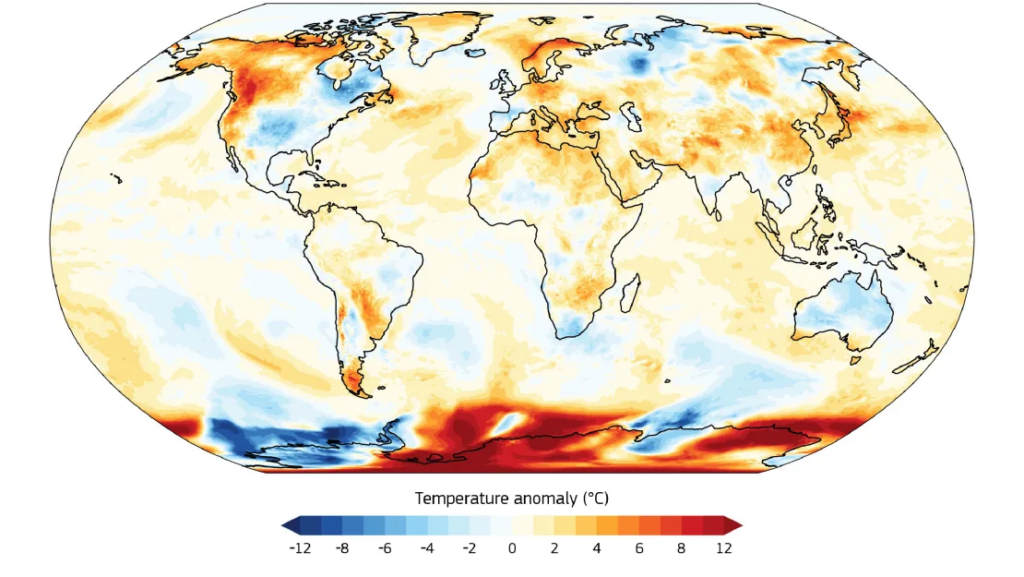
July 21 clocked in at 17.09 degrees Celsius, or 62.76 Fahrenheit, and was the hottest day on Earth since at least 1940, according to the preliminary data from the European Union’s Copernicus Climate Change Service.
Global average temperatures typically peak during the Northern Hemisphere summer, between late June and early August.
Sunday’s record came as many countries endure prolonged and brutal heat waves. Around a hundred cities across the US are experiencing their hottest start to summer on record, and swaths of southern Europe have been grappling with triple-digit temperatures.
Despite being based on data from the mid-20th century, the temperature records represent the warmest period the planet has seen in at least 100,000 years, scientists have found from many millennia of climate data extracted from ice cores and coral reefs.
Global climate records are typically broken by tiny fractions of a degree, as was the case with this one: Sunday’s temperature was just 0.01 degrees Celsius above 2023’s record.
C3S/ECMWF
What’s jarring is the warmest global temperatures were significantly cooler by about 0.3 degrees before 2023.
“We are now in truly uncharted territory and as the climate keeps warming, we are bound to see new records being broken in future months and years,” said Carlo Buontempo, director of Copernicus.
These recent records are “truly staggering,” Buontempo said.

“We are now in truly uncharted territory and as the climate keeps warming, we are bound to see new records being broken in future months and years.”
Global temperatures fluctuate based on natural factors: seasons, large-scale climate patterns and solar activity — and on unnatural factors: the pollution from human activity, including the burning of fossil fuels, which is chiefly driving the planet’s temperature steadily upward.
Scientists pegged last year’s record to the coincidence of El Niño, a natural climate pattern in the Pacific ocean with a warming effect, and fossil fuel pollution, which is trapping heat in the Earth’s atmosphere.
This year’s record comes as El Niño is disappearing and transitioning to its cool La Niña phase, underscoring the significant influence of the human-caused climate crisis.
The sudden rise in global temperatures is linked to abnormal heat in large parts of Antarctica, according to the Copernicus analysis. The rapid warming of this vast, icy continent is a trend that is alarming scientists given the region’s ability to drive catastrophic sea level rise.
Latest Stories
-
Republic Bank-JoyNews Habitat Fair: Day 2 ends on high note as patrons enjoy exciting discounts
7 minutes -
Big Push: Upper West MPs inspect N12 works, optimistic improved roads will curb robberies
24 minutes -
India is turning to ancient water systems as modern ones run dry
42 minutes -
NSMQ 2026: Anum Presby survive tense battle to deny St. Charles Minor Sem. one-eighth spot
1 hour -
NSMQ 2026: Heartbreak for OLA SHS as Aburi Presby SHTS deny them one-eighth spot
1 hour -
Laptop catches fire on US flight, with passenger treated at airport
1 hour -
Tano North chiefs tackle police over ‘routine release’ of arrested illegal miners
2 hours -
Accra-Kumasi Expressway almost complete – Roads Minister
2 hours -
ECG announces temporary power outages in parts of Tema and Ashanti Regions
2 hours -
Somalia child hunger crisis deepens after aid cuts, UNICEF says
2 hours -
Media urged to help shape Constituency Games implementation
2 hours -
Accra’s only public horse racing course destroyed at Borteyman
2 hours -
Dozens of people abducted in attacks on villages in Nigeria, police say
3 hours -
NSMQ 2026: Mfantsiman Girls’ bounce back from 2025 prelims exit to book one-eighth spot
3 hours -
Africa’s $9 trillion lithium bonanza: Can Africa turn its mineral wealth into a global economic powerhouse?
3 hours