

Audio By Carbonatix
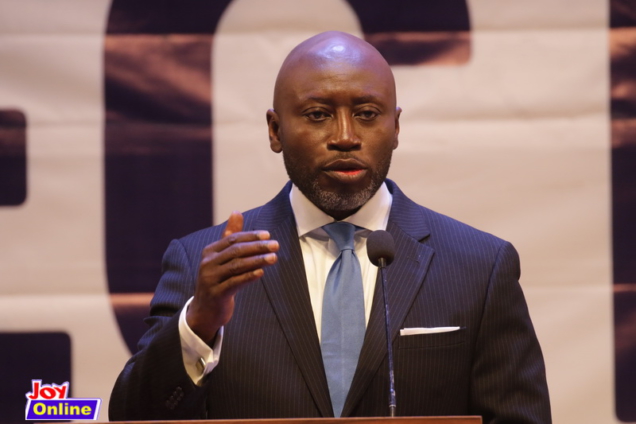
The presidential candidate for the New Vision Movement, Kofi Koranteng, has expressed deep disappointment in the operations of the Electoral Commission (EC), calling its performance “inefficient” and its approach to election management “unprofessional”.
Mr Korateng criticised what he described as recurring irregularities, poor planning, and a lack of innovation in the EC’s processes, which he believes undermine the credibility of Ghana’s electoral system.
In an interview on JoyNews’ Newsfile on Saturday, November 30, he lamented the EC’s inability to resolve operational inefficiencies despite decades of experience managing elections.
He pointed to repeated issues such as delays in meetings, faulty ballot papers, and a general lack of accountability, which he argued exemplify a culture of complacency within the commission.
“The Electoral commissioner is so unprofessional, it's ridiculous. If they work for me, I'll fire all of them...We have been at this thing for more than 32 years. We can't seem to figure it out, we always wait till the dawn, at the eve of an election, and then we come here and we mess things up, and we want people to accept that.
“There are so many irregularities that blow my mind. The times that they set for meetings, they're never on time. It bothers me. You go in there, they change an agenda. They tell you to show up at two o'clock for a meeting. They don't start a meeting till maybe six or eight. And then they come and they feed you snacks. It bothers me because there is no sense of efficiency, and we think it's okay because, at some point, we will get it done,” he complained.
Read also: Election: Movement for Change’s Ohene Ntow warns against Executive interference in election security
Mr Koranteng also raised concerns about the persistence of irregularities in ballot printing, which he blamed on the EC’s lack of foresight and preparation.
He argued that such inefficiencies lead to unnecessary wastage of resources and taxpayer funds, advocating for innovations like barcode or QR code authentication to improve transparency and efficiency.
“Faulty ballots should not even be a discussion. Why do we have them in the first place? It’s a waste of time and money. We should have systems in place to prevent these issues before they occur,” he said.
A Call for Structural Overhaul
Mr. Koranteng proposed a complete overhaul of the EC’s foundation, describing it as fundamentally flawed.
He called for rigorous drills, rehearsals, and contingency planning to ensure the EC is prepared for any challenges that may arise during elections.
“You can’t go into an election and solve problems as they come. That’s not preparation; that’s incompetence. We need a system where every potential issue is anticipated and resolved before Election Day,” he stressed.
Mr Koranteng also raised concerns about the EC’s failure to enforce rules around campaign financing and asset declaration.
He criticised the commission for not holding candidates accountable for disclosing their finances, calling it a significant oversight that affects public trust in the electoral process.
“Why does the EC ignore campaign financing and asset declaration? This is a basic requirement for transparency, and yet it’s completely overlooked,” he noted.
EC’s Response
In response, the Deputy Chairman of the EC in charge of Corporate Services, Dr Bossman Asare dismissed Mr Koranteng’s remarks, suggesting he lacked a fundamental understanding of electoral processes.
He defended the Commission’s operations, particularly regarding ballot printing, explaining that printing excess papers is standard practice to account for errors during production.
Dr Asare also criticised Mr Koranteng’s call for stricter EC involvement in polling station oversight, arguing that the law already allows candidates to deploy their agents to monitor proceedings.
“Mr Korateng lacks understanding about processes. I don't think he understands how printing works to attribute the 40 ballot papers to the incompetence of the EC, you don't understand.
Ask people who are in the printing business, if you have been told to print, let's say, 1,000 copies of something, definitely, there will be a waste. What is being destroyed, are the excess papers that were associated with the printing,” he explained.
Latest Stories
-
Ronaldinho seeks 300th goal with comeback aged 46
4 hours -
Your voice, your future – Opare Addo opens National Youth Forum 2026
4 hours -
GRA pushes data-driven tax administration to boost revenue mobilisation
4 hours -
NSMQ 2026: Presby SHS, Bompata crushes Sacred Heart’s hopes of reaching one-eighth stage
4 hours -
Africa Golf Tourism Convention opens in South Africa to unlock opportunities
4 hours -
BOGISS alleged sexual assault: Dr Apaak demands protection for autism victim
4 hours -
GTEC trains tertiary officials on new affiliation quality assurance framework
4 hours -
Luv FM High School Debate: OKESS, OSASS silence K’Wey Gey and KASS in fierce round of 16
4 hours -
Alcaraz to play US Open after four months out
4 hours -
Even if all foreigners leave, South Africa’s problems will remain – Dr Yamson blames state failure
5 hours -
Mahama announces GH¢500m district housing programme; rollout to begin this year
5 hours -
Energy Committee yet to receive July 29 blackout report – Adomako-Mensah
5 hours -
Five in six Ghana health facilities fall short of basic sanitation standard – WHO/UNICEF
5 hours -
Mohammed Fuseini in talks over Troyes move from Union SG
6 hours -
‘Bear with the system’ – Energy Ministry says temporary power control room to be ready by September
6 hours