

Audio By Carbonatix
The immediate past Chairman of the Appointments Committee has stated that there is no strict rule dictating how questions should be framed during parliamentary vetting processes.
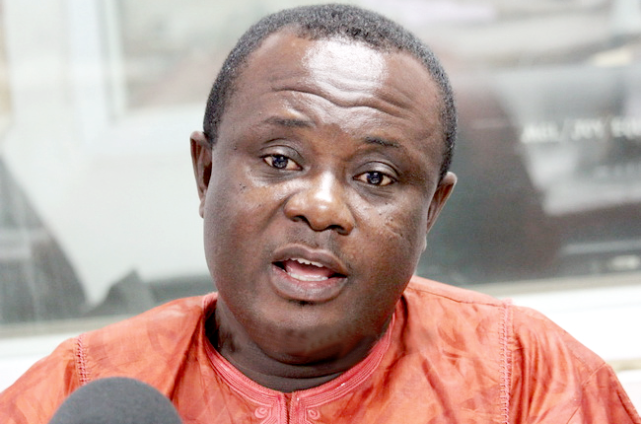
Joseph Osei Owusu speaking on Joy News’ Upfront on Thursday, January 16, shared insights from his tenure and offered perspectives on the current chairperson’s approach.
“There is no rule about how a question should be,” he said, addressing recent debates about the style and conduct of the Appointments Committee.
The immediate past First Deputy Speaker of Parliament reflecting on his own time as chair, acknowledged that his approach was shaped by his legal training.
“Probably from my experience as a lawyer, I make sure that the question is straight to the point. I don’t like going through the bush before you come to the main road.”
The former chairman clarified that he always focused on ensuring adherence to the Constitution and nominees' qualifications.
“Our duty is to ensure that the person qualifies in accordance with the Constitution and that he can do the work he has been nominated to do.”
Joe Osei Owusu, however, expressed surprise at the demeanour of the current chairman, Bernard Ahiafo, in some instances.
“I was a bit surprised to see how hard-faced the chairman of the committee was addressing one of the members of the committee,” he noted. “That is not my style. My style is different. We are all colleagues.”
While some have criticized his tenure as rigid, Mr Osei Owusu defended his insistence on structure and brevity.
“I believe strongly in the rules. I believe strongly in law and order,” he said. He also cautioned against allowing lengthy commentary to dominate proceedings.
“This will allow people to run five minutes of commentary and ask a one-minute question. In the end, they answer the question before they ask it. Those are the kinds of things I try to avoid.”
Responding to suggestions that his rigid application of rules could serve as a model for Bernard Ahiafor, the former Bekwai MP acknowledged the importance of discipline but noted that individual styles differ.
“If he [Ahiafor] is doing that, I think he is within his right to do so.”
Mr Joe Osei Owusu admitted he had not followed the current vetting proceedings in detail but acknowledged that different leadership styles could evoke varying public perceptions.
“I can’t say whether that is fair or not, but I’ve seen, in a particular case, somebody forwarded to me after that my friend chairman was needlessly raising his voice and showing a tendency to show machoism.”
He concluded by reiterating that the essence of the vetting process should remain focused on evaluating nominees’ qualifications and suitability for their roles, irrespective of the chairperson’s style.
Latest Stories
-
Government prioritises foundational learning to improve education outcomes
2 minutes -
Ghana, Côte d’Ivoire deepen maritime security cooperation through joint boundary inspection
8 minutes -
Three-hour rainfall exposes poor drainage system in Kadjebi
14 minutes -
Food inflation never responded – Dr Yamson says Ghana must stop throwing money at short-term fixes
48 minutes -
Oil set for second weekly rise as unsettled US-Iran war crimps supply
1 hour -
US teen drops lawsuit against Meta, Google and Snap ahead of trial
1 hour -
Meghan could return to acting once back in UK
1 hour -
Bali jails Swiss tourist for insulting sacred Day of Silence
2 hours -
At least 50 killed, mostly children, as overloaded boat capsizes in Nigeria
2 hours -
Cameroon president returns home after 10-week absence
2 hours -
Mineworkers demand release of $34.5 million in trapped savings
2 hours -
Stability must last 10 years, not 4 – Dr Yamson challenges gov’t to make boom-bust economy last
2 hours -
Tunisia opposition protests against president amid economic discontent
3 hours -
Nii Lante Vanderpuye apologises to Sammy Gyamfi, NDC over GoldBod comments
4 hours -
US sanctions more Cuban companies and officials
4 hours