

Audio By Carbonatix
A former Chairman of the Appointments Committee, Joseph Osei Owusu, has criticised the lack of sufficient time afforded to the public to submit memoranda during the ministerial vetting process.
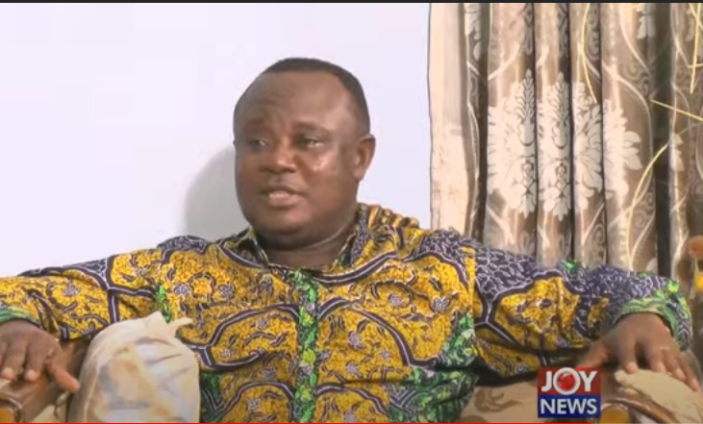
The immediate First Deputy Speaker of Parliament speaking on Joy News’ Upfront on Thursday, expressed concerns over what he described as “indecent haste” in the process, which he believes undermined both public participation and the thoroughness of the committee’s work.
Addressing the issue, he noted that allowing the public time to submit concerns is a critical component of vetting procedures.
“The reason we call it a public hearing is that we want to afford the opportunity for the public to participate in it,” he said. “It’s not just a formality; it’s about giving the public a voice to bring their issues to the committee.”
The former Bekwai legislator revealed that he was unsure whether adequate advertising was done to notify the public. “I am not even sure whether they advertised and allowed sufficient time,” he said.
“I spoke with the Majority Leader and the Minority Leader about the arrangements they made, but I did not see any advert.”
He suggested that a minimum of one to two weeks should have been given for the public to submit memoranda.
“Frankly, when you are starting a term like this, I would have thought that, at minimum, there should have been a one-week or two-week advert,” he emphasised.
The former Appointments Committee Chairman further criticised the timing of the vetting process.
“In this particular instance, the time between the election, the swearing-in, and the start of vetting—just four or five days after—was novel,” he said.
“It has never happened before. I thought the haste with which they proceeded may have affected the preparation of the members of the committee.”
Joseph Osei Owusu described the situation as a missed opportunity for thorough public engagement.
“If there’s a way to receive nominations and allow for public input, it should be done properly,” he stated.
“The committees themselves had not been fully constituted. I thought it was a needless and indecent haste to push through the process.”
The deputy speaker’s comments add to growing concerns about transparency and inclusivity in parliamentary proceedings.
He reiterated his belief that the abridged timeline not only limited public participation but also impacted the committee’s ability to probe effectively.
“A public hearing should reflect its name—it’s an invitation for everyone to contribute, and the time should have been given for that.”
Latest Stories
-
ICC London rules in favor of Ghana against Tullow over $400m tax charge
10 minutes -
We are disappointed in ICC’s ruling over our corporate income tax assessment in Ghana – Tullow Oil
20 minutes -
Cost of building inflation for August 2026 increases to 4.6% – GSS
21 minutes -
Today’s front pages: Wednesday, September 30, 2026
52 minutes -
Bawumia highlights agricultural, compulsory insurance reforms in IBAG engagement
53 minutes -
Ghana will secure Tullow tax revenues while protecting Jubilee, TEN investments – Ato Forson
1 hour -
Ghana wins $393m Tullow tax arbitration as tribunal upholds GRA assessment
1 hour -
Gender Minister assures women’s group of action on Affirmative Action, Development Bank
2 hours -
Over 2,000 teachers in Dormaa comply with strike – GNAT Secretary
2 hours -
Food Buffer Stock seeks stronger liquidity buffer despite record profit
2 hours -
LPG investments key to achieving 50% access target by 2030 – Energy Minister
2 hours -
Jinapor: New LPG terminal strengthens Ghana’s energy security
2 hours -
Agbodza directs road agencies to fast-track design approvals to prevent project delays
2 hours -
Housing Minister urges stakeholders to prioritise quality education in Banda District
2 hours -
Government redeems pledge to complete abandoned projects – Kofi Buah
2 hours