

Audio By Carbonatix
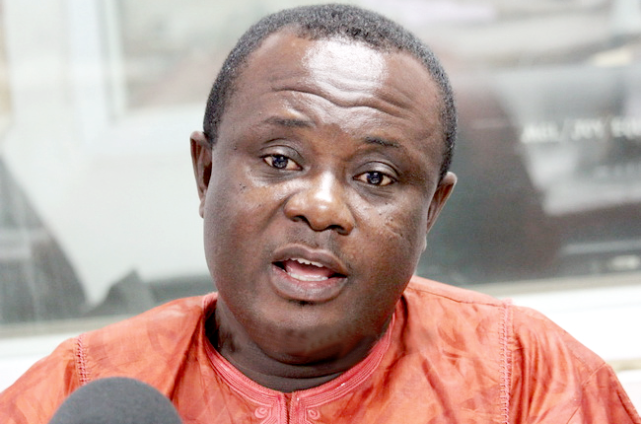
Former Ashanti Bekwai MP Joseph Osei Owusu says the credibility of the internal election process rested on one clear principle: agreed rules applied equally to all candidates in the upcoming NPP presidential primaries.
Speaking on Joy News’ PM Express on Wednesday, he said the process began with clarity, not improvisation. “First, we started with the rules. How are we going to play the game?” he said.
According to him, the rules were formally shared with every contestant. “We brought the rules, we distributed them to all the contestants, and we sat together with them,” he said.
He said that even those who could not attend in person were represented.
“Some appeared in person. Others sent their representatives. But we went through the rules together and agreed these are the rules we’ll play by,” he said.
That agreement, he noted, was critical to trust. “If I allow you to breach the rule without sanction, then I have not provided sufficient basis to be confident in me,” he said.
He said consistency followed from that point. Attention then shifted to the delegate register.
“There was a 2023 register, which at the conference we agreed will be used for this election,” he said.
But constitutional changes made updates unavoidable.
“At the same conference, we amended the Constitution to allow new entrants, people like me, who otherwise would not have been delegates, to become delegates,” he said.
That decision, he explained, required careful handling to avoid suspicion.
“So we had to compile the list and give confidence that nothing was being done to favour any candidate,” he said.
He said candidates were involved at every stage. “We invited them to participate at every stage of the compilation,” he said.
Verification, he added, happened openly at the constituency level. “Once people filled their forms, we sent groups to the constituencies,” he said.
“At verification, the constituency executives were there. The contestants’ agents were also there,” he said.
Disputes were not ignored. “Where there were disagreements, we didn’t let them die down. They were brought to us,” he said.
He said disputed cases were reviewed jointly. “We sat together with the representatives of the contestants and went through the controversies,” he said.
Outstanding issues were then handled by a smaller body. “We formed an in-house committee to investigate and report,” he said.
Latest Stories
-
Atta Akyea denies seeking presidential pardon for Wontumi in galamsey case
17 minutes -
Photos: Mahama commissions 85-bed Police Hospital ward, donates two ambulances
25 minutes -
GTEC directs Ghana’s public universities to reopen by October 16 and begin lectures on October 19
27 minutes -
Star Oil donates GH¢1million towards construction of new CID facility
30 minutes -
Court hands Adjetey Sowah, two others lifetime bans after Amputee Football legal dispute
40 minutes -
NDC appoints Julius Kwame Anthony as a Deputy Communications Director
40 minutes -
Ghana repatriates 120 Nigerians rescued from suspected cybercrime centres
45 minutes -
NPP rejects Emelia Agbenyo’s appointment as Deputy EC Chair, demands withdrawal
49 minutes -
EOCO grants Suame MP John Darko enquiry bail in GH¢27m SIC investigation
53 minutes -
NPP cannot question EC appointment after appointing own people to Commission – Kwakye Ofosu
58 minutes -
BoG deepens public trust with regional stakeholder forum in Techiman
1 hour -
‘We have turned the tide’ – Ato Forson says Ghana is ready to take off
1 hour -
Police arrest man captured in viral video assaulting wife in Agona Nkwanta
1 hour -
KATH Mother and Baby Unit construction stalled for 14 months over unpaid contractor arrears
1 hour -
Government wanted to ‘tilt the balance’ with new EC appointments – Kwakye Ofosu
2 hours