

Audio By Carbonatix
Civil Society Organisations (CSOs) in education have called for enhanced funding as part of reforms to the Students Loan Scheme (SLS).
They argued that increased funding would improve disbursement and position the Scheme to offer pre-admission loans among others.
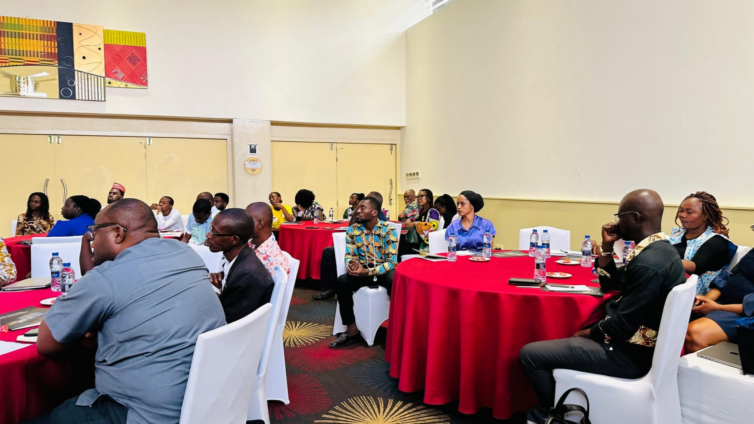
The stakeholders made the call at a thematic forum on education in Accra as a preparatory step towards the Government’s planned National Summit on Transforming Ghana’s Education System.
Organized by STAR-Ghana Foundation under its Inclusive Election and Accountability in Ghana Project (Phase III), the Thematic Forum on Education focused on strengthening civil society’s role in monitoring education policies and reforms.
It also emphasized leveraging evidence-based advocacy to improve education service delivery while enhancing partnerships for effective policy implementation.
The day’s forum brought together stakeholders in the education sector to discuss strategies for monitoring government’s commitments and driving accountability in education service delivery.
STAR-Ghana has already held similar engagements in Northern Ghana, bringing together civil society partners to discuss priority areas in basic, secondary, and tertiary education.
The Foundation, along with other advocacy groups such as Eduwatch, has identified major bottlenecks in the sector, including challenges with the Free Senior High School policy.
The Students Loan Scheme, designed to assist needy students in financing their tertiary education, lacks adequate fund allocation and disbursement.
The CSOs said the challenge of funding had neutralized the impact of the guarantor-free system introduced by the previous NPP Government.
Against a commitment of GH¢160 million and a fund availability of GH¢53 million, the Students Loan Scheme was only able to disburse half of its 2022/23 commitments.
The stakeholders further stated that there was also a cohort of needy tertiary candidates who were unable to honour their admissions due to financial challenges.

According to Africa Education Watch, in the 2020/21 academic year, out of 190,395 public tertiary applications for bachelor’s degree programmes, 61 per cent, representing 118,000, were admitted, with only 74,970, representing 39 per cent, honouring their admissions.
The CSOs indicated that the Students Loan Trust Fund heavily relied on its 65 per cent recovery rate to operate, along with GH₵5 million annually from the Communication Service Tax and a maximum of 10 per cent from GETFUND as required by law.
They further suggested that if the allocation to the scheme was not increased consistent with demand and if its financing was not re-engineered to make funds available at the beginning of the academic year, it would be difficult to increase the proportion of senior high school graduates progressing to tertiary education.
Raymond Danso, Portfolio Manager, Right to Services, STAR-Ghana Foundation, emphasized the need for a unified civil society approach in addressing challenges in Ghana’s education sector ahead of the upcoming National Education Forum to be organized by the Government.
“This forum allows us to prioritize the key issues we need to present at the National Education Forum, including past challenges, previously proposed solutions that did not work and new alternatives,” he stated.
Mr. Danso further expressed optimism about the Government’s willingness to engage with CSOs and the public in shaping educational policies. He stressed that discussions from the CSO forum around critical areas such as education financing, infrastructure development, and teacher deployment should be at the centre of discussions at the national forum.
A key outcome of the CSO forum, he added, would be the introduction of a tracking tool to monitor the Government’s commitments to the education sector, particularly concerning manifesto promises.
“Previous efforts by individual CSOs have been fragmented, making accountability and reform efforts difficult. This tool will ensure a coordinated approach in monitoring progress,” he added. Mr. Danso stressed that both duty-bearers and citizens had roles to play in ensuring quality education service delivery.
While expressing optimism about the forthcoming National Education Forum, he urged stakeholders to ensure that recommendations from such dialogues lead to actionable outcomes rather than being shelved.
“We cannot continue to expect new results if we don’t take the right decisions and commit to practical solutions,” Mr. Danso emphasized.
Latest Stories
-
YEA records GH¢110.4m surplus after turning around 2024 deficit – SIGA report
24 seconds -
Madina MP Francis-Xavier Sosu prioritises road rehabilitation, education and healthcare
6 minutes -
Valco-Kpone road turns nightmare as motorists fume, tanker drivers threaten fresh strike
6 minutes -
STC cuts net loss by 93% to GH¢5.18m despite 12% revenue decline
13 minutes -
Tanker drivers threaten strike over deplorable VALCO-TOR-Kpone road
19 minutes -
NPA surplus jumps 76% to GH¢447m in 2025 – SIGA
22 minutes -
Railway workers push for completion of Takoradi-Nsuta line by 2027
26 minutes -
Police arrest 6 suspected notorious armed robbers in Kumasi
29 minutes -
Opinion: GHS1m is welcome, but Ghana Premier League’s biggest problem remains unsolved
30 minutes -
Stylen Boy’s ‘Adole’ featuring Kurl Songx hits No. 1 on Ghana iTunes
33 minutes -
CBG’s assets rise to GH¢17.86bn as deposits, revenue and equity grow in 2025 – SIGA Report
36 minutes -
KNUST SHS considers slashing admissions over infrastructure deficit
41 minutes -
GEXIM Bank’s capital adequacy ratio rises to 75.3% in 2025 – SIGA Report
45 minutes -
CPC’s revenue plunges 47% as net loss widens to GH¢144m — SIGA
45 minutes -
Ghana Water turns GH¢3.06bn loss into GH¢635.23m profit in 2025 – SIGA Report
46 minutes