


Audio By Carbonatix
Across Africa and notably in Ghana, community-based leadership has emerged as a driving force in the fight against HIV/AIDS.
These grassroots initiatives are not only reshaping how treatment and prevention are delivered but are also redefining what it means to respond to a public health crisis from the ground up.
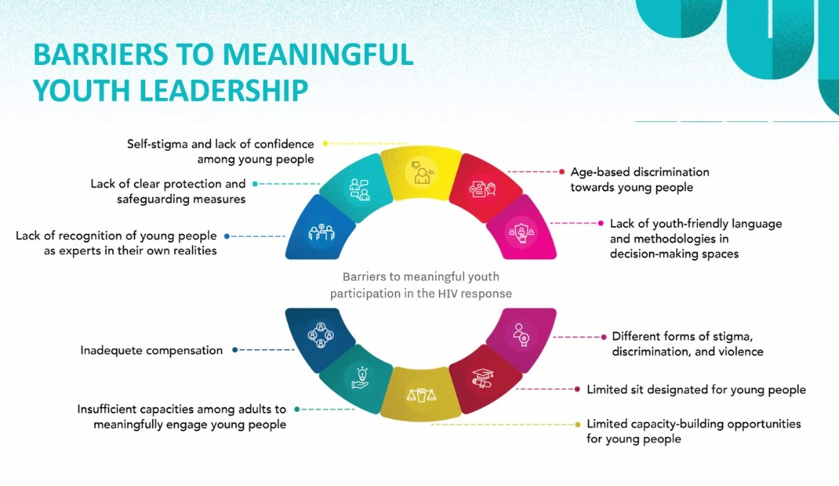
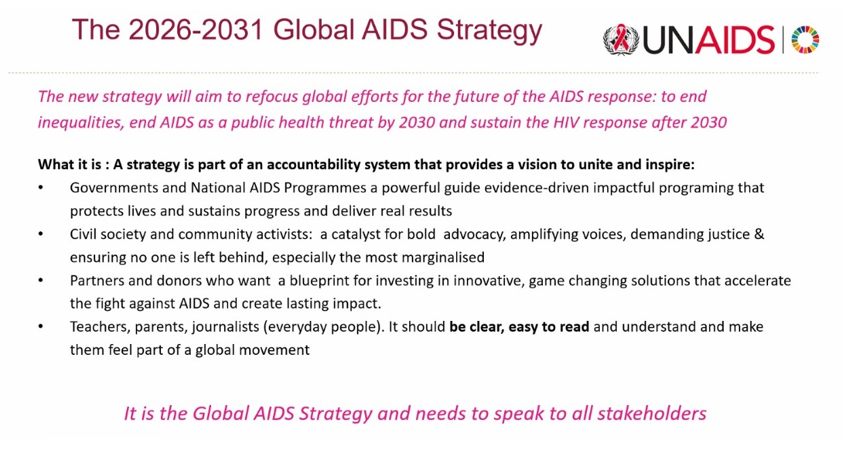
This momentum was resonated during the Global AIDS Strategy 2031 Consultation Programme, hosted by the United Nations Programme on HIV/AIDS under the theme "Ensuring Community Leadership in the HIV Response in Africa." The programme brought together health practitioners, researchers, and civil society organizations from across Africa. Together, they shared bold visions and practical strategies on the short-term, mid-term, and long-term requirements which centered on the Global AIDS Strategy for 2026-2031 to combat the silent killer at every level, from the household to national policymaking.
The Global AIDS Strategy 2031 aims to refocus global efforts for the future of AIDS response as well as to end inequalities and end AIDS as a public health threat by 2030.
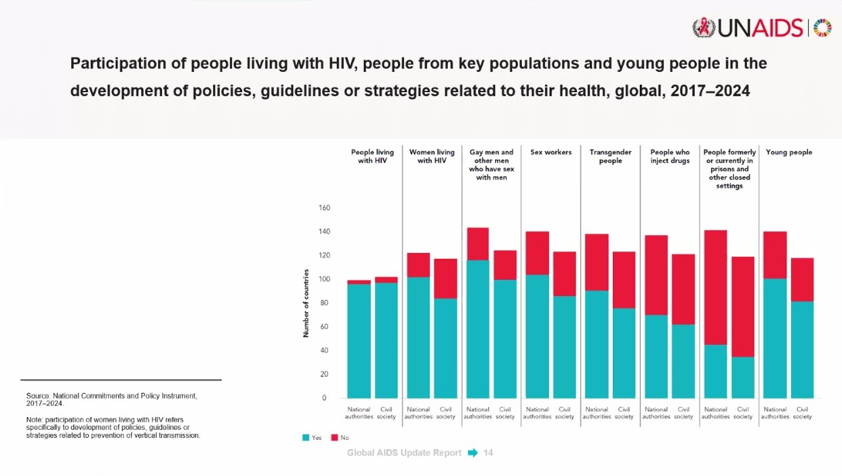
The discussion highlighted the significance of community-led responses and its contributions to advocacy, technical innovation, and policy reforms with a common thread, that is real change at the community level. Christoforos Mallouris, Senior Adviser to the UNAIDS Regional Support Team in South Africa emphasized need to make sure that there are mechanisms and there is the willingness from governments to fund community-led responses.
"We must deepen our research on community-led responses that catalyze change not only in practice but in government policy. Only then can we ensure these responses are truly effective since community-led advocacy makes structural changes. ", he stated.
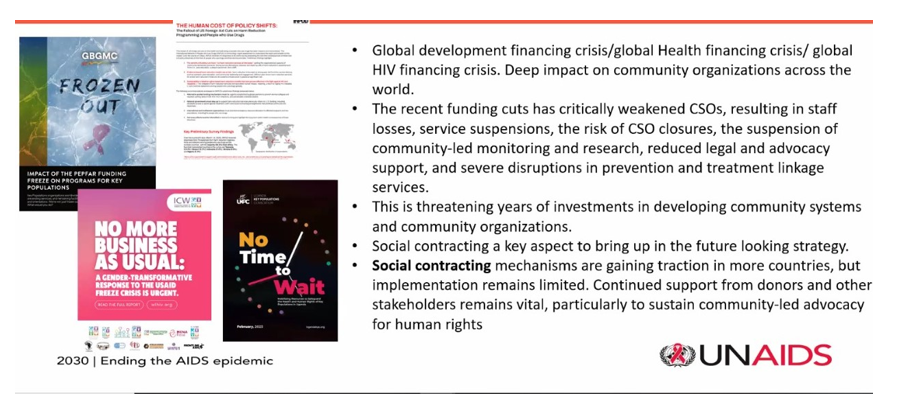
One major theme was the shrinking civic space and limited domestic financing for community-led responses. Participants called for greater investment in impact analysis and the development of localized advocacy tools, including data-driven reports that align with national health strategies. They also emphasized the importance of social contracting mechanisms that formally integrate community organizations into government health service delivery systems.
Rita Wahab, Executive Director of MENA Rosa, highlighted overlooked but critical issues such as mental health support for the young and aged living with HIV not only in the Middle East and North Africa (MENA) but across other sub-regions, she noted the exclusion of HIV-positive individuals from senior care facilities and workplaces.
“We’re dealing with real people, many of whom are aging, traumatized, and increasingly excluded from essential services. Mental health and palliative care must be prioritized,” said Wahab.
Among the civil societies organisations in this discussion, were members of Réseau des Médias Africains pour la Promotion de la Santé et de l'Environnement (REMAPSEN), from across over 30 countries in West and Central Africa. They stressed on the importance of innovation and adaptability in the face of limited resources as a substantive effort in combating AIDS.
The discussion also touched on the fragility of social enabler programs, initiatives that support rights-based approaches, stigma reduction, and advocacy. These efforts, which are vital to a sustained HIV response, often receive the least funding and are most vulnerable during policy or funding transitions.
Despite the challenges, the message from participants was clear. Community-led responses are essential, and governments must do more to recognize, fund, and integrate them into national HIV strategies.
As discussions continue toward new global HIV targets for 2030, advocates are urging governments to not just include communities in the response, but to fully resource and empower them as leaders.
Latest Stories
-
Ghana eyes stronger trade ties as Australia hosts multicultural trade and investment forum
3 minutes -
Margaret-Marie Krakue
6 minutes -
Ayariga announces plans for live broadcast of MMDAs’ meetings on local radio stations
9 minutes -
Mrs Anna Tackie
11 minutes -
Ghana links Afghan heroin and Brazilian cocaine to global drug markets – Global Organised Crime Index
18 minutes -
NHIA launches nationwide inter-school quiz to deepen students’ knowledge of NHIS
25 minutes -
Political protection could be masking Ghana’s cocaine trade – Global Organised Crime Index
30 minutes -
AFCON 2027Q: ‘We have to dissolve the GFA’ – Effia MP after Black Stars lose to Gambia
32 minutes -
NPP announces voting schedule and ID requirements for October 3 national elections
34 minutes -
Lupus can mimic HIV symptoms and damage kidneys if untreated – KNUST expert
37 minutes -
Focus on Sickle Cell Foundation seeks to introduce sickle cell education through comics in Ghanaian schools
42 minutes -
NPP rewrites the campaign playbok as opposition reality shapes National Executive contest
44 minutes -
Road safety education will fail without enforcement – NRSA boss
45 minutes -
Daily Insight for CEOs: Finishing Q3 strong and entering Q4 with purpose
46 minutes -
National Ambulance Service begins ‘Operation Restore Fleet’ to restore grounded ambulances
46 minutes