

Audio By Carbonatix
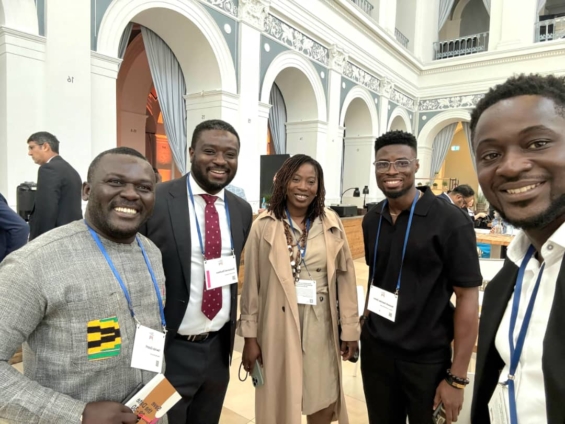
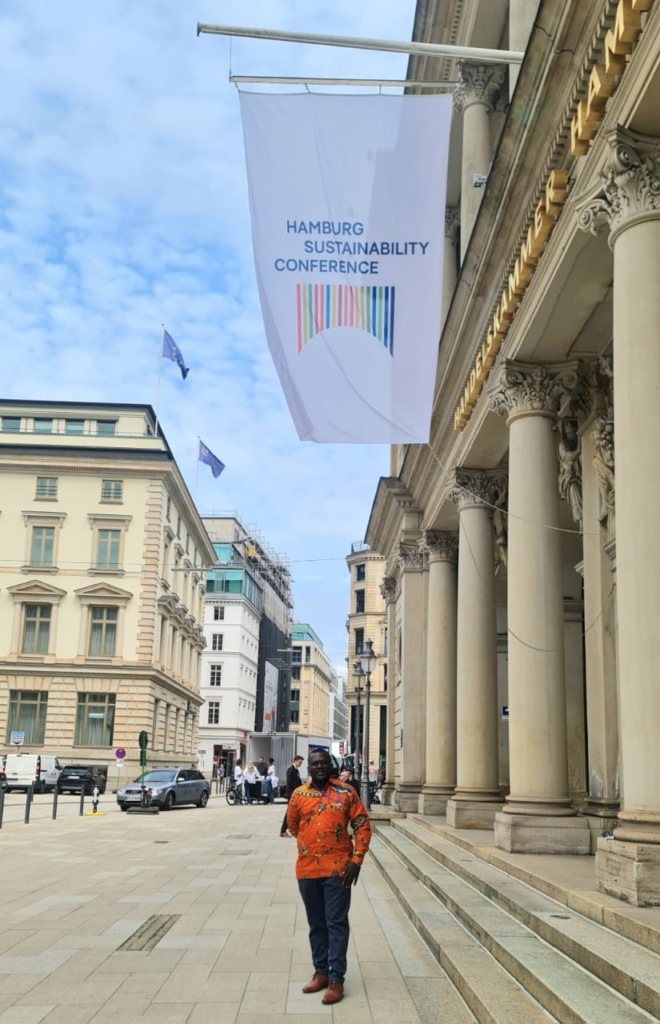
At the 2025 Hamburg Sustainability Conference, one of the defining themes that emerged was the intersection of innovation, sustainability, and the future of work. As cities and countries worldwide grapple with the dual challenge of climate resilience and economic transformation, the role of innovation ecosystems, particularly innovation hubs, is gaining unprecedented recognition.
For Ghana, where the need to create green jobs, transition to low-carbon growth, and empower a rising youth population is urgent, innovation hubs offer a practical and scalable platform for driving sustainability. Anchored in the spirit of co-creation, experimentation, and entrepreneurship, these hubs are uniquely positioned to foster solutions that are local in insight and global in relevance.
What Hamburg Taught Us: Innovation as a Climate and Economic Strategy
The Hamburg conference showcased how innovation spaces are being harnessed globally as strategic instruments for both economic inclusion and climate action. In Germany, hubs have evolved into collaborative ecosystems that unite startups, academia, government, and civil society around mission-driven challenges — from renewable energy to circular economy models and sustainable urban farming.
Crucially, these hubs are no longer just startup incubators. They are policy partners, research testbeds, and civic platforms. Their value lies in their agility — the ability to test solutions quickly, fail fast, and scale what works.
This model is highly relevant for Ghana, where climate risks, youth unemployment, and informal urbanisation converge as pressing policy issues.
Ghana’s Innovation Hubs: Seeds of a Green Future
Over the past decade, Ghana has witnessed a vibrant growth in innovation hubs, tech labs, maker spaces, incubators, and creative collectives, particularly in Accra, Kumasi, Tamale, Takoradi, Techiman, Wa, Ho, and Koforidua. These hubs have largely driven entrepreneurship, digital innovation, and skills development. But their potential as sustainability drivers remains under-leveraged.
This is where the Ghana Hubs Network (GHN) — a national consortium of nearly 100 innovation hubs — can step in as a unifying force to catalyze green innovation across regions.
The Role of Ghana Hubs Network in Driving Sustainability
1. Localizing Sustainability Solutions:
Hubs can serve as centers for developing and deploying community-level solutions in waste management, clean cooking, water access, and green mobility — ensuring that sustainability is not an abstract policy goal, but a lived, localized reality.
2. Building the Green Workforce:
Through partnerships with universities and vocational institutes, hubs can offer training in green skills — from solar panel installation to sustainable agriculture and eco-design — preparing youth for the jobs of the future.
3. Acting as Policy Labs:
GHN can support the Ministry of Environment, Science, Technology and Innovation (MESTI) in piloting climate innovation policies. For instance, by serving as experimental zones for green financing models, low-emission technologies, or carbon credit tracking tools.
4. Supporting Green Entrepreneurship:
Hubs already host and nurture entrepreneurs. By embedding sustainability criteria into incubation programs, such as climate-smart agriculture, circular product design, or digital tools for environmental monitoring, hubs can accelerate the emergence of eco-enterprises.
Multi-Stakeholder Partnerships: A National Imperative
To achieve this vision, cross-sector collaboration is key. The Ministry of Environment, Science, and Technology can provide policy direction and integrate hubs into national sustainability planning and climate strategies such as the National Adaptation Plan.
The German Development Cooperation in Ghana (GIZ), which already supports several innovation and skills projects, can play a pivotal role by aligning its support with a green innovation mandate. Technical expertise, funding, and exposure to German green technologies can significantly enhance the capabilities of Ghanaian hubs.
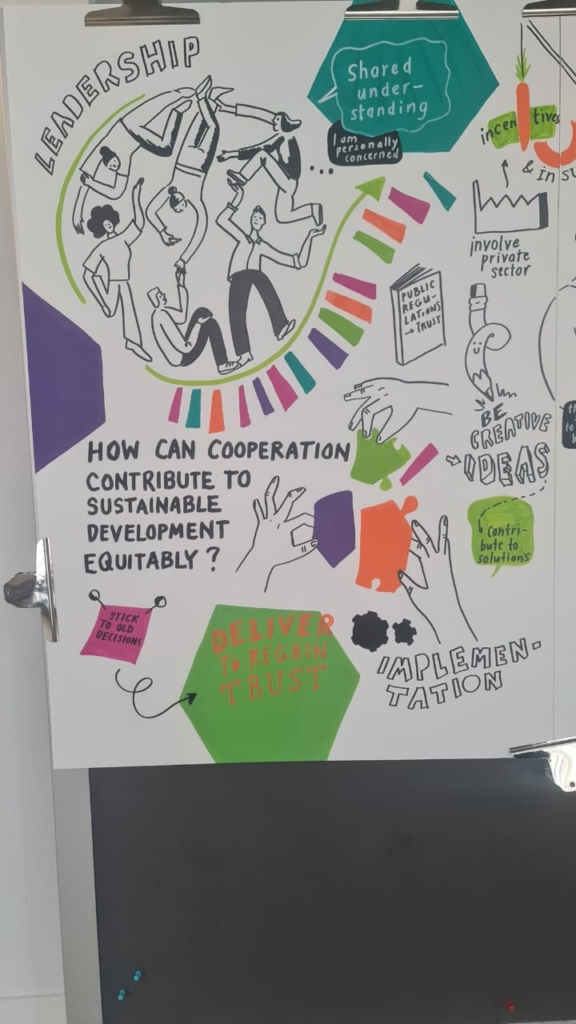
Together, GHN, MEST, and GIZ can co-create an Innovation for Sustainability Framework, guiding how hubs contribute to the Sustainable Development Goals (SDGs), especially SDG 9 (Industry, Innovation and Infrastructure), SDG 13 (Climate Action), and SDG 12 (Responsible Consumption and Production).
The Future of Work: Green, Digital, and Inclusive
The Hamburg deliberations were clear: the future of work will be green and digital. For Ghana, the innovation hubs can serve as bridges between the informal and formal economies, between rural and urban solutions, and between traditional knowledge and frontier technologies.
They can help young Ghanaians see sustainability not just as a policy topic, but as a business opportunity, a career path, and a civic responsibility.
Conclusion: A Decade to Deliver
As Ghana positions itself for inclusive, green, and tech-enabled development, innovation hubs must be seen and supported as strategic national assets. With coordinated support from government and development partners, and with lessons drawn from global platforms like the Hamburg Sustainability Conference, the Ghana Hubs Network can lead a generational shift, where innovation becomes the heartbeat of a sustainable Ghana.
*****
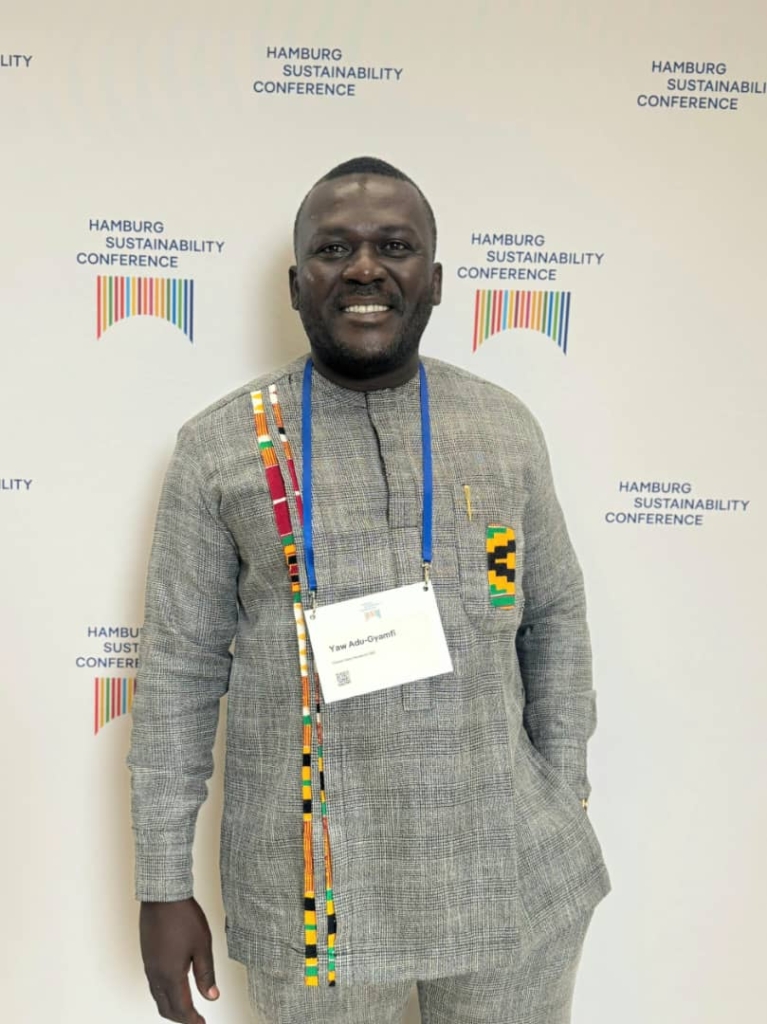
The Author, Yaw Adu-Gyamfi, is the Chairperson of the Ghana Hubs Network (GHN), a mission-driven association of nearly 100 innovation, technology and entrepreneurship hubs in Ghana.
Latest Stories
-
24-Hour Economy’s job creation push yet to gather speed – Nii Moi Thompson
16 minutes -
Why I rejected political offers that could have made me billionaire – Omotola Jalade
35 minutes -
Singer Davido sternly warns those trying to move like him
46 minutes -
Davido reveals secret bond between Dangote and his family
56 minutes -
Dangote’s proposed Kenyan oil refinery faces hurdles, not least with crude supply
1 hour -
Ivory Coast cocoa sellers struggle to use new traceability system
1 hour -
Banks’ credit profiles improve on stronger operating environment – Fitch
1 hour -
Nigeria names new commander to lead military operations against Boko Haram
1 hour -
Brent holds above $100 as tanker attacks deepen supply fear
2 hours -
Trump promises $5,000 payout to U.S. adults if Republicans win election
2 hours -
Ghana’s growth rate to exceed 6.5% in 2026 – Databank Research
2 hours -
Gold edges higher on weaker dollar, US inflation data in focus
2 hours -
Spanish intelligence warned of Ceuta mass crossing plans before surge
2 hours -
Uganda pulling out of Prince Harry’s Invictus Games, says military chief
2 hours -
Nicolas Cage’s driveway collapses as sinkhole opens up at his Malibu home
2 hours