

Audio By Carbonatix
The National Health Insurance Authority (NHIA) has announced an ambitious plan to expand the National Health Insurance Scheme (NHIS) to cover every illness in Ghana by 2030.
With the scheme currently providing coverage for about 95% of illnesses, the establishment of the Medical Trust Fund, dubbed Mahama Cares, and the planned introduction of free primary healthcare, the Authority believes total coverage is within reach.
Speaking at a stakeholder engagement with private health insurers, acting Chief Executive of NHIA, Dr Victor Bampoe, expressed confidence that the reforms underway will make the vision of full coverage achievable.
“Every Ghanaian everywhere can actually access healthcare without financial hardship, and by 2030, we want to ensure that we have universal health coverage across Ghana. Starting with the NHIS as it exists now, we already take care of about 95% of all disease conditions.

"So, there is the Mahama Cares initiative, the regular NHIS, and the upcoming free primary healthcare, which will help diagnose diseases quicker, screen people earlier, and provide preventive medicines,” he said.
Also speaking at the stakeholder engagement, the acting Director of the Private Health Insurance Industry, Dr William Omane-Adjeikum, raised concerns about the role of telecommunication companies in offering health insurance packages.
According to him, their activities remain largely unregulated and pose risks to the growth and sustainability of the private health insurance sector.
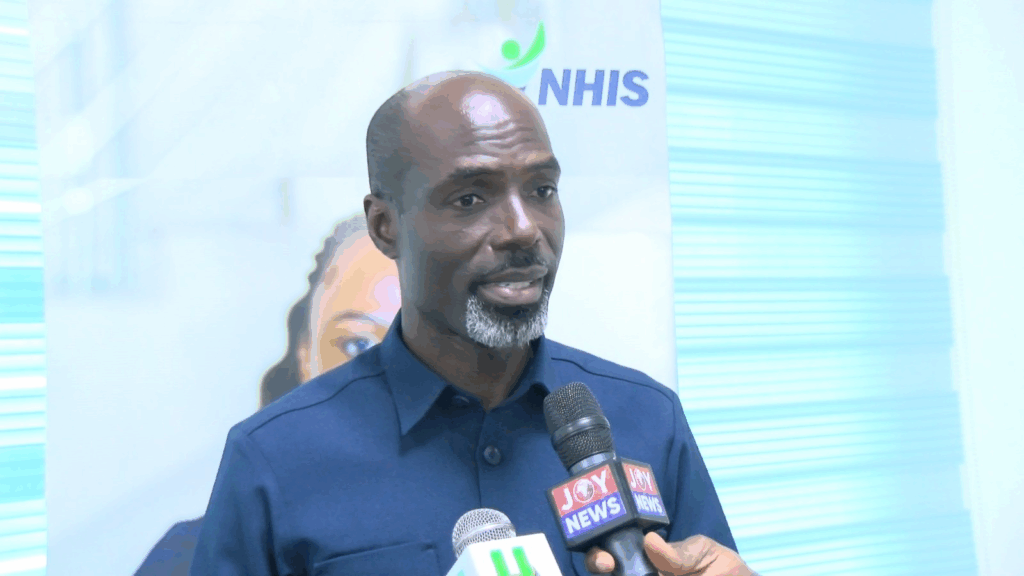
“There is a growing menace of some telecommunication companies partnering with certain insurance companies to roll out products that also include health insurance. These products are not known to the National Health Insurance Authority.
"The Authority is therefore sounding a caution to companies in partnership with telecom operators to desist from offering products that have any component or semblance of health insurance,” he said.
While the Authority insists it is on course to deliver universal health coverage by 2030, private sector players caution that tighter regulation and oversight will be crucial to safeguard the industry and ensure the ambitious target is met.
Latest Stories
-
Police officer, 6 others injured in New Winneba shooting over land dispute
6 minutes -
SIGA Report: TDC more than triples net profit to ¢195.6m in 2025
11 minutes -
KiDi’s WDWGFH album listening draws strong turnout
18 minutes -
Adu-Boahen Trial: Court gives Atta Akyea final chance to end cross-examination
20 minutes -
Adu-Boahene trial adjourned to September 2 as defence gets extra day to cross-examine witness
22 minutes -
Rising fuel prices will inevitably push up transport fares – COPEC
24 minutes -
GoldBod now appears to be operating a forex bureau – NPP
25 minutes -
Rapid urban expansion outpacing Ghana’s electricity infrastructure – Electrical engineer warns
43 minutes -
Common Fund must not be used to finance Accra waste management, residents must pay – Ayariga
46 minutes -
Palm oil should not be used to induce vomiting
47 minutes -
Nearly 3 out of 4 women give birth without a trained professional in Sene East
53 minutes -
PRURide 2026: Elite race set for September 6
55 minutes -
Forms Capital empowers young Ghanaian innovators to reimagine the future of finance at Hack54 2026
57 minutes -
Recovering ECG’s losses could strengthen power sector without tariff increases – Ing. Quaye-Larbi
59 minutes -
Local Government Minister declares war on indiscipline over sanitation rates
59 minutes