

Audio By Carbonatix
The life of a seafarer has always been one of adventure and sacrifice, navigating not just oceans but also the immense challenges of isolation and life at sea. For seafarers from developing nations like Ghana and Small Island Developing States (SIDS), who power the global merchant fleet, these challenges are often magnified. Now, a landmark change in international law is set to make their workplaces safer and more dignified.
The International Maritime Organization (IMO) has passed the STCW 2026 amendments, introducing the most significant update to seafarer training in a generation. For the first time, it mandates comprehensive training to combat the silent epidemics of harassment and assault at sea, marking a pivotal shift towards safeguarding the mental and physical well-being of every crew member.
What This Means for Seafarers
Under the new convention, every seafarer will receive structured education on critical issues that have long been overlooked:
- Understanding the Harm: Training will cover the full "continuum of harm," from bullying and sexual harassment to sexual assault, ensuring seafarers can identify unacceptable behaviour in all its forms.
- Confronting the Consequences: The curriculum will detail the profound impact of this misconduct not just on victims, but on the entire crew's safety, mental health, and operational efficiency. It acknowledges that a harmed crew is an unsafe ship.
- Addressing the Root Causes: Seafarers will learn how factors like the abuse of power, discrimination, extreme stress, isolation, fatigue, and substance abuse can create an environment where harassment thrives.
- Empowering Bystanders: A key focus is on empowering every crew member with the knowledge of how to safely intervene and report incidents, transforming bystanders into active allies.
- Trauma-Informed Support: Crucially, basic training will now include principles of a trauma-informed response, teaching seafarers how to provide initial, empathetic support to a colleague in distress.
This is a transformative step. It equips seafarers with the tools to protect themselves and each other, fostering a culture of respect that is as crucial to safety as any lifeboat drill.
Why Our Maritime Training Institution Need a Lifeline
This progress, however, does not implement itself. The burden of delivering this advanced, sensitive training falls squarely on maritime training institutions in developing countries, like our renowned Regional Maritime University (RMU). For them, STCW 2026 presents a formidable challenge.
The new requirements are not just about adding a page to a textbook. They demand a fundamental shift in teaching methodology, requiring:
- Specialised Faculty: Instructors need to become experts in psychosocial topics like trauma-informed care and harassment prevention, far beyond traditional nautical sciences. This requires intensive "train-the-trainer" programs.
- Modern Learning Environments: Teaching conflict resolution and trauma response effectively requires dedicated, safe spaces for role-playing and discussion, not just standard classrooms.
- Updated Simulators and Tools: To properly teach the reinforced emergency preparedness and fatigue management standards, state-of-the-art simulators and monitoring technologies are essential.
Without urgent support, there is a real risk that institutions in developing nations will be left behind, creating a two-tier system where their graduates are at a competitive disadvantage.
The Call to Action
To ensure a fair and equitable future for our seafarers, we must act now. Supporting institutions like the RMU is not an expense, but a critical investment in the global maritime industry's safety and humanity.
I call on international development partners, the IMO, and donor countries to provide:
- Grant funding for curriculum development and simulator upgrades.
- Fellowships and partnerships with global experts to train our instructors.
- Direct technical assistance to bridge the resource gap.
The STCW 2026 convention sets a new, higher standard for dignity at sea. Let us ensure that seafarers from Ghana, SIDS, and all developing nations are fully equipped to meet it, not just as compliant crew, but as leaders of a new, safer, and more respectful maritime world.
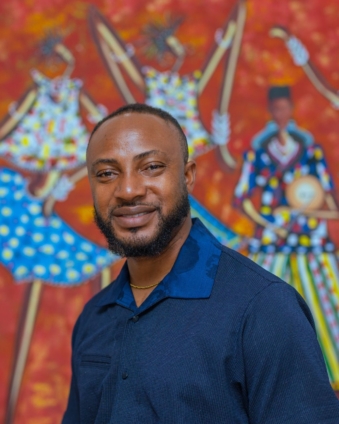
Writer: Evans Ago Tetteh, Ph.D.
Regional Maritime University
Latest Stories
-
Asylum votes show people want help, says Kemi Badenoch
47 minutes -
Badenoch welcomes expanded grooming gangs inquiry
48 minutes -
GACL MD sues Samuel Buabeng over alleged Facebook defamation
53 minutes -
Christa Pike in critical condition after surviving two lethal injections, lawyer says
57 minutes -
Kemi Badenoch backs face covering ban at protest
1 hour -
Man City not ‘above the rules’, says No 10 after backlash to Burnham remarks
1 hour -
Real Madrid submit ‘substantial’ dossier in Barca payments case
1 hour -
Messi completes purchase of second Spanish club
2 hours -
Government must engage horticulturists on tomato crisis – GhIH
2 hours -
King Promise’s ‘Can’t Tame Us’ becomes official Chelsea anthem
2 hours -
Afenyo-Markin demands Baffour Awuah’s release from EOCO’s custody, end to alleged political intimidation
2 hours -
Rapper Rick Ross arrested on domestic violence charges
2 hours -
Minority demands security review of Ghana-Colombia visa waiver and port deals
2 hours -
Pursue drug kingpins, not persecute political opponents – Afenyo-Markin tells EOCO
2 hours -
‘I am disappointed’ – Yaw Ampofo Ankrah breaks silence after NSA suspension
2 hours