

Audio By Carbonatix
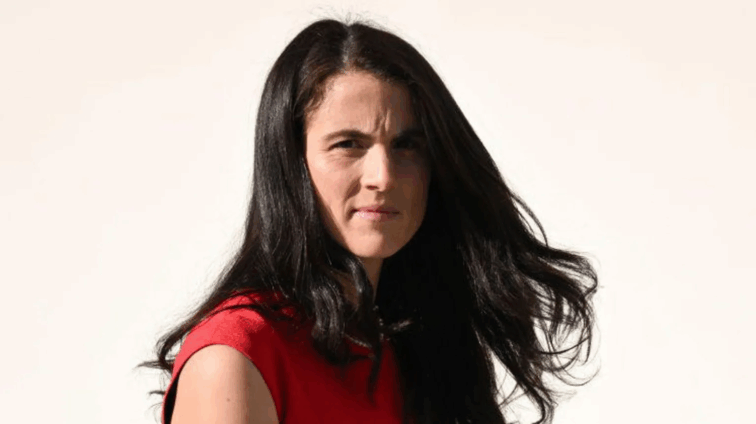
Tatiana Schlossberg, granddaughter of former US President John F Kennedy, moved many Americans over the weekend with her emotional essay about being diagnosed with terminal cancer shortly after giving birth to her second child.
In the New Yorker, the 35-year-old stunned readers, writing that she was battling acute myeloid leukaemia (AML), an aggressive blood cancer, and had less than a year to live.
Doctors and researchers say the essay helped raise awareness about the deadly illness and the critical need for more funding and research to tackle treatment-resistant cancers.
"It's such an obviously moving and courageous essay," said Vijay Sankaran, a physician with Dana-Farber Cancer Institute. "She comes from a very prominent family, and yet anybody can be affected by cancer, even people who are young, who are seemingly healthy."
In the essay, titled A Battle With My Blood, Schlossberg said she was diagnosed after doctors noticed an abnormally high white-blood cell count after giving birth to her daughter in May 2024.
The daughter of designer Edwin Schlossberg and diplomat Caroline Kennedy, she said she was shocked by the diagnosis, as she considered herself "one of the healthiest people I knew".
One of the dangers of acute myeloid leukaemias is that they can emerge suddenly, going from being undetactable to affecting hundreds of cells in a matter of days, said Dr Sankaran.
The cancer - affecting both the bone marrow and blood - is rare, sickening four in 100,000 adults each year.
Schlossberg's subtype of leukaemia - a chromosomal abnormality formerly called Inversion 3 - is even rarer, affecting only 1% to 2% of people with acute myeloid leukaemia.
The rare genetic mutation makes Schlossberg's cancer even more dangerous. It is one of the few subsets of acute myeloid leukaemia for which there are few effective therapies - meaning remissions or cures are the minority", said Courtney DiNardo, professor of leukaemia at University of Texas MD Anderson Cancer Centre.
The most common treatments involve bone marrow transplants, chemotherapy and clinical trials.
Schlossberg tried them all.
She described in her essay the transplant doctors drained from her sister's arms and chemotherapy that made her once "great hair" fall out.
She joined a clinical trial for CAR-T-cell therapy, a type of immunotherapy for certain blood cancers, in which she said scientists "engineered my sister's T-cells, directing them to attack my cancer cells".
Though the therapy has been revolutionary for other types of leukaemia, it is less so for acute myeloid leukaemia, Dr Sankaran said.
In the last clinical trial, her doctor told Schlossberg that he could "keep me alive for a year, maybe".
She also discussed battling cancer while watching her cousin, Health Secretary Robert F Kennedy Jr, make massive cuts to research funding, including for cancers. She and other family members are ardent critics of Kennedy since his unsuccessful presidential campaign and nomination for the health role.
"As I spent more and more of my life under the care of doctors, nurses, and researchers striving to improve the lives of others, I watched as Bobby cut nearly a half billion dollars for research into mRNA vaccines, technology that could be used against certain cancers," Schlossberg wrote.
Kennedy, a vaccine sceptic, announced in August that he was pulling the funding over claims that "mRNA technology poses more risks than benefits" for certain respiratory viruses. He also revoked funding for hundreds of research grants through the National Institutes of Health (NIH).
Even though cuts to mRNA funding were only for respiratory viruses, they have had a chilling effect in the entire mRNA research community, said Jeff Coller, a Bloomberg Distinguished Professor at Johns Hopkins University focused on RNA therapeutics.
"We've seen that researchers are, quite frankly, afraid to put together proposals for clinical trials that would be using mRNAs. And we call these cancer vaccines," he said.
The NIH was once a global leader in funding for biomedical research, but that has changed this year, Dr Sankaran said.
"That's been limiting, because you could just imagine you need to take more shots on goal to actually have research that will successfully lead to therapies," he said.
Schlossberg's battle - while having access to the best care as a member of a prominent American family - highlights the need for more funding to develop better screening tools and treatments for all patients, physicians said.
"[Schlossberg] continues to have a poor prognosis with even the best available tools that we have, and so I think it just really emphasises our need to do better for many of our patients," Dr Sankaran said.
Latest Stories
-
Ghana Mineworkers Union demand suspension of contract mining directive, threaten industrial action
24 minutes -
ADB Ghana Medicals constructing and equipping new Cardiothoracic Centre at Komfo Anokye
31 minutes -
AFREIKH Summer School challenges Africa to harness critical minerals
41 minutes -
Government plans 2,000-acre pharmaceutical innovation park in Osudoku to boost local drug production
43 minutes -
Partey undergoes medical ahead of Al Shabab move in Saudi Arabia
45 minutes -
Today’s front pages: Friday, August 21, 2026
1 hour -
Power outages could drive up cost of digital services — NITA
1 hour -
Patients face basic sanitation gaps in West African health facilities — WHO / UNICEF
1 hour -
Competence has no age; let’s stop punishing new businesses
1 hour -
JoyNews Republic Bank Habitat Fair 2026 opens today at Achimota Mall
2 hours -
What Is Wrong With Us: The roads that keep counting our dead
2 hours -
MTN condemns recent xenophobic attacks on Ghanaians in South Africa
2 hours -
Philip Nai: What happens at your front desk can make or break your brand
2 hours -
Ghana’s mining deaths fall sharply, but Chamber insists ‘three deaths are too many’
3 hours -
Tatale Sanguli officials destroy expired food products, warn traders
3 hours