


Audio By Carbonatix
AAK Ghana Limited has signed an MoU with the Ministry of Food and Agriculture (MoFA) to drive value addition, competitiveness and sustainable growth within Ghana’s shea industry.
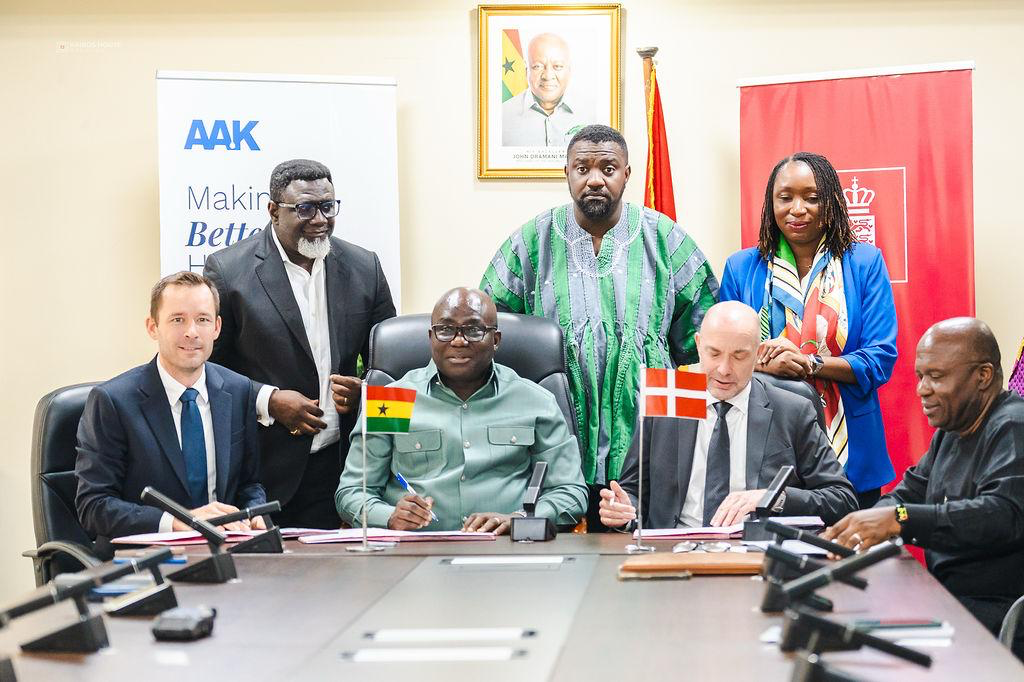
The MoU was signed in Accra by the Minister for Food and Agriculture, Eric Opoku, and the Vice President and Head of AAK West Africa, Lasse Skaksen.
The signing was witnessed by Denmark’s Ambassador to Ghana, Jakob Linulf, highlighting the strategic importance of the partnership to Ghana’s agribusiness and industrial development agenda.
The agreement formalises collaboration between the Government of Ghana and AAK—one of the world’s largest producers and buyers of shea products—to enhance local processing capacity, strengthen participation of small and medium-scale enterprises, and improve Ghana’s competitiveness in global shea markets.
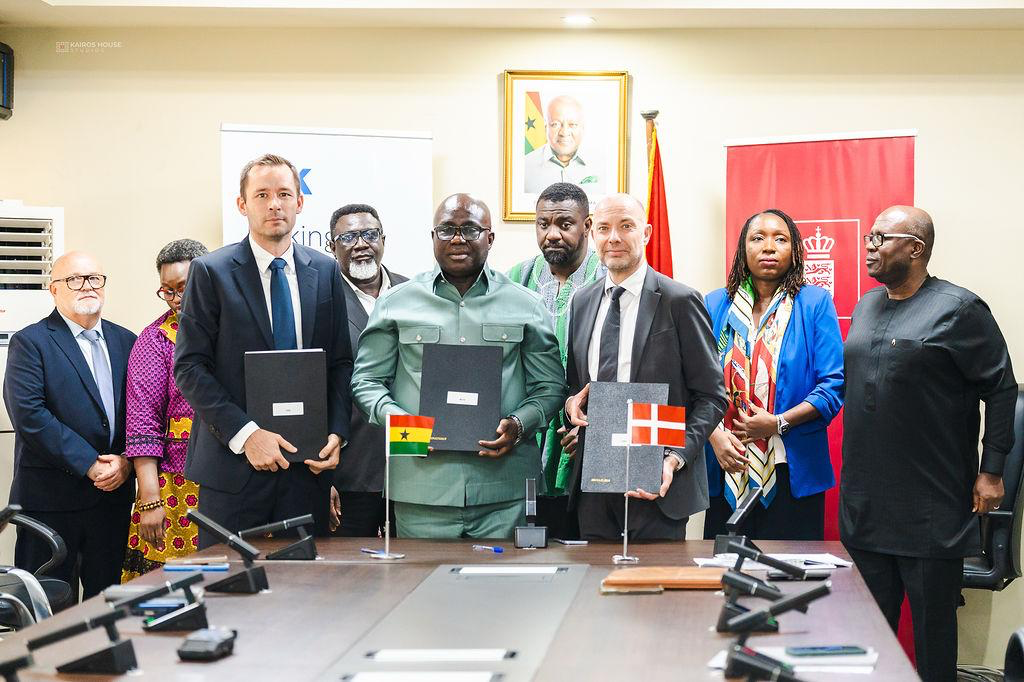
The partnership is expected to promote inclusive growth across the shea value chain, with a focus on women collectors, youth employment and sustainable sourcing.
AAK, which has operated in Ghana since 1958, reaffirmed its long-term commitment to the country and expressed confidence in Ghana’s potential to become a regional hub for value-added shea processing.
The company also referenced the recent FairWild certification of its Kolo Nafaso programme—the first ever for shea—which it says is transforming ethical sourcing in the sector and setting a new benchmark.
The programme is reported to be empowering families of more than 230,000 women collectors across the region.
Speaking at the ceremony, Mr Skaksen said Ghana has the potential to become “a global reference point for value-added shea processing,” adding that AAK intends to remain a long-term partner in that effort.
“This partnership reflects our confidence in Ghana’s shea sector and our commitment to investing in local capacity, sustainable sourcing, and inclusive economic growth,” he said.
Under the MoU, AAK outlined four key priorities to support the development of Ghana’s shea industry.
The first is the expansion of Kolo Nafaso, AAK’s sustainable direct sourcing programme, which currently supports over 230,000 women shea collectors through access to financing, capacity development and guaranteed markets.
Over the coming years, the company plans to expand the programme by about 70,000 additional women, mainly in northern Ghana, increasing the total number of supported women to more than 300,000.
The expansion will also include further investment in logistics, warehousing and the supply chain.
The second priority is skills development and support for local value addition through the proposed establishment of the AAK Ghana Innovation Academy.
The academy is expected to strengthen SME viability, enhance youth employability and build technical expertise in the shea sector and the broader plant-based oils and fats industry.
As a third priority, AAK said it intends to invest in local shea processing in Ghana using world-class technology. The company says this will increase local value addition, create over 100 jobs and boost export competitiveness.
The fourth priority is support for shea reforestation and parkland preservation initiatives, in partnership with the Tree Crops Development Authority and other stakeholders, to ensure long-term sustainability.
MoFA said the MoU aligns with government’s strategic priorities, including the Agriculture for Economic Transformation Agenda (AETA), the Feed Ghana Programme—through the Feed the Industry sub-programme—and broader efforts to strengthen agro-processing, tree crop development and export-led growth.
The Ministry also expressed its commitment to supporting AAK’s priorities by creating an enabling business environment to ensure the success of planned investments.
The ceremony was attended by senior government officials and key stakeholders, including Deputy Minister for Food and Agriculture, John Dumelo; Chief Director of MoFA, Paul Siameh; Chief Executive Officer of the Tree Crops Development Authority, Dr Andy Osei Okrah; and representatives of the Danish Embassy in Ghana.
Under the MoU, AAK and the Government of Ghana reaffirm their shared commitment to transitioning the shea sector from a largely raw commodity-based industry to a competitive, value-driven pillar of Ghana’s agricultural and industrial economy.
Latest Stories
-
Recurrent strikes threaten quality of education and academic calendars – Prof Bokpin
4 minutes -
‘Cockroach’ group leaders among hundreds detained in Delhi protest
7 minutes -
Don’t let speed of information become your judgement – CJ tells new lawyers
45 minutes -
World Cup visa scandal: People have leveraged public office to facilitate fraud – Senyo Hosi
50 minutes -
Glut! Farmers count losses as prices crash, customers happy
1 hour -
GSA postpones auction of unserviceable vehicles
1 hour -
Man charged with attempted murder after stabbing
2 hours -
World Cup visa scandal: Senyo Hosi says issue goes beyond calls for Sports Minister’s resignation
2 hours -
Yaw Ampofo Ankrah hasn’t taken or received any money to facilitate visas – Lawyer insists
2 hours -
World Cup visa scandal: Senyo Hosi urges focus on constitutional accountability
2 hours -
La Beach demolition: Senyo Hosi condemns lack of consultation
2 hours -
Russian glide bomb attack on Zaporizhzhia kills at least 15 people
2 hours -
Jinapor warns underperforming energy sector CEOs of consequences, says no protection for failure
2 hours -
Fire destroys head of tipper truck on Lower Volta Bridge
2 hours -
Palmer signs new Chelsea contract until 2034
2 hours