

Audio By Carbonatix
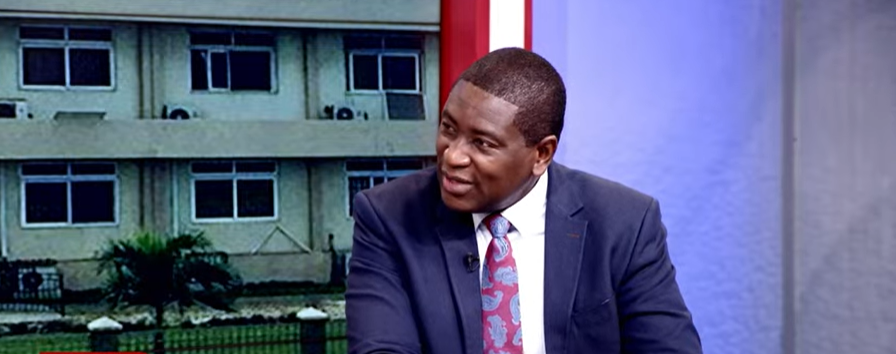
A leading member of the New Patriotic Party (NPP), Kwadwo Poku, says Ghanaians are focusing too much on politicians and ignoring what he describes as a deeper problem within the healthcare system itself.
Speaking on JoyNews AM Show on Wednesday, February 25, the Executive Director of the Institute for Energy Policies and Research argued that conversations around Ghana’s long-standing “no bed syndrome” must go beyond blaming the system and confront individual professional responsibility.
“I’m saying that there are two stages of this conversation,” he said. “The bed situation, somebody says ‘no bed syndrome’ doesn’t actually mean there are no beds; it could be other issues. But let’s concentrate on the Ghanaian in healthcare.”
His comments come in the wake of renewed public outrage over reports of patients allegedly being turned away from hospitals due to lack of beds, a phenomenon commonly referred to as “no bed syndrome.”
The term describes the refusal of hospitals, particularly in the Greater Accra Region, to admit patients including emergency cases because of limited bed space, inadequate equipment, or staff shortages. Over the years, the issue has sparked national debate, especially after high-profile deaths linked to delayed treatment.
But Mr Poku insists that while systemic failures and political decisions must be scrutinised, individual health professionals who neglect their duty should not escape accountability.
“This is not the first time people have gone to hospital and not been attended to,” he said. “Somebody who is a nurse, somebody who is a doctor, could have helped this gentleman. That person reneged on their duty as a healthcare professional. Let’s talk about that. Let’s be angry at them.”
According to him, the discussion should happen in stages. First, Ghanaians must address instances where healthcare workers fail to act. Then, attention can turn to the broader system and political leadership responsible for infrastructure and policy decisions.
“The next step of the conversation is the system, the politician then we blame them,” he explained. “But if we keep blaming the politician and the politician, we lose sight of the Ghanaian in healthcare, which is where the bigger problem is.”
His remarks are likely to stir debate, particularly at a time when Ghana’s healthcare system is under pressure from rising patient numbers, urban congestion in referral hospitals, and limited resources.
The “no bed syndrome” has persisted for years despite policy discussions and promises of reform by successive governments. Health experts have repeatedly called for investment in district and regional hospitals to reduce pressure on major facilities in Accra.
For many families, however, the issue is not theoretical. It is about whether a loved one receives timely care in an emergency.
Mr Poku’s intervention shifts the spotlight to professional ethics within the health sector a sensitive but crucial dimension of the ongoing national conversation about healthcare delivery in Ghana.
Latest Stories
-
Today’s front pages: Wednesday, September 30, 2026
16 minutes -
Bawumia highlights agricultural, compulsory insurance reforms in IBAG engagement
17 minutes -
Ghana will secure Tullow tax revenues while protecting Jubilee, TEN investments – Ato Forson
26 minutes -
Ghana wins $393m Tullow tax arbitration as tribunal upholds GRA assessment
30 minutes -
Gender Minister assures women’s group of action on Affirmative Action, Development Bank
1 hour -
Over 2,000 teachers in Dormaa comply with strike – GNAT Secretary
1 hour -
Food Buffer Stock seeks stronger liquidity buffer despite record profit
2 hours -
LPG investments key to achieving 50% access target by 2030 – Energy Minister
2 hours -
Jinapor: New LPG terminal strengthens Ghana’s energy security
2 hours -
Agbodza directs road agencies to fast-track design approvals to prevent project delays
2 hours -
Housing Minister urges stakeholders to prioritise quality education in Banda District
2 hours -
Government redeems pledge to complete abandoned projects – Kofi Buah
2 hours -
Sam George calls for Black Stars disbandment, GFA dissolution after Gambia defeat
2 hours -
Bunkpurugu MP urges action to curb network disruptions in Northern Ghana
2 hours -
Education Minister calls for evidence-based response to learning crisis in West Africa
2 hours