

Audio By Carbonatix
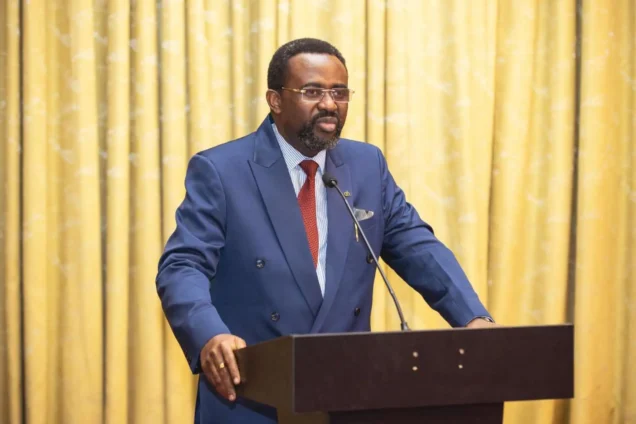
The Governor of the Bank of Ghana, Johnson Pandit Asiama, has disclosed that the central bank’s GH¢17 billion liquidity stabilisation measures in 2025 significantly contributed to a rapid decline in inflation, one of the steepest drops recorded in recent years.
Dr Asiama made the remarks on Monday while addressing the Parliamentary Committee on Economy and Development.
He explained that when he assumed office, inflation levels remained high and existing monetary conditions were not sufficiently tight to bring prices under control within a reasonable period.
According to the Governor, a major difficulty at the time was the presence of excess structural liquidity within the banking sector, which weakened the transmission of monetary policy decisions and allowed inflationary pressures to persist.
To address the problem, the central bank intensified its open market operations to absorb surplus liquidity from financial institutions.
He noted that such operations involve withdrawing excess funds from the banking system while paying interest on those funds to prevent too much money circulating in the economy.
“Liquidity management through open market operations is a core function of central banks around the world and is one of the primary tools used to ensure that monetary policy decisions are effectively transmitted through the financial system,” Dr Asiama said.
The Governor indicated that the policy actions have helped stabilise the economy and strengthen confidence in financial markets.
Inflation has dropped significantly from 23.8 per cent in December 2024 to 3.3 per cent in February 2026, representing one of the lowest inflation rates recorded in the country in recent times.
He added that the improvement has eased the pressure on household incomes, noting that lower inflation helps protect the purchasing power of Ghanaians by preventing wages from being eroded by rising prices.
Dr Asiama further revealed that the Ghanaian cedi has shown signs of stability, while interest rates have started to decline, creating more favourable borrowing conditions for businesses and households.
He also pointed to a strong improvement in the country’s external position, explaining that gross international reserves have risen to about 13.8 billion dollars, providing approximately 5.7 months of import cover.
Latest Stories
-
Sanitation Committee backs proposed National Sanitation Authority Bill
2 minutes -
Ashanti Regional Minister refutes claims of Mankranso classroom demolition
3 minutes -
‘Ghana Jollof’ case: Former classmates demand release of remanded nursing officer
6 minutes -
Dancer Rica reveals she nearly quit dancing to focus on school
16 minutes -
Two arrested over alleged CSSPS fraud after collecting up to GH¢22,000 for school placement
19 minutes -
At least 17 killed after vehicle loaded with explosives rams Pakistan mosque
38 minutes -
Doormaster supports COBAANA Medical Centre project to improve access to dialysis care in Bono Region
40 minutes -
Russian hybrid attacks against Europe intensifying, says Macron
40 minutes -
‘She is not a flight risk; even worst criminals get bail’ – GRNMA on detention of nurse in Ghana Jollof case
41 minutes -
Uber ordered to pay $40m to family of woman killed after driver left her on highway
48 minutes -
‘Ghana Jollof’ sent money to others to circulate false news – Police
1 hour -
Photos: Mahama commissions evacuation of Agbogbloshie waste to Nsawam landfill
1 hour -
From roadside deliveries to safe births: Dadetoklo gets lifeline CHPS compound after years of health struggle
1 hour -
NSA employment summit: Authority targets 70 private placement
2 hours -
43 suspects arraigned over killing of police officer at Gindabour
2 hours