

Audio By Carbonatix
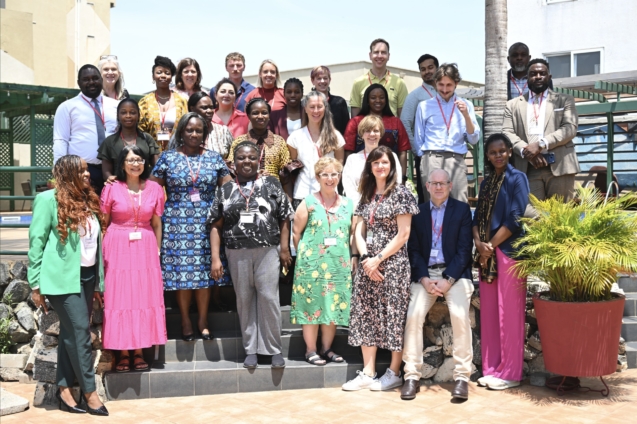
Forty clinical research partners from across Africa and Europe gathered in Accra this week for the SNIP-AFRICA General Assembly. This meeting focused on strengthening research and healthcare responses to severe neonatal infections, one of the leading causes of newborn deaths globally.
The two-day meeting brought together partners from 12 institutions involved in the Severe Neonatal Infection Adaptive Platform Trials in Africa (SNIP-AFRICA) project.
The project is a multi-country research initiative working to improve the prevention, diagnosis, and treatment of life-threatening blood infections in newborns. SNIP-AFRICA is funded by the European Union under Global Health EDCTP3.
The General Assembly provided a platform for project partners to review progress, share lessons from ongoing research activities, and coordinate the next phase of work aimed at improving newborn survival across Africa.
Discussions during the meeting focused on several key areas of the project, including strengthening clinical and microbiological surveillance systems, advancing adaptive clinical trial platforms, conducting studies to optimise drug dosing in newborns, and building research capacity among healthcare professionals across participating countries.
Partners also explored ways to ensure that the scientific evidence generated through the project informs health policies and clinical guidelines that improve care for newborns affected by severe infections.
Ghana’s Role in Capacity Building
Ghana plays an important leadership role in the SNIP-AFRICA consortium through the Kumasi Centre for Collaborative Research in Tropical Medicine (KCCR) at the Kwame Nkrumah University of Science and Technology (KNUST).
The Ghana team leads the project’s Training and Capacity Building Work Package, which focuses on strengthening the knowledge and skills of healthcare workers and researchers working in neonatal infection research across participating countries.
Professor John Amuasi, who leads the SNIP-AFRICA project in Ghana, explained that building the skills of healthcare professionals is critical to improving newborn survival.
“Capacity building is about increasing the knowledge and the skills of healthcare workers so that they can perform better at what they are expected to do,” he said.
“When nurses, doctors, pharmacists, and other healthcare workers better understand their role in managing neonatal sepsis and how their work connects with others in the health system, we can improve care and ultimately reduce the number of babies who become critically ill or die.”
As part of this effort, the project has developed training opportunities that combine established courses with digital learning platforms, allowing healthcare workers, researchers, and students across participating countries to access training while continuing their clinical and research duties.
Dr. Anthony Afum-Adjei Awuah, capacity building work package lead for the consortium, shared that high-quality courses had been curated and made accessible to members through an online learning platform.
He noted that participants are supported through mentorship, progress tracking and collaborative learning groups designed to mirror real-world healthcare environments.
Turning Evidence into Policy
One of the innovative aspects of the SNIP-AFRICA project is the development of adaptive clinical trials to evaluate treatments for neonatal infections. These trials allow researchers to adjust study designs as new evidence emerges, potentially accelerating the discovery of effective treatments.
However, translating findings from these innovative studies into global health guidelines can be complex.
Professor Julia Bielicki, Scientific Coordinator for the SNIP-AFRICA, noted that the consortium is working closely with international partners like the WHO to ensure that the evidence generated can inform policy and practice.
“Every research programme faces the challenge of ensuring that the evidence it generates creates real impact for patients,” she said.
“Our goal is to make sure the findings from SNIP-AFRICA ultimately reach policymakers and contribute to improving care for newborns.”
Beyond reviewing current activities, the General Assembly also focused on identifying sustainable structures that will allow the research networks and training systems developed through SNIP-AFRICA to continue supporting neonatal infection research beyond the life of the project.
By strengthening surveillance systems, building research capacity, and generating evidence to guide treatment and policy, SNIP-AFRICA aims to contribute to long-term improvements in newborn health across Africa.
Latest Stories
-
Today’s front pages: Wednesday, September 30, 2026
17 minutes -
Bawumia highlights agricultural, compulsory insurance reforms in IBAG engagement
18 minutes -
Ghana will secure Tullow tax revenues while protecting Jubilee, TEN investments – Ato Forson
27 minutes -
Ghana wins $393m Tullow tax arbitration as tribunal upholds GRA assessment
31 minutes -
Gender Minister assures women’s group of action on Affirmative Action, Development Bank
1 hour -
Over 2,000 teachers in Dormaa comply with strike – GNAT Secretary
1 hour -
Food Buffer Stock seeks stronger liquidity buffer despite record profit
2 hours -
LPG investments key to achieving 50% access target by 2030 – Energy Minister
2 hours -
Jinapor: New LPG terminal strengthens Ghana’s energy security
2 hours -
Agbodza directs road agencies to fast-track design approvals to prevent project delays
2 hours -
Housing Minister urges stakeholders to prioritise quality education in Banda District
2 hours -
Government redeems pledge to complete abandoned projects – Kofi Buah
2 hours -
Sam George calls for Black Stars disbandment, GFA dissolution after Gambia defeat
2 hours -
Bunkpurugu MP urges action to curb network disruptions in Northern Ghana
2 hours -
Education Minister calls for evidence-based response to learning crisis in West Africa
2 hours