

Audio By Carbonatix
A high-level technical exchange is currently underway at Imperial College London, marking a critical expansion of the UK-Ghana Science, Technology, and Innovation (STI) Strategy.
The initiative, supported by Ghana’s Ministry of Communication, Digital Technology and Innovations, focuses on a pivotal challenge in modern development: translating elite laboratory research into actionable public intelligence.
By moving beyond theoretical frameworks, the program emphasises the practical application of emerging technologies to address specific socio-economic challenges in West Africa.
Advancing Frontiers in Digital Health and Malaria Research
The core of the residency involves deep-dives into specialized research areas currently being pioneered at Imperial. Central to these sessions is the development of digital diagnostics, specifically designed for integration into African healthcare infrastructures. These innovations aim to provide rapid, high-accuracy medical testing in environments where traditional laboratory access may be limited.
Technical sessions are also focusing on:
Genomic Malaria Research: Analyzing the latest biotechnological interventions and the ethical frameworks required for their implementation.
Autonomous Energy Systems: Exploring the use of robotics and automated laboratory systems to accelerate the discovery of sustainable energy solutions.
Data Security: Addressing the urgent need for cybersecurity within healthcare systems to protect patient data in an increasingly digitised global landscape.
The Role of High-Impact Science Communication
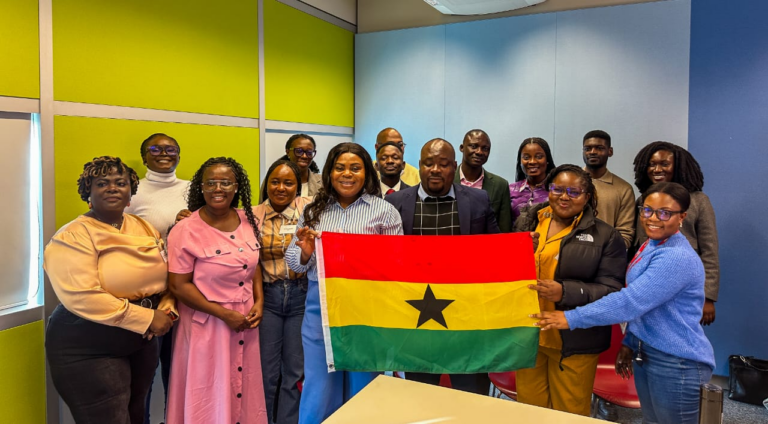
Recognizing that scientific advancement is limited by the public's ability to comprehend it, the program includes a specialized cohort of thirteen West African journalists. This group consisting of nine reporters from Ghana and four from Nigeria was selected through a competitive process focused on the societal relevance of their previous work.
These media professionals are undergoing intensive training in science storytelling and short-form video production. The objective is to equip them with the technical vocabulary and digital tools necessary to bridge the gap between complex academic findings and diverse public audiences.
"Responsible reporting on evolving scientific developments is as essential as the research itself," organisers noted during a session on health communication.
"Accuracy in these fields is a matter of public safety and national progress."
A Multilateral Framework for Innovation
This London-based phase is a collaborative effort involving the British High Commission in Accra, Kwame Nkrumah University of Science and Technology (KNUST), and the Ghana National Research Fund.
By aligning international academic expertise with regional media leadership, the program seeks to foster a more informed and resilient media landscape, ensuring that scientific innovation remains a central pillar of the national development agenda.
Latest Stories
-
Photos: Housing solutions take centre stage at Day 2 of the 3rd Republic Bank-JoyNews Habitat Fair
19 minutes -
Video: Immunity should be exercised without creating classism – Inusah Fuseini on cocaine bust
52 minutes -
Ghana Air Force passes out 293 recruits after six months of intensive training
60 minutes -
EOCO vrs Baffour Awuah: EOCO should have secured warrant before arrest attempt at court – Inusah Fuseini
1 hour -
Triple fibre cuts disrupt telecom services across Northern, Oti regions – Sam George
1 hour -
Politicisation could undermine parliamentary probe into cocaine seizures – Dr Osae-Kwapong
1 hour -
EOCO chases MP: Can Section 41 cure lacuna in EOCO Act? – Inusah Fuseini asks
1 hour -
GNFS, GWL inspect fire hydrants in Ministries enclave; 23 found faulty
1 hour -
Gov’t directs release of 50,000 bags of grain to ECOWAS
1 hour -
Ghana, Germany deepen cooperation on railways, labour mobility
1 hour -
Huge crowds greet Pope in Paris for open-air Mass
2 hours -
‘I never said I’ll declare a state of emergency’ – President Mahama on galamsey
2 hours -
Bobby Banson condemns EOCO’s attempted arrest of Nana Agyei Baffour Awuah
3 hours -
When Kumasi begins to look like somebody is in charge
3 hours -
Parliamentary probe into cocaine seizure would be a waste of time – Inusah Fuseini
3 hours