

Audio By Carbonatix
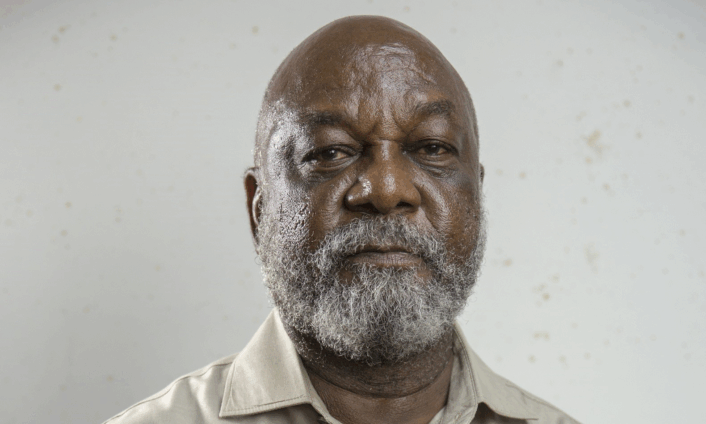
A former Executive Director of the Media Foundation for West Africa, Professor Kwame Karikari, has raised concerns about declining moral and ethical standards in Ghana’s Fourth Republic, saying leadership across key sectors has failed to uphold integrity and merit.
Speaking at the commemoration of World Press Freedom Day on Monday, May 4, 2026, Prof Karikari noted that ethical conduct in professions such as journalism cannot be separated from the broader moral climate of society.
According to him, professional ethics are shaped by the values demonstrated by leaders of major institutions.
“But ethics and the observance of ethics in any and every occupation take place in the general context and environment of prevailing moral standards as manifested in practice by leaderships of vital institutions in real society,” he said.
“It derives from the wider moral standards of the larger society. So if the larger society’s moral standards are of a certain level, the different professions, the different activities in the different sections may reflect that,” he added.
Reflecting on Ghana’s Fourth Republic, Prof Karikari argued that public life has increasingly been dominated by commercial interests and political opportunism.
“In our Fourth Republic Ghana, public life and public affairs suffocate under the weight of and are overwhelmed by crass commercialism, bankrupt political opportunism, which is distinguished in its disdain for merit, and backward social and cultural values,” he said.
He described what he sees as a worrying decline in leadership standards over the years.
“As far as I’m concerned, and I’ve lived in this country for well over seven decades, I’ve seen that in this Fourth Republic, the moral standards of people who are in leadership in all sectors, traditional or otherwise, have fallen very low,” he stated.
“We live in times when leadership at all levels and in all sections of society, traditional or otherwise, is reduced to banal supplication and prostitution before the god of illicit money,” he added.
Despite these concerns, Prof Karikari noted that Ghana continues to be recognised as a strong defender of freedom of expression and media freedom.
Turning to the media, he said, while the press cannot be absolved of lapses in professionalism, its challenges reflect broader societal issues.
“While not excusing the media of their waywardness, in a sense, it may be surmised that the tormented professionalism of the Ghanaian media is an affliction of the generalised bankruptcy in public life and affairs that frustrates the country’s democratic governance and stifles its social, economic and cultural progress and development,” he said.
Latest Stories
-
I haven’t experienced any envy in the gospel music industry — Ohemaa Mercy
39 minutes -
Prayer does not solve everything — Ohemaa Mercy
50 minutes -
New PURC office symbolises stronger consumer protection – Dr Jinapor
1 hour -
Rev. Wengam re-elected Assemblies of God, Ghana General Superintendent
1 hour -
Less than 20km of clearing left to connect Accra-Kumasi Expressway to Kumasi – Agbodza
2 hours -
US judge strikes down policy suspending immigrant visa processing for 75 nations
2 hours -
MCEs collecting fees from galamseyers are facilitating illegality – Ken Ashigbey
2 hours -
Developer LMI Holdings commits to completing first 700 Saglemi housing units
2 hours -
Africa’s next chapter will be built by institution-builders, not idea-havers
2 hours -
Wenchi Traditional Council suspends Twafohene indefinitely
3 hours -
Kpassa-Merimeri road undergoes filling and levelling works to improve accessibility
3 hours -
9 Blue Water Guards arrested over alleged bribery, impersonation
3 hours -
Wildlife guard shot dead during Kakum patrol
3 hours -
‘I reject them without qualification’ — Afenyo-Markin hits back over Sammy Gyamfi’s claims
4 hours -
GoldBod must appear before a parliamentary inquiry to answer for gold-trade losses — Appiagyei
4 hours