

Audio By Carbonatix
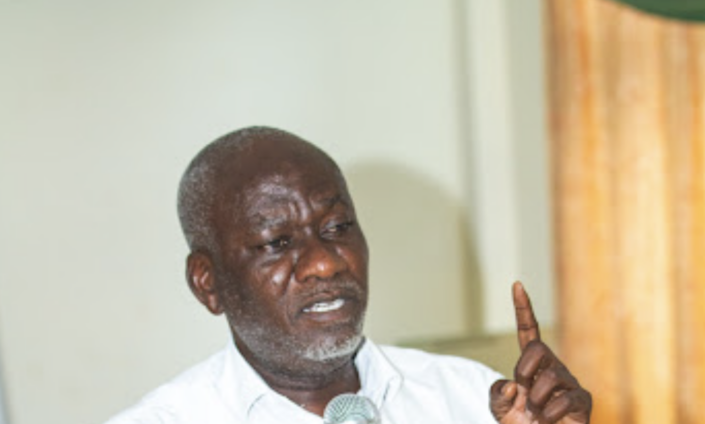
Jaladeen Abdulai, Upper East Regional Director, Commission on Human Rights and Administrative Justice (CHRAJ), cautioned journalists against irresponsible crime and court reporting, warning it undermines public trust in the justice system.
He added that such practices also threaten fair trial processes in Ghana’s judicial system courts.
According to him, inaccurate, sensationalised, and unverified reportage could distort public perception of justice, prejudice cases, and weaken confidence in the judiciary.
Mr Abdulai gave the caution during a court and crime reporting training organised by the Upper East Regional branch of the Ghana Journalists Association (GJA) in Bolgatanga.
The training formed part of activities to commemorate this year’s World Press Freedom Day under the theme, “Shaping a Future at Peace,” aimed at strengthening journalists’ capacity in ethical and rights-based reporting on crime and court issues.
He noted that while journalism plays a critical role in promoting transparency and accountability, failure to adhere to legal and ethical standards could result in serious human rights violations.
He stressed that responsible journalism was essential to maintaining confidence in the justice system, adding that poor reporting could discourage victims and witnesses from cooperating with law enforcement agencies.
“Irresponsible reporting destroys lives and erodes institutional trust. The media’s power to shape the perception of justice carries profound ethical responsibility,” Mr Abdulai said.
Mr Abdulai explained that crime and court reporting required accuracy, fairness, and respect for due process, stressing that journalists must avoid declaring suspects guilty before court rulings.
He emphasised that individuals arrested by the police remain suspects until proven guilty by a competent court of law, and cautioned against the misuse of terms such as “criminals” or “thieves” during ongoing investigations.
He advised journalists to instead use terms like “suspected,” “alleged,” and “accused,” among others, to avoid being cited for contempt of court.
He further warned that publishing unverified allegations as facts, revealing the identities of victims—especially minors and survivors of sexual violence—and invading privacy could lead to unfair trials, stigma, and psychological harm.
The Regional Director, who is also a legal practitioner, indicated that such practices could also expose media houses to legal liabilities, including defamation and contempt of court.
Mr Abdulai urged journalists to rely on credible sources, including court registrars, to obtain accurate information on proceedings rather than speculating or rushing to break news.
He encouraged reporters to familiarise themselves with legal processes and terminology to improve the quality of their reportage.
“Report only what is said in open court, verify your facts, and always apply the public interest test before publishing sensitive information,” he advised.
Mr Abdulai also called on media practitioners to adhere strictly to the GJA Code of Ethics and respect constitutional provisions on human rights, including the right to privacy, presumption of innocence, and fair hearing.
Justice Ernest Gemadzi, the Upper East Regional Supervising High Court Judge, noted that journalists are often described as the fourth arm of government, stressing their significant role in the country’s democratic dispensation.
As such, he said it was imperative for journalists to work together with the courts in the administration of justice and avoid actions that could lead to contempt of court or bring the judicial system into disrepute.
Mr Albert Sore, the Regional Chairman of the GJA, underscored the need for journalists to be well-versed in court proceedings and activities to enable accurate reporting and avoid challenges.
He encouraged journalists to visit the courts regularly, noting that they were full of interesting and public-interest stories, and urged them to report responsibly to inform the public effectively.
Latest Stories
-
Final day of Joy FM Back-to-School Fair: Come shop, save and prepare for the new school year
17 minutes -
GSE showed strong performance in August 2026 despite recording more stock losses
2 hours -
If CJ needs ethics law to know SOE comments were wrong, he may not be worthy of office – Arthur Kennedy
3 hours -
Stop touring state agencies and focus on the Judiciary’s problems – Arthur Kennedy to CJ
3 hours -
Apologise and don’t do it again – Arthur Kennedy to Chief Justice over SOE comments
3 hours -
Chief Justice remains committed to judicial independence, justice and equality – Judicial Service
4 hours -
Ghana concludes evacuation of citizens from South Africa; total returnees reach 1,900 – Ablakwa
4 hours -
Africa must define its own green transition path – Prof Fatima Denton
5 hours -
WASSCE 2026: English Language performance falls to 62.4% – WAEC
5 hours -
WASSCE 2026: Social Studies records sharp rebound as Maths, Science also improve
5 hours -
2026 WASSCE entry rises by 11% as 512,862 candidates sit exams
5 hours -
WASSCE 2026: English Language performance falls to 62.4% – WAEC
6 hours -
WAEC cancels 2026 WASSCE results of 8,295 candidates over examination irregularities
6 hours -
WAEC releases provisional 2026 WASSCE results for 512,862 candidates
6 hours -
CJ’s remarks on SOEs were made in good faith, not to undermine judicial independence – Judicial Service
9 hours