

Audio By Carbonatix
A catastrophic heatwave that scorched Western Europe in late June has left a trail of unprecedented loss of life in its wake, with France and Belgium reporting a combined toll of over 3,200 excess deaths.
As medical facilities and public services remain under extreme strain, government authorities across the continent are sounding the alarm that these initial figures are likely significant underestimates. This deadly surge in fatalities marks one of the most severe climate-driven health crises in the region's recent history, forcing a reckoning with infrastructure that is increasingly ill-equipped for the soaring temperatures now becoming a seasonal norm.
France confirms thousands of deaths
France has confirmed that 2,025 additional deaths occurred during the peak of a record-breaking heatwave in late June. Data from the Public Health France agency shows a 29 per cent surge in deaths between June 22 and June 28 compared to the prior week. The Paris region experienced a disproportionate impact, with deaths climbing by 62.8 per cent in the Île-de-France area. Health Minister Stéphanie Rist described the figures as a clear increase in deaths, particularly among individuals over the age of 45. Authorities have cautioned that these numbers represent an incomplete tally and likely constitute an underestimate, meaning the final impact will be higher.
Regional crisis and broader health impacts
The severity of this heatwave extended well beyond French borders. Belgium reported 1,222 excess deaths between June 18 and 29, marking a 39 per cent increase above typical levels. The Belgian health ministry stated, "Such a level of excess deaths during a heatwave is unprecedented in our country," noting that more than half of those fatalities involved individuals aged 85 or older.
Similarly, the Netherlands documented roughly 480 excess deaths, with the majority occurring in the south and east where temperatures soared near 40 degrees Celsius. In France, the physical toll included more than just heat-related health complications. Interior Minister Laurent Nuñez noted that 72 people had drowned since June 18 while attempting to find relief from the scorching temperatures. Marina Ferrari, the youth and sports minister, later updated this figure to “more than 90” deaths since June 19, noting the clear correlation between rising temperatures and people seeking water-based relief.
Environmental pressures and infrastructure strain
The extreme weather has placed significant stress on vital infrastructure across the continent. High temperatures forced the Paks nuclear power plant in Hungary to reduce output because the Danube River, used for cooling, became too warm. Rivers across Europe have seen depleted flow, impacting power generation and agriculture. Italy faces a dire situation as the low flow of the Po River has allowed seawater to intrude 18 kilometres inland.
Furthermore, France is confronting severe wildfire risks. Prime Minister Sebastien Lecornu reported nearly 7,000 fires since the season began, resulting in 8,700 hectares burned. Thousands were forced to evacuate in the town of Sainte-Marie-la-Mer as flames spread, prompting red alerts for forest fires in the southern regions. Storms also caused power outages, leaving 36,000 households in northern and central France without electricity. Interior Minister Laurent Nuñez noted that three blazes near Marseille alone scorched 1,210 hectares.
Political tension and climate change
The political fallout from the crisis has been immediate. Some politicians have criticised the government’s response to rising temperatures, leading the Greens to file a no-confidence motion against the government of Sebastien Lecornu.
Scientists emphasise that this pattern of extreme heat is no longer an anomaly. According to the Copernicus climate service, Europe is warming twice as fast as the global average, establishing it as the fastest-warming continent. World Health Organisation Director-General Tedros Adhanom Ghebreyesus highlighted the gravity of the situation on the X platform, stating, "Right now 150 million people are living under extreme heat, hundreds have died, schools are shut, grids are buckling."
He further remarked, "Driven by climate change and global warming, the phenomenon of the 'once-in-a-generation' heatwave is now occurring nearly annually. We were warned." Research suggests that such intense heat would have been virtually impossible without human-induced climate change.
Public desperation and infrastructure limitations
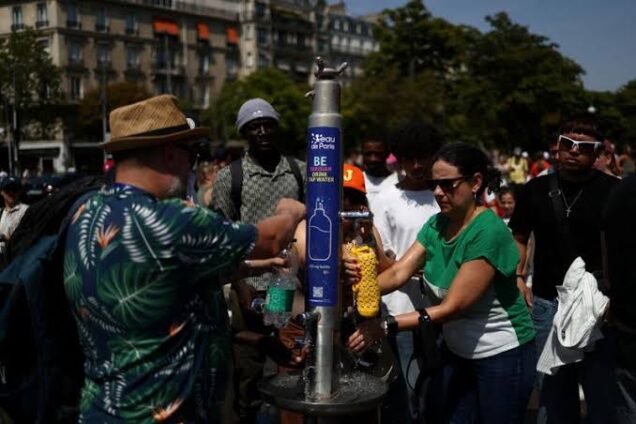
The return of heat to the Paris region triggered chaotic scenes as residents struggled to find cooling solutions. In northern Paris, hundreds besieged Lidl supermarkets to purchase bargain air-cooling units for €179. With most air conditioning retailing for over €1,200, the desperate demand led to scuffles and required police intervention at multiple locations. This scramble underscores a systemic vulnerability; due to historically mild summers, few French homes and schools are equipped with air conditioning.
The medical emergency service SOS-Mébreins reported that call-outs for heatstroke and dehydration soared by 480% and 315% respectively, while hospitalisations for those over 75 increased by 19%. The service also recorded an 85% increase in deaths among people aged over 75 during the last two weeks of June.
Assessing historical context and future vulnerability
While the current figures are alarming, French officials are comparing them to the historic 2003 heatwave that claimed roughly 15,000 lives. Health Minister Stéphanie Rist noted that the current situation will "probably not be comparable" to the 2003 disaster. Nicolas Revel, head of Paris hospitals, echoed this, stating he did not expect the death toll to match 2003 "because we’ve made a lot of progress in many areas." However, he expects the final count to exceed the 5,700 deaths recorded during a heatwave last year.
Forecast for an ongoing crisis
Meteorologists are now warning that Spain and France may face another heatwave with temperatures reaching 44C. Aemet, the Spanish state meteorological agency, noted that a mass of dry, hot air is expected to bring persistently high temperatures starting this weekend. Rubén del Campo, an Aemet spokesperson, warned, "Temperatures will begin to rise over the weekend, and we can’t rule out another heatwave." Spanish health data indicated 1,029 excess deaths in June alone. Minister Rist warned that the health consequences can linger long after the initial heat subsides, stating, "The episode is not finished."
The recurrence of these intense weather events underscores a deepening challenge for European infrastructure and public health policy, forcing governments to reconcile immediate disaster management with long-term climate adaptation strategies.
Latest Stories
-
Education Minister engages university administrators over ongoing strike
41 minutes -
Technological convergence, disruptive innovation and the future of youth education in Ghana
1 hour -
When the sirens become a national anthem: confronting Ghana’s road accident crisis
2 hours -
Aksa bribery scandal exposes deeper failures in Ghana’s procurement system – Manhyia South MP
2 hours -
Luv FM High School Debate: KNUST, St. Louis strike gold as quarter-finals dreams come alive
2 hours -
Banks’ pre-tax profit jumps 40% to GH¢23bn
2 hours -
Luv FM High School Debate: Anticipation builds as schools battle for supremacy in Round of 16
3 hours -
Banking sector deposits jump 25% to GH¢334.3bn in 2025 — PwC
3 hours -
Hostel Owners Association bares teeth over legality of rent control campaign against exorbitant fees
3 hours -
GCB overtakes Ecobank as Ghana’s largest deposit-taking bank
3 hours -
Young Cocoa Farmers petition Mahama over funding, producer price and start date for new cocoa season
3 hours -
Ruha Benjamin challenges Africa to shape its own AI future
3 hours -
Trump threatens to bomb US ally Oman if it ‘gets in the way’ over Iran deal
3 hours -
FIFA sacks senior executive who criticised Infantino, Sky News understands
3 hours -
Aksa saga: Don’t turn EOCO-OSP roles into turf war – Deputy AG
4 hours