

Audio By Carbonatix
Buying a used car has always been about trust.
As a buyer, you’re convincing yourself that the money you’re parting with is going towards a vehicle that will reliably serve your needs today and still hold enough value to be sold tomorrow. The seller, on the other hand, has the equally important task of convincing you that the car is worth every cedi you’re paying.
That relationship of trust has never been more important than it is today.
Modern vehicles are rolling computers packed with sophisticated electronics, sensors and advanced safety systems. Gone are the days when a quick look under the bonnet and a short test drive were enough to tell you everything you needed to know. Today’s car market is no place for “Wofa Kwasi”, the well-meaning family mechanic who learned the trade by watching his master decades ago. Experience still matters, but experience alone is no longer enough.
Today’s inspections require modern tools. A quality diagnostic scanner can uncover hidden electronic faults, but even that only tells part of the story. To truly understand what you’re buying, you also need to know where the vehicle has been. That’s where a Vehicle Identification Number (VIN), or chassis number, history check becomes invaluable. It can reveal accident records, previous ownership, mileage inconsistencies, title status and, in many cases, photos from insurance or salvage auctions.
Unfortunately, there is another side of the used car business that every buyer should understand: the world of salvage scams.
The importance of understanding a vehicle’s history becomes even clearer when you consider the scale of the salvage industry. In North America alone, it is a multi-billion-dollar business, with the global online salvage auction market valued at around US$10 billion and expected to grow significantly over the next decade. Every year, millions of insurance write-offs are bought, repaired, dismantled or exported around the world. Ghana is one of the destinations for many of these vehicles. While a large number are rebuilt professionally and provide years of dependable service, others arrive with hidden histories that buyers are never told about. That is why VIN history checks are no longer a luxury; they are an essential part of buying a used vehicle in today’s Ghanaian market.
What Is a Salvage Vehicle?
A salvage vehicle is one that has been declared a total loss by an insurance company. This could be because of a serious accident, flood damage, fire damage or theft recovery. Contrary to popular belief, not every salvage car is beyond repair. Many are rebuilt professionally and safely.
The problem begins when dishonest individuals try to hide a vehicle’s past in order to sell it for far more than it is worth.
Here are some of the most common scams buyers should watch out for.
1. Title Washing
This is one of the most deceptive tricks in the industry. A vehicle that has been branded as a salvage write-off is moved through jurisdictions with different registration rules until it eventually receives paperwork that no longer clearly reflects its damaged history.
To the unsuspecting buyer, it appears to have a clean record.
2. Cosmetic Repairs That Hide Serious Damage
Fresh paint can hide a multitude of sins.
Some vehicles receive little more than cosmetic repairs. Damaged body panels are filled with body filler, bent structural components are left untouched, and rust is covered rather than repaired. The car looks immaculate at the carport but may no longer protect occupants the way its engineers intended.
3. Airbag Fraud
Perhaps the most dangerous scam of all.
After a collision, deployed airbags should be replaced with genuine components. Instead, some dishonest repairers fit fake airbags, install empty airbag covers or use electronic resistors to switch off the warning light.
Everything appears normal until another accident occurs.
4. Flood-Damaged Vehicles
Vehicles damaged by floods are often cleaned thoroughly, fitted with new carpets and upholstery, and polished until they look factory fresh.
The real problems often appear months later as corrosion spreads through wiring looms and electronic modules begin to fail.
5. Odometer Tampering
Mileage still plays a major role in determining a vehicle’s value.
Unscrupulous sellers sometimes reduce the displayed mileage electronically, making a heavily used vehicle appear far younger than it really is. This is more prevalent on the market than you think.
6. VIN Cloning
A damaged vehicle may be given the identity of another legitimate car by copying its VIN.
Once that happens, even some vehicle history searches can become misleading if the wrong VIN is checked.
7. Hiding Auction History
Many imported vehicles pass through insurance salvage auctions before arriving on our shores.
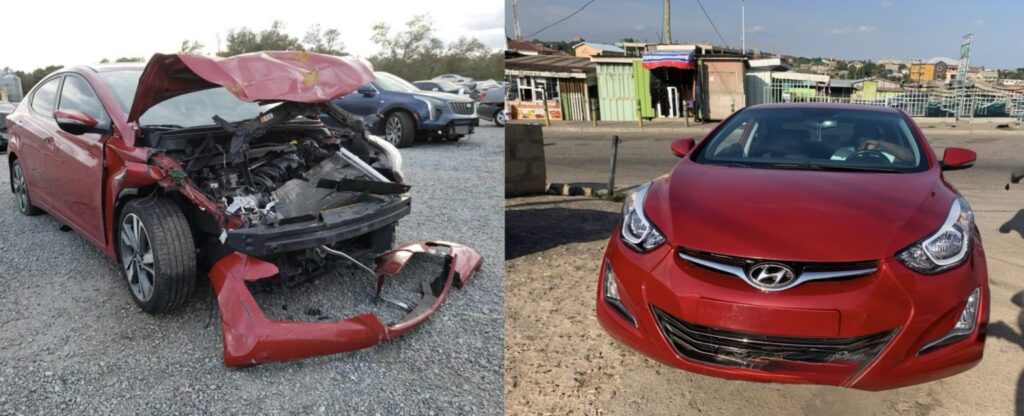
The original auction photographs may show extensive front-end damage, deployed airbags or severe side impacts. Yet the vehicle is later advertised using only glossy “after repair” photos, leaving buyers unaware of its true condition.
8. Fake Inspection Certificates
Some sellers present forged or misleading inspection reports to reassure buyers that the vehicle has been professionally repaired.
Always verify any documentation independently where possible.
9. “Minor Accident” Claims
One of the oldest sales lines in the book is:
“It was just a small bumper repair.”
A proper VIN history report may reveal that the same vehicle was once declared a total loss with extensive structural damage and multiple airbags deployed.
Knowledge Is Your Best Protection
None of this means you should avoid buying an imported or previously repaired vehicle. Many rebuilt cars provide years of reliable service when repairs have been carried out correctly and disclosed honestly.
The problem isn’t the repair.
The problem is deception.
Before committing your hard-earned money, invest in three things:
- A trusted independent mechanic familiar with modern vehicles.
- A professional diagnostic scan using quality equipment.
- A comprehensive VIN history report from a reputable provider.
That small investment could save you thousands in unexpected repairs, or even protect your life.
In today’s used car market, trust should never be based solely on a handshake or a freshly polished body. It should be backed by evidence.
Because when buying a car, what you don’t know can cost you far more than the purchase price.
Latest Stories
-
Klopp wants to ‘reclaim’ flag amid German elections
21 minutes -
FA chair demands Infantino release World Cup sell-off documents
32 minutes -
Bournemouth on to win at Sociedad on European bow
42 minutes -
U.S. Trade and Development Agency, C-Squared Africa sign deal to expand affordable digital connectivity in Ghana
51 minutes -
We have at least 6 weeks of fuel cover – NPA boss calms supply fears
1 hour -
Fiji declares HIV a national emergency as cases surge
1 hour -
Michelin-starred Seoul restaurant fined for using ants as garnish
2 hours -
No politics behind fuel export reduction to Sahel – BOSTenergies
2 hours -
BOST clarifies fuel export cut to Burkina Faso, Mali – Says no imminent shortage in Ghana
2 hours -
New iPhones, new features: Is it time to upgrade?
3 hours -
German Development Cooperation, KOA partner to turn cashew apples into jobs, incomes and investment
3 hours -
Scaling Enterprise AI across Africa: From technology to real-world impact
3 hours -
Fibre Broadband isn’t complicated: You’re just overthinking it
3 hours -
Arrest all officials who handled cocaine-linked container – Nitiwul
3 hours -
DTI inaugurates Academic Council, Industry Advisory Committees to strengthen TVET delivery
3 hours