

Audio By Carbonatix
Every year on August 12, the world pauses to recognise the energy, creativity and potential of young people through International Youth Day. It is an opportunity to draw attention to the barriers young people face, celebrate the solutions they are already creating, and remind governments, businesses and development partners that young people must be active participants in shaping the future.
The 2026 observance comes under the theme “Different Contexts, Common Aspirations.” The message is particularly relevant to Africa, a continent where young people live in vastly different economic and social circumstances but share many of the same hopes: decent work, quality education, a meaningful voice in decisions that affect their lives, and the opportunity to build secure and sustainable futures. The United Nations says the theme recognises that young people may face different realities depending on where they live, but their aspirations are remarkably similar. Those aspirations, however, are colliding with a stubborn employment challenge.
A continent young enough to work, but struggling to find work
Africa has the youngest population in the world. More than 60 per cent of people in sub-Saharan Africa are under 25, while the continent's population continues to expand rapidly. This creates enormous potential — but also an urgent economic question: where will the jobs and businesses come from to absorb the millions of young Africans entering the labour market?
The Food and Agriculture Organisation (FAO) estimates that Africa needs to create more than 10 million decent jobs every year by 2035 to keep pace with its growing young workforce. At the same time, around one in four young Africans is not employed, in education, or in training. This is where Africa's food systems present a compelling opportunity.
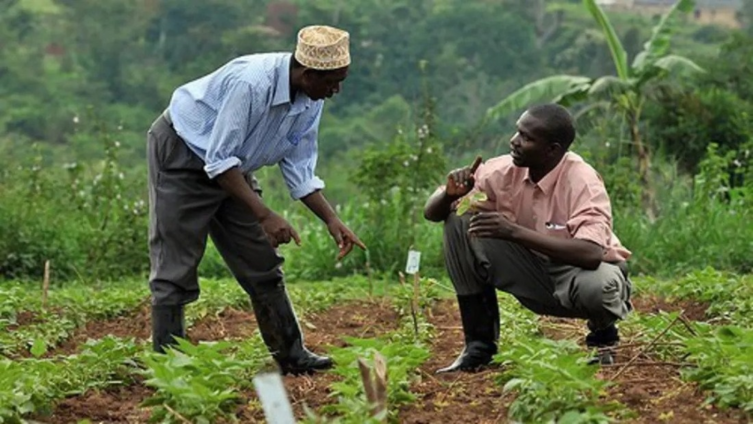
For many young Africans, the word “agriculture” can conjure images of subsistence farming, hard physical labour and limited financial returns. But the modern food system is far broader than farming. It stretches from seeds, soil, irrigation and production to logistics, storage, processing, packaging, marketing, finance, technology, retail, restaurants, waste management and export.
It includes digital platforms connecting farmers to buyers, businesses developing climate-smart technologies, entrepreneurs turning agricultural waste into new products, and innovators using data and artificial intelligence to improve productivity. That wider ecosystem could offer young people multiple entry points into the economy.
That shift in perspective matters. A young person with a technology background, for example, could develop a digital platform that helps farmers access markets. Another option is to build a cold-chain business to reduce food losses. A designer could create attractive packaging for locally processed foods. An engineer could develop affordable irrigation or renewable-energy solutions. A business graduate could build a company connecting smallholder farmers to institutional buyers. The possibilities are as diverse as the food system itself.
From aspiration to enterprise
This is precisely why International Youth Day's emphasis on youth innovation is important. Across the continent, young entrepreneurs are already developing businesses that address food insecurity, climate change, market inefficiencies, and consumer demand. The question is whether the wider ecosystem will give those ideas the capital, mentorship, skills, markets and networks required to grow.
That conversation will be particularly relevant when the Africa Food Systems Forum 2026 gets underway in Kigali, Rwanda, from September 1–4. Organised by AGRA, the 20th edition of the Forum will bring together more than 5,000 stakeholders from over 50 countries under the theme “Investing in Africa's Agri-Food Systems: Nourishing Nations, Growing Jobs, Building Resilience.”
The timing could hardly be more appropriate. Coming only weeks after International Youth Day, the Forum offers an opportunity to translate the language of youth empowerment into practical economic opportunities. Its programme includes a specific focus on youth and digital innovation, alongside investment and finance, food security and nutrition, climate resilience, and trade and markets.
A room where connections can become businesses
For a young African entrepreneur, the value of such a gathering may extend well beyond what happens on the main stage. A food-systems summit brings together people who ordinarily operate in different worlds: policymakers, investors, scientists, development organisations, established companies, farmers, technology innovators and young entrepreneurs.
For a young person trying to turn an idea into a viable business, that network can be invaluable. A conversation with an investor can lead to financing. A meeting with another entrepreneur can produce a partnership. A discussion with a researcher can improve a product. A connection with a large food company can open a route to market. A conversation with a policymaker can reveal an emerging opportunity or help shape regulations.
In that sense, the Africa Food Systems Forum can be viewed as a marketplace of ideas, relationships and possibilities. The Forum's Deal Room is explicitly designed to help participants forge partnerships, attract investment and close deals. Its youth-focused programming is also intended to connect young people with resources, mentorship, innovation platforms and networking opportunities.
If International Youth Day is a reminder of young people's shared aspirations, then the Africa Food Systems Forum can become one of the places where some of those aspirations begin to take shape — through connections, investment, innovation and enterprise.
Latest Stories
-
NDC Deputy National Organizer Aspirant Hamza Umar targets grassroots mobilisation
35 seconds -
Gordon scores as Barcelona beats Galatasaray
3 hours -
Bumble bought for $1.3bn in ‘bet on the future of humanity’
3 hours -
Imagination Africa, Mentors Chess Academy to host second African Genius Chess Championship at Ghud Park
3 hours -
Paradigm Initiative steps up calls over digital rights, internet freedom in Africa
3 hours -
Saudi man charged with planting ‘sophisticated’ recording device in OpenAI office
3 hours -
Ghana wins UN Human Rights Council seat as calls grow for action against atrocities
4 hours -
Royal Mail losing 400 postal workers a week, says union
4 hours -
Techiman South MP ends decades of water struggle in Asutia
4 hours -
Three things we’ve learnt about the UK economy from the IMF
4 hours -
Nana B passport claims a diversionary tactic — Abu Jinapor
4 hours -
Pope Leo diagnosed with cancer as doctors remove lobe of lung, Vatican says
4 hours -
Legal Aid Commission takes free legal services to Techiman main lorry terminal
4 hours -
Nana B denies seeking passport favour, accuses Ablakwa of failing to account for GH¢16.4m
4 hours -
Young girls demand climate action, stronger protection against child marriage
5 hours