

Audio By Carbonatix
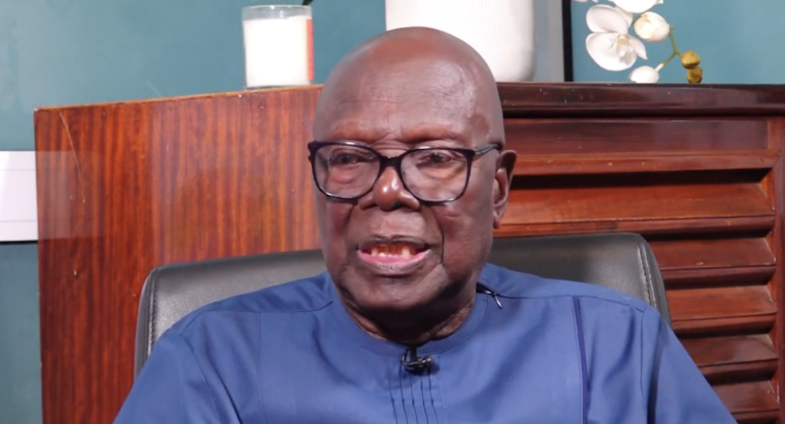
Economist and Board Chairman of MTN Ghana, Dr Ishmael Yamson, has challenged the government to ensure Ghana’s current economic stability lasts for at least a decade.
He says investors need long-term certainty before committing significant capital to the country.
Speaking on Joy News’ PM Express on Tuesday, Dr Yamson said Ghana’s history of economic cycles has made investors sceptical about whether the current gains can last.
“They’ve seen the history. They know what it is. We go up, we come down. We take three years to build, and we take another five years to destroy.”
He said this history makes it difficult for investors to believe that the current stability is sustainable.
“But if you ask me, I would say it is different this time.” Dr Yamson commended the government for the progress made over the past 18 months.
“First of all, let me congratulate this government for what it has achieved in 18 months. We haven’t achieved that level of economic stability before.”
“It’s just dramatic, and it is worth commending them that they have had to, because if you recall where we came from, being where we are today can only be commended.”
However, he said the real test is whether the government can build the resilience needed to protect the gains from future economic shocks.
“You won’t get sustainability unless you build resilience.”
According to Dr Yamson, previous governments often focused on short-term measures to stabilise the economy without creating the structures needed to sustain those gains.
“Most of literally all our governments in the past did what they could do in the short term to stabilize the economy. Didn’t go the next step to ensure that they create the pillars that will hold the economy into the longer period.”
He cited the government’s Gold for Reserves programme as one initiative that could strengthen Ghana’s economic resilience, although he acknowledged that it carries risks.
“I know that everybody is saying this is ambitious, but the Gold for Reserves program, it has its risks. There’s no doubt about that.”
But he said achieving 15 months of reserve cover by 2028 would provide a stronger foundation for economic stability.
“If they achieve the 15-month cover by 2028, then I am very confident that we can sustain it, because that is the resilience you would have built to allow you to sustain the macro stability you are experiencing today.”
Dr Yamson also pointed to long-term investment in agriculture as another way of addressing structural weaknesses in the economy.
He said Ghana’s persistent food inflation showed the limitations of previous interventions.
“If you look at our inflation basket, the biggest problem has always been food. We spent millions of money on Planting for Food and Jobs, right? And yet, food inflation never responded.”
He said investing in 250,000 hectares for oil palm plantations, including for food production, could address the problem over the long term.
“You are resolving a very fundamental issue on a long-term basis.” For Dr Yamson, controlling expenditure alone is not enough.
“You can suppress expenditure now to bring stability, but you need to create pillars for resilience that allow you.”
He believes the government must successfully implement its long-term resilience initiatives if Ghana is to change its economic history.
“If this government commits itself and actually sees through all the resilience initiatives that they have started, then I have no doubt.”
But he stressed that Ghana must convince investors that its stability will survive political cycles.
“I believe that unless we can demonstrate to investors that we can maintain stability for a minimum of 10 years, we will go nowhere.”
Dr Yamson said serious investors make decisions based on decades, not electoral cycles.
“Nobody builds a factory for five years. No one builds a factory for 10 years.”
“Unilever was commissioned just after Nkrumah was overthrown. It’s still there. How many years now?”
He said investors establishing factories or plantations are thinking decades ahead.
“So, we need to create that mindset that our stability should not be four years. Should be five years. They are talking about giving governments a five-year term of office.”
For Dr Yamson, breaking Ghana’s boom-bust cycle will therefore require a shift from short-term economic stabilisation to building resilience that can survive successive governments.
Latest Stories
-
Tamale Metropolitan Assembly distributes 10,000 bags of fertiliser to farmers
5 minutes -
TUSAAG suspends strike, resumes work after renewed talks with government
9 minutes -
PIAC marks 15 years of oil revenue accountability and transparency
16 minutes -
Adongo calls for non-political interference in $1.46bn Heritage Fund review
21 minutes -
FDA records GH¢70m surplus in 2025 amid concerns over ageing lab equipment
23 minutes -
Arise Ghana demands stronger commitment to end galamsey
25 minutes -
96% of Ghanaian pensioners willing to work beyond retirement age – Study
28 minutes -
Ghana gets nuclear power plant simulator
34 minutes -
Temporary Akosombo power control facility to be ready by September – Energy Ministry
35 minutes -
GMTF, Atlantic Lifesciences explore local production of cancer and heart medicines
39 minutes -
GHS medical-legal claims hit GH¢400m in three years
45 minutes -
Mahama cautions Ghanaians not to take religious freedom for granted
1 hour -
We need development pathway, not selection exercise – Sports Minister urges football stakeholders
1 hour -
Government prioritises foundational learning to improve education outcomes
1 hour -
Ghana, Côte d’Ivoire deepen maritime security cooperation through joint boundary inspection
1 hour