

Audio By Carbonatix
Former Unilever Ghana boss Dr Ishmael Yamson, has criticised the current state of state-owned enterprises (SOEs), arguing that they have become tools for political interests rather than serving their intended economic purpose.
The Board Chairman of MTN Ghana speaking on Joy News’ PM Express Business Edition last Thursday, lamented the decline of Ghana’s industrial sector since the overthrow of Dr. Kwame Nkrumah.
“We were very proud to be Ghanaians after independence,” the economist recalled.
“Anytime I walked into Unilever House in London, every African identified as Ghanaian, and the British assumed every African was from Ghana. We were very proud of ourselves.”
He noted that after political independence, Nkrumah set the country on a path toward economic independence, but this vision crumbled when he was removed from power.
Dr. Yamson recounted Ghana’s industrial vibrancy in the 1960s, particularly in Tema, where factories were thriving.
“I worked at UAC, and Unilever’s factory was next to the Ghana Publishing Company in Tema. Everywhere in Tema, factories were running. You could hear industrialisation taking place,” he said.
He credited Nkrumah for setting up nearly 400 vertically integrated manufacturing companies, ensuring that raw materials were readily available for local production.
“My first Volkswagen, the tires were made by the Bonsa Tyre Factory,” he said. “There was a rubber plantation feeding the factory to produce tires for cars. What else did we want at that time?”
However, he blamed the decline of Ghana’s industrial sector on the intervention of Bretton Woods institutions and the military government, which led to the closure of many factories.
“They forced the military government to shut down a whole lot of these factories,” he said.
Reflecting on his tenure as Chairman of Unilever, Dr. Yamson recalled that over 370 companies were earmarked for divestiture.
While he acknowledged that divestiture itself was not a flawed idea, he criticized its execution.
“Nkrumah himself lamented that state-owned enterprises, meant to fuel industrialisation and growth, were making losses. He knew something was wrong with government managing all these factories. So bringing in the private sector wasn’t a bad idea,” he explained.
“But we didn’t act judiciously. How many of those companies are left today? Most of them collapsed.”
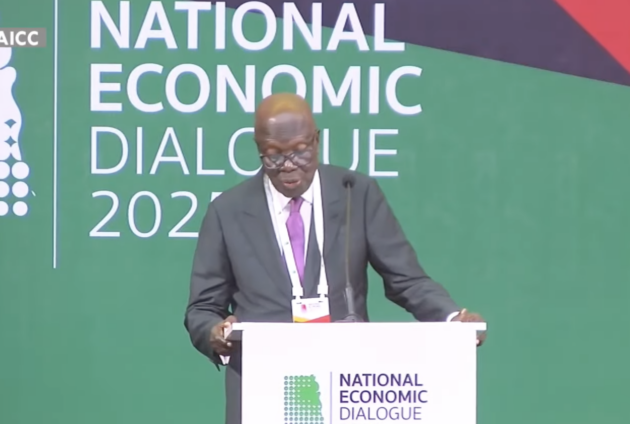
Dr Yamson cited a recent presentation by the Finance Minister at the National Economic Dialogue, which revealed that only two SOEs were profitable, while the rest were making losses.
“Why? Because they are there to sell political interest, not the purpose for which they were established,” he stressed.
He also criticised Ghana’s repeated reliance on the International Monetary Fund (IMF).
“How can a country in 68 years go to the IMF 17 times for a bailout? And let us pray we don’t go for an 18th time,” he said.
Despite these challenges, Dr. Yamson remains hopeful that Ghana can reset its economy.
“Like the British say, the situation is difficult, but it’s not hopeless. I still have hope that if we follow the reset agenda, as we have all diagnosed and made proposals, we shouldn’t have to go for the 18th bailout,” he concluded.
Latest Stories
-
Conflicts among care providers linked to maternal, neonatal deaths – Expert
36 minutes -
GIS marks 10th TIME conference, champions improved teaching practices
43 minutes -
BRICS Or Balance? What Ghana’s bid really means
1 hour -
GPRTU wants full TRAFFITECH-GH implementation to start in 2027
1 hour -
Mahama announces plans to import electric wheelchairs for PWDs
2 hours -
KGL U17 Colts 2026: Western beat Prempeh Elite Academy to set up final final with Greater Accra Region
2 hours -
Late Solanke strike salvages 10-man Spurs draw at Man United
2 hours -
Gender Ministry to monitor welfare of Nana Akua Addo’s children amid domestic violence case
2 hours -
Benedict Okyere Yeboah: Ghana’s football problem goes beyond sacking a coach
2 hours -
GPL 2026/27: Darkwah Wiafe’s winner sees All Blacks beat Kotoko
2 hours -
ITF World Tour : Patel Wins Boys’ Singles Final at J100 Accra
3 hours -
Ghana must pursue BRICS partnership if it brings economic benefits – Kpebu
3 hours -
Success and Wright Claims J100 Accra Girls’ Doubles Championship
3 hours -
ITF J100: America’s Wright wins J100 Accra Girls’ Singles Title
3 hours -
Expedition hopes to find aviator Amelia Earhart’s plane on remote island
3 hours