

Audio By Carbonatix
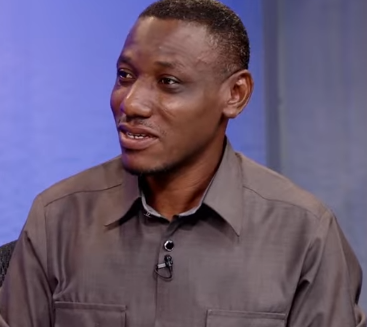
A Senior Lecturer at the University of Ghana Business School (UGBS), Dr Jabir Ibrahim Mohammed, has said Chief Justice Paul Baffoe-Bonnie may have spoken the truth about the performance of some state institutions, but did so in the wrong place.
Speaking on the JoyNews AM Show on Friday, September 4, Dr Mohammed said the issue should be examined by asking whether the Chief Justice has the right to speak his mind, whether, as a statesman, he had the audacity to make such a statement, and whether he was speaking the truth.
He further questioned whether the opposition’s call for the Chief Justice’s resignation was justifiable, stressing that answers to these questions would help determine whether the Chief Justice had acted appropriately.
His comments follow remarks by the Chief Justice during a visit to MIIF on Wednesday, September 2, where he praised the performance of the fund and other state institutions under the current administration.
The Chief Justice had earlier visited SSNIT, where he said he was also impressed by what he had been told about the institution’s performance.
Comparing the situation to previous plans to dispose of some SSNIT assets, including Labadi Beach Hotel, the Chief Justice said: “If you compare that to the fact that not too long ago, SSNIT was preparing to sell its prized assets like Labadi Beach Hotel, you wonder how Ghana could have sunk so low.”
The comments have since generated political controversy, with the New Patriotic Party (NPP) calling on the Chief Justice to resign and join the National Democratic Congress (NDC), accusing him of engaging in political commentary.
Dr Mohammed said that, from the perspective of the Chief Justice’s position as a statesman, he could have made his observations without attaching them to any political party.
‘He could have avoided political tagging’
According to Dr Mohammed, the Chief Justice could have made his observations without linking them, directly or indirectly, to political considerations.
“On the face value of being a statesman, I don't think making that statement—he could have made a statement devoid of tagging it to any political party,” he said.
He argued that doing so would have helped prevent the comments from being interpreted as political.
Dr Mohammed acknowledged that the issues raised by the Chief Justice concerning SSNIT were based on facts that had previously been discussed publicly.
“We all know very well that SSNIT properties like La Palme, Royal Beach, Labadi, and others were at the verge of being given out,” he said.
According to him, public opposition played an important role in preventing those plans from going ahead.
“It took well-meaning Ghanaians to demonstrate and to send a signal that they don't want it to be sold, before the decision was reverted,” he added.
Questions over SSNIT’s current performance
Dr Mohammed, however, said the discussion should not end with the issue of the proposed sale of SSNIT assets.
He questioned whether SSNIT is currently performing as well as has been suggested and whether the hotels that were previously considered for disposal are themselves now performing strongly.
“Now, what is the position of SSNIT currently? Is SSNIT really doing very well as a state-owned enterprise? Or these hotels that were not doing sold, are they really doing very well?” he asked.
He said those are the questions that should form part of the national discussion.
For Dr Mohammed, therefore, the Chief Justice’s comments were not necessarily wrong in terms of the facts he cited.
“For him to have made that statement, he spoke the truth at the wrong place,” he said, arguing that the Chief Justice was not the appropriate person to make such a comment.
Dr Mohammed questioned why the Chief Justice chose a visit to MIIF as the setting to discuss the performance and previous asset-related issues of SSNIT.
‘Why bring SSNIT issues to MIIF?’he questioned.
He stressed that MIIF and SSNIT are separate state institutions with different mandates. “The Minerals Investment Fund is different from SSNIT,” he said.
He therefore questioned whether commenting on the performance of state-owned enterprises formed part of the Chief Justice’s official responsibilities.
“And indeed, is it his role to have gone there to make that statement?” he asked. “As Chief Justice, was he being sent there? Or does he also have the role to go around and check the performance of these state-owned enterprises?”
Dr Mohammed maintained that the Chief Justice’s primary responsibility is to preside over the judiciary and make decisions on cases before the courts.
“These are not his role. His role is to be at the courts and take decisions regarding our criminal cases and our other related activities,” he said.
He acknowledged that, as a statesman, the Chief Justice could visit public institutions, but argued that such visits should not lead to comments that could be interpreted as political.
“As a statesman, he can have a visit there, but he's not supposed to make such statements,” Dr Mohammed said.
“Such statements are distasteful. And somebody of that nature should not be making such statements.”
Concern over public confidence in judiciary
Dr Mohammed also raised concerns about how comments of that nature could affect public perceptions of the judiciary.
He said the Chief Justice is expected to be a justice for everyone, regardless of political affiliation.
“I have already mentioned that the facts are there. These are facts that he has spoken. But he is the wrong person to have spoken the facts,” he said.
“Because as a Chief Justice, you are a justice for everybody.”
According to him, statements perceived as favouring one side of the political divide could have implications for public confidence in judicial decisions.
Dr Mohammed suggested that such perceptions could become particularly problematic when politically sensitive cases come before the courts.
Dr Mohammed rejects resignation demand
Despite his criticism of the Chief Justice’s comments, Dr Mohammed disagreed with the suggestion that the remarks alone should constitute grounds for his removal or resignation.
When asked whether the comments amounted to grounds for resignation, Dr Mohammed questioned the process by which a Chief Justice is required to resign.
He noted that the Constitution provides a laid-down procedure for removing a Chief Justice from office and that such a process has been seen in Ghana’s past.
However, he stressed that the Chief Justice’s comments should not, in his view, be considered sufficient justification for invoking such a process.
Calls for retraction
Rather than demanding the Chief Justice’s resignation, Dr Mohammed suggested that he could retract the comments.
He said the Chief Justice could acknowledge that although the substance of what he said was factual, the decision to make the statement in that particular setting was inappropriate.
For Dr Mohammed, the central issue is therefore not necessarily whether the Chief Justice spoke the truth, but whether someone occupying such a sensitive constitutional position should have made those observations at a visit to another state institution.
Latest Stories
-
No truth in GH¢70k ‘gift’ claims involving Appiagyei, the memo is fake – Deputy Minority Whip
58 seconds -
10-year-old pupil drowns while swimming with friends at Tetekope beach
8 minutes -
NAFCO warns public against fraudsters posing as agents for school food contracts
11 minutes -
Nearly 55,000 unplaced BECE candidates can turn to private SHSs – CHOPSS
18 minutes -
Woman suffers severe ear injury after alleged attack by landlord’s wife at Fufuo
22 minutes -
GPRTU proposes 30% increase in transport fares
27 minutes -
Tanzania announces friendly with Black Stars in September international window
27 minutes -
Ghana’s music industry faces piracy crisis as artists struggle to monetise hits – Bright Dwomoh
30 minutes -
Ghana Mining Industry Awards nominations rise by 31.4%
32 minutes -
OSP investigates alleged GH¢70,000 payment linked to Patricia Appiagyei and parliamentary vetting
33 minutes -
GoldBod withdraws bid for 3-acre Parks and Gardens land at Cantonments
35 minutes -
Second gas plant could ease pressure on electricity tariffs – Ghana Gas
42 minutes -
GFA, FIFA hold commercial strategy workshop for women’s football
43 minutes -
CDD-Ghana calls on Chief Justice to avoid partisan political commentary
55 minutes -
Ghana could save $500m a year by switching from liquid fuels to gas – Energy Advisor
58 minutes