

Audio By Carbonatix
I have been watching the memes and social media reaction to the Dangote IPO with a great deal of amusement — and interest.
Profile pictures captioned "Partners of Dangote."
People watching Dangote trucks on the road to make sure the drivers are behaving properly. People deliberately buying the company's products because, after all, "this is now our company."
Others joking about checking whether employees are working hard, or turning up at Annual General Meetings dressed up, proud and ready to ask questions.
One viral would-be shareholder, after seeing a Dangote tanker he was unhappy with, declared: "Dangote, we need a board meeting."
Dangote himself has joked that his "partners" are calling him for a board meeting.
Some of these memes are genuinely funny. I love the energy. But underneath the humour, I see something important happening.
People Are Taking Ownership Personally
And I like it. There is something powerful about people moving from being passive consumers of businesses to becoming owners of them.
Their stake in the Dangote IPO may be small, but their pride is not.
The Dangote Refinery offer has deliberately been positioned as an "IPO for the People." At ₦525 (approx. USD0.50) per share, with a minimum investment of just 10 shares (₦5,250/USD5), the barriers to participation have been kept remarkably low. The offer is aiming to reach around 10 million investors, from market traders and drivers to pension funds, and is being described as the largest retail share offer in African history.
The offer is still open, but the soon-to-be new “partners of Dangote” see this clearly. They are already thinking like owners. They expect a return on their investment, and the moment you own even a small part of a company, your relationship with it changes.
The truck you see on the road is no longer simply a Dangote truck. The company's profits are no longer just numbers in the newspaper. The dividend matters. The share price matters. Governance matters.
You have skin in the game.
"This company belongs partly to me, therefore I care about what happens to it."
Perhaps this is exactly the kind of ownership culture Africa needs.
If I own it, I care about it. If I care about it, I watch it. If I watch it, I ask questions. And when enough shareholders begin asking questions, something else happens: Accountability.
Capital Markets Are Also About Accountability
We often think about IPOs primarily as capital-raising events. But public markets do something deeper. They introduce scrutiny.
Public companies have shareholders to answer to. Investors expect financial information, explanations of performance, good governance, and boards that protect shareholder interests. They want to know what is happening to their money. This relationship between ownership, disclosure and accountability is one of the most essential functions of a developed capital market. It is why the response to this IPO matters beyond Dangote.
We may be watching a new generation of Africans discovering that the stock market is not a distant institution reserved for banks, pension funds and wealthy people. It can also mean owning part of the businesses that shape your everyday life.
Imagine If Africans Owned More of Africa
Imagine millions of Africans owning shares in the businesses whose products and services they consume every day: the banks where we keep our money, the telecommunications companies whose networks we use, the energy companies powering our economies, the food businesses feeding our families, the manufacturers producing the goods we buy, and the infrastructure and technology companies building Africa's future.
Something changes when people stop seeing successful African businesses as belonging to "some rich person" or "some big company" and begin to say: "I own a piece of that."
That is more than financial inclusion. It is economic participation.
From Consumers to Owners
Someone said something to me recently that stayed with me:
"If I have the choice between owning a tiny fraction of Tesla and owning 200 shares in an African company I know, whose products I use and whose growth I can see around me, I am beginning to think differently about where I want my money to be."
This is not an argument against investing globally. Diversification remains important. But we need to become much more intentional about owning Africa.
Africans are significant consumers of African businesses. Perhaps we should ask a different question: how much of what we consume do we own?
We should not only aspire to work for successful African companies or consume their products. We should increasingly aspire to own them. Imagine if more ordinary Africans began saying: "I use this company. I understand this business. I believe in its future. I want to own part of it."
That changes things. It also makes investing less abstract. For many people, investing feels complicated and inaccessible, and the language itself can be intimidating. But suddenly you see a business you know being offered to the public and you realise: “hold on, I can actually own some of this and make money!”.
That first investment may be small, but these small moves can make a very big difference to our capital markets. One new investor becomes ten. Ten become thousands. People begin reading company results, following dividends, understanding returns and asking questions. Financial literacy grows because people now have skin in the game, and accountability grows with it.
Imagine, for example, if citizens directly owned meaningful stakes in the utilities and infrastructure businesses they use every day. The conversation changes when poor performance affects not only a service you consume but also an asset you own. You start asking: Why are people not paying? Why is the company losing money? Where is the leakage? What is management doing about it?
Ownership makes things personal. When people care, they pay attention, and that scrutiny can make companies better. Better companies create better returns. Better returns encourage more people to invest. More investment provides capital for companies to grow.
This is where I believe the bigger opportunity lies. Imagine the cycle:
African savings finance African businesses.
African businesses grow.
African shareholders participate in that growth.
Wealth is created.
That wealth is reinvested into the next generation of African businesses.
Increasingly, the wealth created by African growth stays within African households and institutions. That is the cycle we need to build, and that is how capital markets contribute to economic development.
Africa needs enormous amounts of capital to build its businesses, industries and infrastructure. That capital cannot come only from governments, development institutions and foreign investors. Increasingly, it must also come from African savings, African pension funds and African investors. When Africans participate in the ownership of successful African businesses, the returns from Africa's growth also accrue to African investors.
Don’t Just Own: Learn and Understand
Of course, buying shares is not the same as supporting a football club. Investors still need to understand risk, valuation, diversification, and the fact that companies do not always perform well. They need to read the prospectus and understand what they are buying.
But that is also part of the beauty of what is happening.
People are learning. People are asking questions. People who may never have considered buying shares are suddenly talking about IPOs, dividends, returns and AGMs.
Retail participation without financial literacy can become speculation. Retail participation combined with financial literacy can become wealth creation.
So yes, I am enjoying the Dangote jokes. Watch the trucks. Read the accounts. Calculate your returns. Attend the AGM.
Africa does not have to develop its investment culture in the same way as everyone else. If our version begins with humour from ordinary people proudly saying, "I am a partner," that may be a very good place to start.
Because ownership creates interest. Interest creates scrutiny. Scrutiny encourages accountability. Investment builds financial literacy. And productive assets create wealth.
This is bigger than an IPO. We are watching the emergence of a new African ownership culture.
It is time for Africans not only to consume Africa's growth, but to own it.
I like that very much.
It is time for Africa.
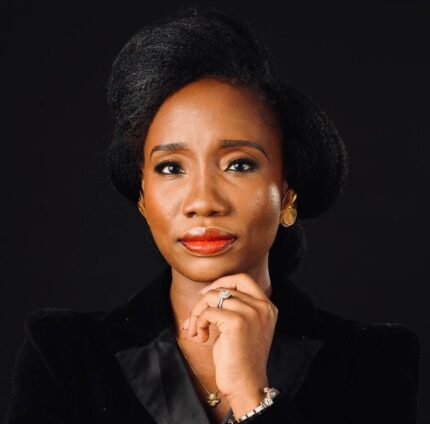
The author, Cecilia Hesse, is Managing Director of Temple Investments Limited and a seasoned investment banker with more than 25 years of experience across Ghana, Sub-Saharan Africa and Europe. Her career spans capital markets, investment banking and advisory, with a particular interest in mobilising capital for African businesses and deepening participation in Africa’s financial markets.
Latest Stories
-
Black Stars: Seven years of decline while hashtagging love
19 minutes -
Today’s front pages: Thursday, October 1, 2026
20 minutes -
Gov’t to suspend GH¢1 D-Levy on diesel for October and November
53 minutes -
Fire destroys belongings in Akweteyman apartment
1 hour -
Baffour Awuah to turn himself in to EOCO today – JoyNews sources
1 hour -
Government identifies payment discrepancy holding up teachers’ strike resolution
2 hours -
BoG signals no FX intermediation for October as GoldBod plans $1bn support for banks
2 hours -
When share ownership becomes personal: The African mindset of the Dangote IPO
2 hours -
Why MFWA Legal Fund matters to Ghana’s democracy
2 hours -
Fuel prices to rise from October 1; diesel could hit GH¢19.60 – COMAC
2 hours -
Parliament must investigate how 3.9 tonnes of cocaine left Ghana undetected – Samuel Jinapor
2 hours -
Government pledges to pay striking teachers as payment dispute is resolved
2 hours -
Government cannot investigate drug exports under its own watch – Abu Jinapor
2 hours -
Government extends GH¢2 diesel subsidy for two more months
2 hours -
GTEC flags over 100 tertiary institutions as unrecognised
2 hours