

Audio By Carbonatix
Senior Specialist for Institutional Capacity Strengthening at AGRA, Lilian Githinji, says there is a need for enhanced support for young Africans pioneering innovations in Africa’s food systems.
Speaking at an event in Accra that graduated the fourth cohort of The Centre for African Leaders in Agriculture (CALA), an AGRA-led initiative, she noted: “Many of the most exciting solutions in agriculture today are coming from young Africans”.
“Our responsibility is to equip them and support them with the partnerships that enable implementation,” said Madam Githinji, who is also CALA Lead.
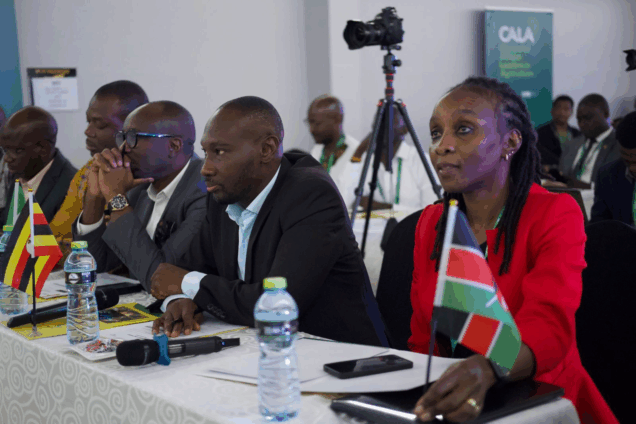
The ceremony to graduate the fourth cohort of senior leaders by AGRA and its implementing partner, African Management Institute, brought together young leaders from eight African countries.
Madam Githinji highlighted a growing recognition that youth are not only innovators, but system-shapers. With Africa’s food economy projected to exceed $1 trillion by 2030, youth leadership is now essential to achieving continental transformation at scale.
CALA is Africa’s premier collaborative leadership programme for food systems transformation. It works to strengthen the leadership capacity of senior and emerging leaders across governments, the private sector, and civil society.
Through its Advanced Leadership Programme and Alumni platform, CALA aims to create a network of resilient, collaborative, accountable leaders delivering lasting impact across the continent’s food systems.
A defining feature of Cohort 4 is its marked increase in young leaders under 35, reflecting on CALA’s strategic commitment to strengthening youth participation and leadership across Africa’s food systems.
Throughout the programme, Cohort 4 participants led youth-focused initiatives in the reduction of post-harvest losses, food processing, youth and women inclusion, digital extension, policy influence and food systems resilience, demonstrating CALA’s role in strengthening leadership that delivers tangible, systemic results.
The event brought together government officials, private sector actors, farmer organisations, development partners, financial institutions, and youth leaders to mark a milestone in advancing leadership excellence and systemic collaboration across Africa’s food systems.
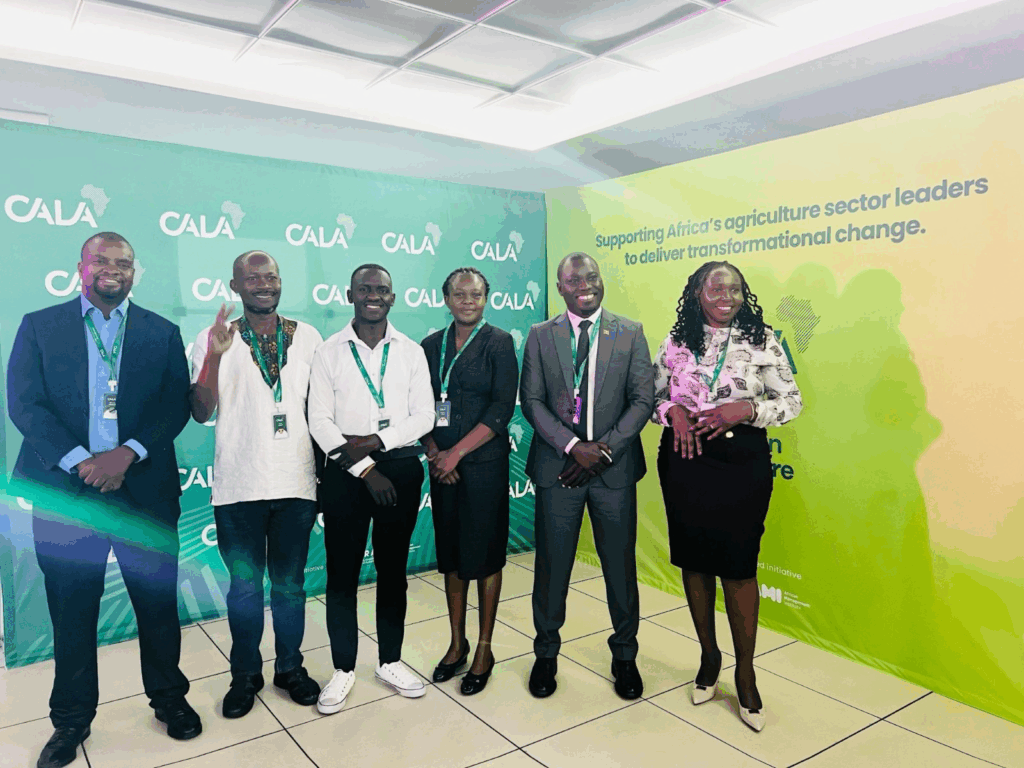
This year’s cohort, drawn from ministries of agriculture, agribusinesses, civil society, farmer organisations, and development agencies, represented 8 countries across East, West, and Southern Africa.
Collectively, these leaders have completed CALA's 16-month-long Advanced Leadership Programme, culminating in Action Learning Projects (ALPs) aligned to national flagship programmes.
ALPs serve as practical, results-focused initiatives through which delegates apply collaboration, accountability, and adaptive leadership skills to deliver tangible systems-level change across value chains.
At the core of CALA’s approach is a belief that tools alone do not deliver transformation. Leaders, institutions, and collaborations do.
The Advanced Leadership Programme blends practical learning, coaching, peer-exchange, institutional accountability, and cross-sector collaboration, creating a system in which African leaders can shift behaviours, redesign structures, and execute bold commitments to achieve national and regional food security goals.
Delegates implement ALPs aligned with national agricultural priorities and core institutional mandates, working in cross-functional teams drawn from the public, private, and civil society sectors.
This collaborative approach ensures that solutions are embedded within systems, not individuals, strengthening the collective leadership required for lasting, systemic change.
During the graduation ceremony, CALA formally announced the extension of the Advanced Leadership Programme into four Francophone countries (Togo, Senegal, Mali & Burkina Faso) in early 2026. countries in early 2026.
This expansion signals the continental demand for collaborative leadership capability, CALA’s commitment to inclusivity, and the growing recognition that Africa’s food transformation requires cross-regional and cross-lingual leadership alignment.
CALA continues to champion the belief that collaborative leadership is the single most catalytic driver for progress in Africa’s food systems, especially in countries facing climate shocks, market disruptions, and demographic pressure.
Africa stands at a critical crossroads. The solutions exist, but scaling them requires leaders who can mobilise institutions, align agendas, and build trust across systems.
Cohort 4 demonstrates that transformation is already happening when African leaders are empowered to drive it.
Latest Stories
-
I assure Otumfuo, Mahama will join him to commission KNUST Teaching Hospital by end of this year – Haruna Iddrisu
13 minutes -
Gov’t to roll out free special education for persons with disabilities from July 1 – Education Minister
35 minutes -
“We used it to test our officiating officials’ readiness” – Bawah Fuseini after CAA Athletics event
1 hour -
Volleyball emerges as Ghana’s fastest rising sport
1 hour -
National Sports Fund needs strong leadership from the top – Administrator David Wuaku
1 hour -
JoySports Exclusive: Steve McLaren in talks with GFA after expressing interest in Black Stars job
2 hours -
Fire guts auto parts warehouse at Bubuashie, one fire officer injured
2 hours -
I owe my victory to coach Ofori Asare – Allotey after winning WBA Africa Gold Super Flyweight belt
2 hours -
Church of Pentecost supports over 2,000 BECE candidates in Obuasi with career guidance seminar
3 hours -
Brandon Asante and Coventry all but promoted to Premier League despite Sheffield Wednesday draw
4 hours -
GPL 2025/26: Late Kwartemaa strike downs Hearts in Tema
4 hours -
Ghana Faces Sierra Leone Moment as Prosecutorial Powers come under strain
4 hours -
Don’t consume fish or seafood from Tema Shipyard until further notice – FDA warns
4 hours -
Why volunteering might be Africa’s most underrated career accelerator
4 hours -
ActionAid Ghana raises concern over gender gaps in Feed Ghana Programme
4 hours