

Audio By Carbonatix
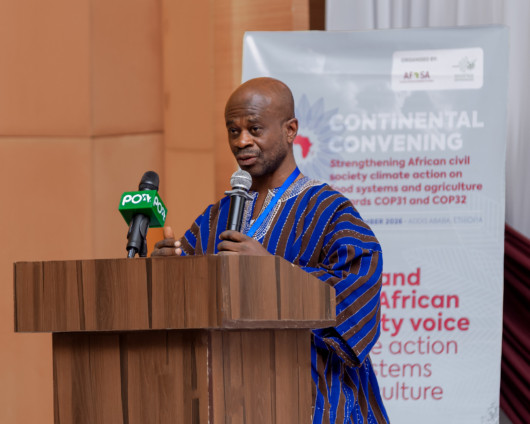
As Africa prepares for two critical years of global climate diplomacy, the Chair of the African Group of Negotiators on Climate Change (AGN), Nana Dr. Antwi-Boasiako Amoah, has issued a powerful call to align international climate negotiations with the daily realities of African communities.
Speaking in Addis Ababa at a continental convening of civil society organizations, Dr. Amoah urged African leaders and global partners to integrate agriculture and food systems into the core of climate policy, declaring that the continent must reject a "false choice" between feeding its people and protecting the planet.
"Africa must reject a false choice between food security and climate action," Dr. Amoah told an audience of farmers, pastoralists, policymakers, and civil society representatives. "We need both. Our task is to build food systems that are productive, resilient, inclusive and increasingly low-emission, while protecting development and avoiding unfair burdens on small producers."
The convening arrives at a pivotal moment, with the United Nations Climate Change Conference (COP31) in Antalya, Türkiye, just over two months away, followed by the hosting of COP32 in Addis Ababa in late 2027.
Dr. Amoah emphasized that hosting the global summit on African soil is not enough to guarantee a favorable outcome for the continent's population.
"A COP held in Africa does not automatically deliver for Africa," Dr. Amoah warned. "It must be shaped by African priorities, evidence and solutions, and it must improve lives beyond the conference halls. Food systems are one of the clearest places where climate policy meets daily life."
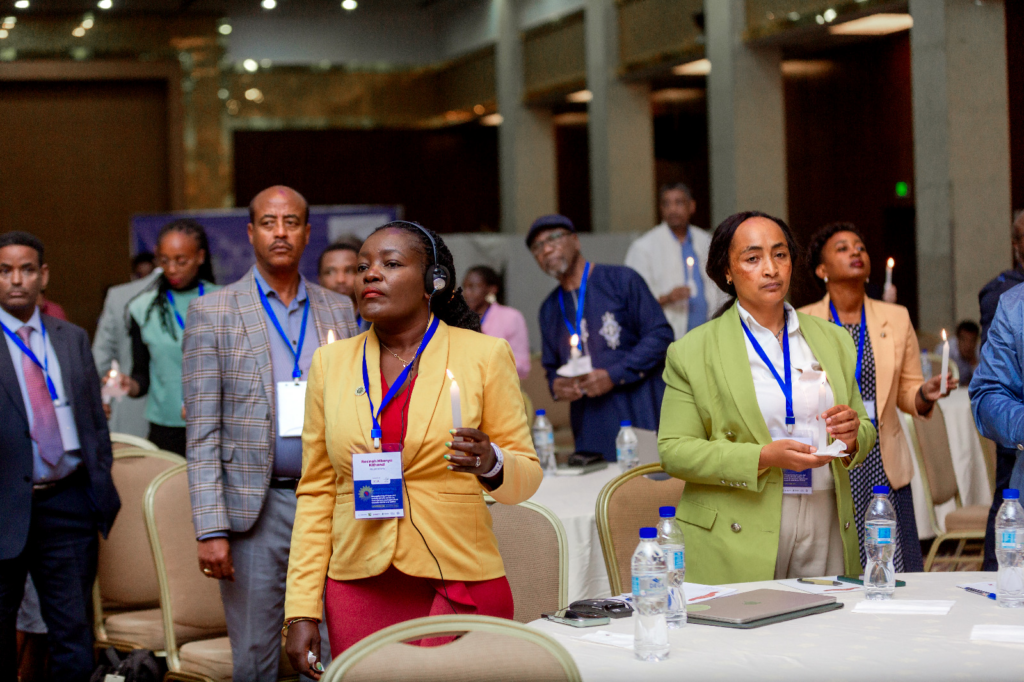
According to the AGN Chair, the transition from COP30 in Belém to COP32 in Addis Ababa represents a vital shift from "rules and promises to delivery on the ground."
He highlighted four critical "gaps" currently undermining global climate policy: the gaps between climate ambition and real-world implementation; between adaptation needs and available funding; between promised finance and direct access; and between global rules and the daily struggles of frontline communities.
Climate Adaptation: A Non-Negotiable Priority
For Africa, Dr. Amoah stressed, adapting to climate shocks is a matter of immediate survival and must remain the continent's "central, non-negotiable priority." [9] While global mitigation efforts determine the future severity of the climate crisis, adaptation determines whether African families and economies can survive the crises already happening.
To illustrate these high stakes, Dr. Amoah grounded his speech in the practical experiences of ordinary Africans. He pointed to Ghana, where unpredictable rainfall patterns leave farmers unable to trust traditional seasons, resulting in lost seeds, wasted investments, and heavy debt.
"For that farmer, adaptation is not an abstract policy category," Dr. Amoah observed. "It is reliable climate information, the right seed, access to water, extension support and finance at the right time. That is what our negotiations must ultimately deliver."
He also spoke of the Sahel and the Horn of Africa, where drying water points force pastoralists to travel further for grazing land, turning climate challenges into localized resource competition and community tensions.
He further highlighted that climate shocks on farms quickly ripple into urban areas, impacting market women who face spoiled produce due to extreme heat and rising supply costs.
"A climate shock on a farm can therefore become a nutrition and cost-of-living problem in a city," Dr. Amoah explained. "That is why food systems must not sit at the margins of climate negotiations. They are where climate change enters the household."
Addressing the Massive Climate Finance Gap
At the heart of Africa’s climate vulnerability is a staggering deficit in adaptation funding. Dr. Amoah noted that developing nations are projected to require between USD 310 billion and USD 365 billion annually for adaptation by 2035. In stark contrast, international public adaptation finance from developed to developing countries stood at just USD 26 billion in 2023.
The AGN Chair criticized not only the size of the finance gap but also the excessive bureaucracy that prevents existing funds from reaching local actors, such as smallholders, youth enterprises, and women's cooperatives.
He shared the example of coastal fishers who need early-warning systems and better cold storage but are shut out by overly complex funding applications.
"We cannot call finance accessible if the people who need it most cannot reach it," Dr. Amoah asserted, calling for shorter, simpler, and less costly funding pipelines from global funds to local villages.
Seven Priorities for COP31 and the Vision for COP32
Looking ahead, Dr. Amoah outlined seven immediate priorities for the African continent at COP31 in Antalya to lay the groundwork for COP32:
- Protect balance by ensuring adaptation receives the same political attention as emissions mitigation.
- Turn the Global Goal on Adaptation (GGA) into funded action, keeping food security, water, and livelihoods highly visible.
- Secure a meaningful outcome on agriculture through the Sharm el-Sheikh joint work program.
- Deliver climate finance at scale, turning the target of USD 300 billion annually in public finance by 2035 into credible delivery.
- Ensure a 'just transition' that protects small producers, local value addition, and agricultural development space.
- Strengthen action on loss and damage with an easily accessible, well-resourced response fund.
- Defend fair cooperation and secure robust, meaningful participation for civil society, women, and Indigenous groups.
For COP32 in Addis Ababa, Dr. Amoah's vision includes a concrete "adaptation delivery package," direct finance access for local actors, and a transparent accountability system to track promises and public reporting. "The journey from COP30 to COP32 must be a journey from measurement to means, and from commitments to visible results," he stated.
Dr. Amoah closed by challenging African civil society organizations (CSOs) to unite and produce a clear roadmap with precise policy demands, an "African evidence package" of community case studies, and a strong plan for public accountability.
He emphasized that the AGN is strongest when backed by coordinated, evidence-based CSOs.
He reminded negotiators and advocates of the human lives behind the policy jargon: "When we sit in climate negotiations, we speak a language of NDCs, NAPs, adaptation indicators, finance mechanisms and COP decisions. These things matter.
But I often remind myself of something very simple: the farmer waiting for rain does not experience climate change as an acronym. The woman who loses her produce because a road has been washed away does not call it an implementation gap.
The pastoralist searching for water does not call it the Global Goal on Adaptation. And the family facing higher food prices does not call it a food-systems negotiation.
They simply experience the consequences. Our responsibility is to make sure that what happens in the negotiating rooms eventually changes what happens on the farm, in the market, in the fishing community and around the family table."
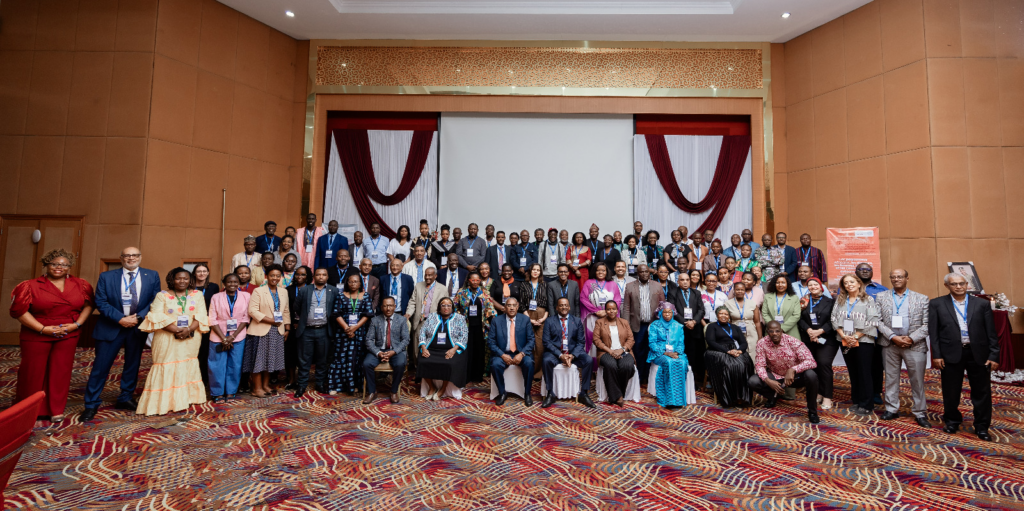
The three-day convening in Addis Ababa will continue through September 9, as civil society networks work to finalize their unified policy positions ahead of the upcoming negotiations.
Latest Stories
-
New York Times executive fatally shot allegedly by elderly in-laws
37 minutes -
Teacher Payment Crisis: GES races to protect academic calendar
46 minutes -
US prosecutors reopen case of alleged gang rape at Cornell University
1 hour -
Journalist to be crowned king in Uganda after bitter succession dispute
1 hour -
OpenAI scraps rollout of new model over safety concerns
1 hour -
Nigerian attempts to break world record by dancing non-stop for seven days
2 hours -
GES urges government agencies to end blame game over teacher payments
3 hours -
GES sets Oct. 5 deadline to resolve teachers’ payment dispute
4 hours -
GES working around the clock to get teachers back to class, says Daniel Fenyi
4 hours -
French PM warns against escalation of school protests after 164 arrested
4 hours -
UK tries to stop Trump’s diesel export ban
5 hours -
Late Olise goal gives France win over Belgium
5 hours -
Mancini enjoys first win since return as Italy boss
5 hours -
Interest payments to average a high 20% of government revenue over next 4 years
5 hours -
Anthropic warns AI may pose ‘existential risks to humanity’ in IPO filing
5 hours