

Audio By Carbonatix
On a routine Ethiopian Airlines flight from Accra to Addis Ababa, a unique Ramadan drama unfolded high above Africa, highlighting the challenges Muslims face when fasting while crossing time zones. What began as a spiritual journey for many passengers turned into a lesson in astronomy, geography, and Islamic jurisprudence—all at 30,000 feet.
The Journey Begins
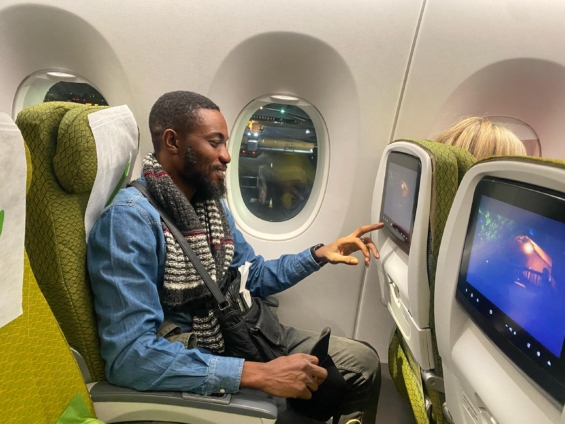
On March 22, 2025, together with 9 other colleague journalists, we boarded Ethiopian Airlines ET920 at Kotoka International Airport, en route to London via Addis Ababa. The flight, carrying a mix of Umrah pilgrims and travelers, departed Ghana at 12:20 PM GMT. For Muslims observing Ramadan, the plan was straightforward: break the fast at 6:20 PM GMT, as they would in Ghana. But the skies had other ideas.
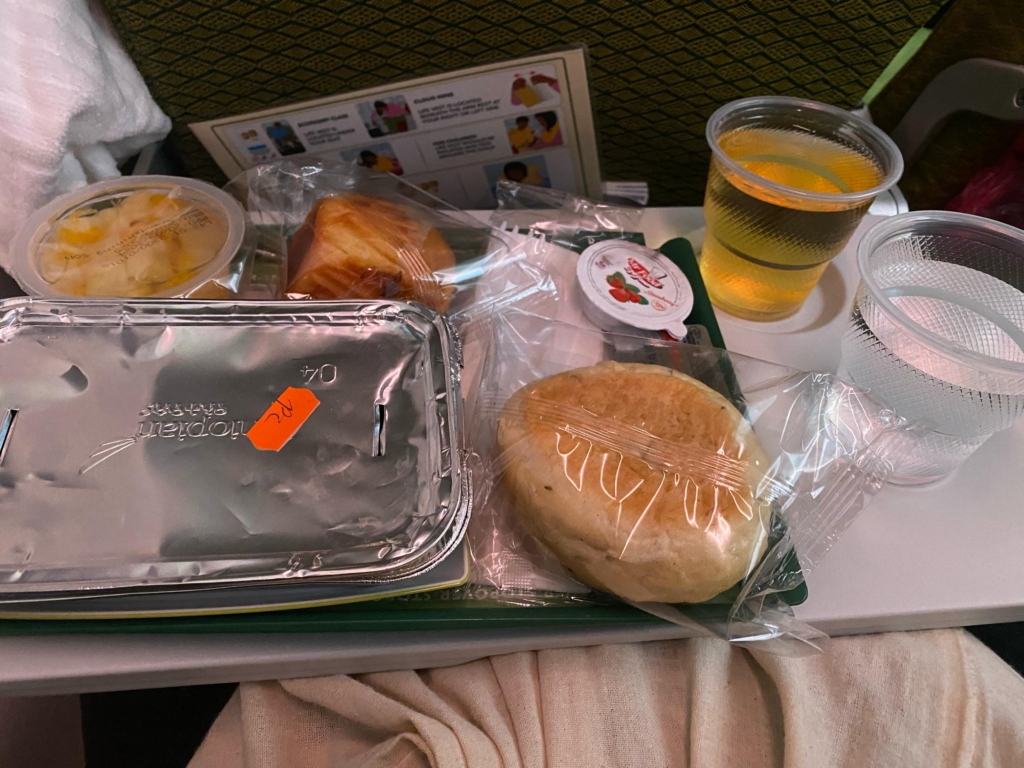
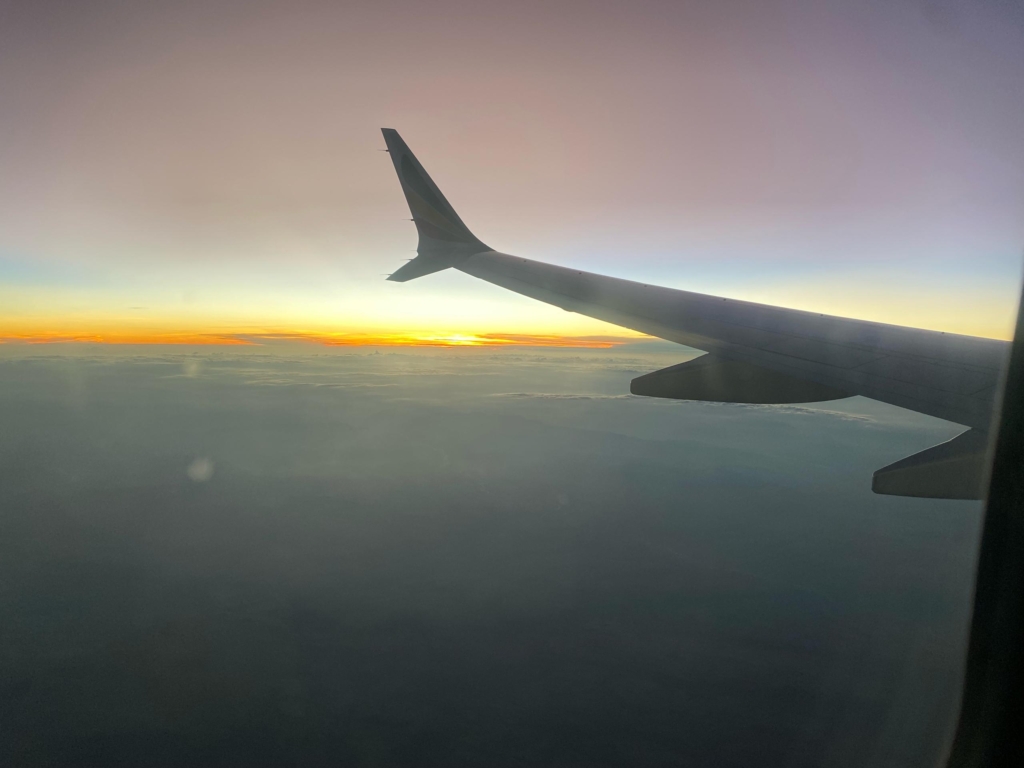
Four hours into the flight, as we soared over South Sudan, the cabin crew—attentive to the Ramadan season and the huge number of Muslim passengers, announced it was time to break the fast. Confusion rippled through the cabin. My watch showed 4:20 PM GMT, two hours earlier than Ghana’s sunset. Peering out the window, I noticed a stark contrast: the right side of the plane was shrouded in darkness, while the left still glowed with twilight.
A Clash of Clocks and Convictions
The crew distributed meals to willing passengers, but dissent erupted. An elderly man suspected to be in his early sixties protested loudly: “This is 4 PM! We can’t break fast yet!” Others murmured in agreement, clinging to their Ghanaian schedules. Yet, for those of us aware of the shifting time zones, the reasoning was clear: Islamic tradition mandates fasting according to local sunset times, even mid-air.
“We were flying east, chasing the sun,” I explained to my seatmate. “Every hour, we gained time.” By adhering to the sunset at our current longitude—likely near South Sudan (GMT+3)—fasting hours are shortened by two. I sipped water cautiously, while the holdouts glared. I followed this up by taking the cup of tea I requested before following up with the ‘small’ bowl of rice served. Then I silently observed my Magrib and Ishaa prayers combined and then continued with a beautiful movie I was watching earlier.
The Sunset Revelation
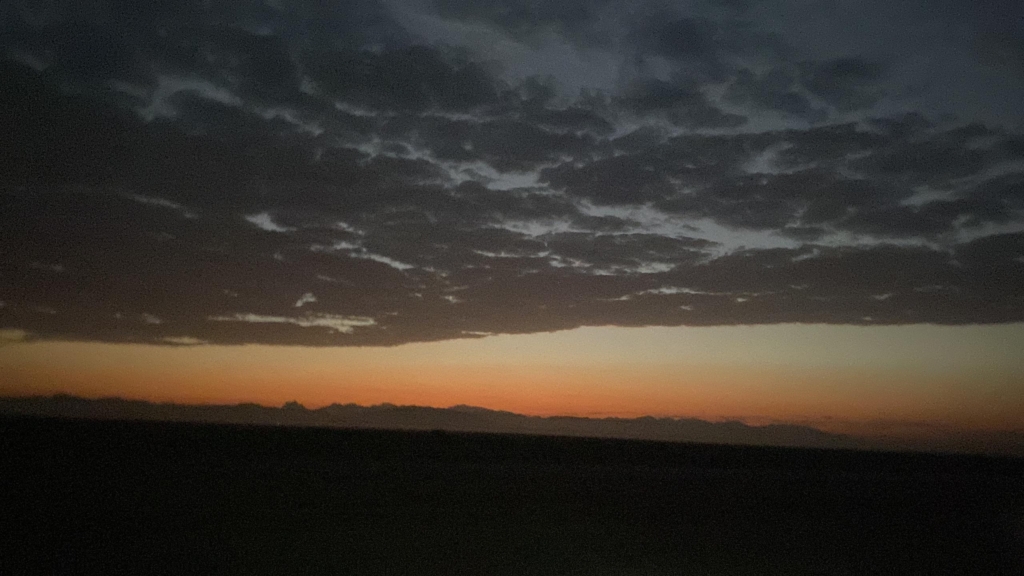
Some thirty minutes later, the skeptics’ resolve wavered. By 4:50 PM GMT (6:50 PM in Ethiopia), darkness enveloped both sides of the plane—a sight unimaginable in Ghana at that hour. The elderly man, now sheepish, whispered to his neighbor and finally accepted a date. Around him, others followed suit, their confusion turning to awe at the celestial mechanics unfolding outside their windows.
A Global Challenge for Muslim Travelers
This incident underscores a growing dilemma in an interconnected world: how to observe Ramadan while traversing time zones. My uncle’s recent journey from Saudi Arabia to Ghana exemplified the reverse. While the people he left in Saudi Arabia, including his wife, broke their fast at 3:00 PM GMT, his flight westward extended his fast by three hours, testing his endurance at 67.
Islamic scholars emphasise that travelers should follow the sunset of their current location, even mid-flight. Sheikh Anass Mansour, a Ghanaian cleric with the Ahlussunna sect, clarifies: “If you’re airborne, observe the sunset of the nearest land region beneath you.” He further explains by quoting a Hadith reported by Umar ibn al-Khattab, which states that The Messenger of Allah, peace and blessings be upon him, said, “When the night approaches from the east and day retreats from the west and the sun has set, it is time to break the fast.” This explains spoke about sunset and not a specific time on the clock.
Calls for Education and Adaptation
Airlines like Ethiopian Airlines are increasingly proactive, adjusting meal services for Ramadan. Yet, many passengers remain unaware of how to adapt rituals aloft. “Muslim travelers need guidance,” says Fatima Ahmed, a Nairobi-based travel blogger I met during a trip to Malawi late last year. “Apps like Prayer Times or Muslim Pro can calculate sunset mid-journey, but awareness is key.” She added
Tips for Fasting in the Skies
- Pre-Flight Prep: Research time zones and sunset times for your route.
- Use Technology: Apps adjust to your GPS location, even airborne.
- Consult Crew: Airlines often track prayer and fasting times for passengers.
- Flexibility: Islamic law eases rules for traveler allowing Muslims to eat and then; missed fasts can be made up later.
Conclusion: Unity Above the Clouds
As our flight descended into Addis Ababa, the cabin buzzed with shared stories—first-time flyers, seasoned pilgrims, and the elderly man who’d embraced the lesson. “Next time,” he chuckled, “I’ll pack a watch and a window seat.” He smiled as he walked away to join his next flight to Arabia.
For Muslims navigating modernity’s complexities, this journey was a reminder: faith adapts, even above the clouds.
***
Anass Sabit is a Ghanaian science journalist and frequent traveler. Follow his journeys on Twitter @AnassXabit
Latest Stories
-
Total expenditure as of July 2026 amounted to GH¢147.07bn, 16% below target – BoG
38 minutes -
Total revenue & grants stood at GH¢144.5bn in July 2026, slightly below target – BoG
54 minutes -
Ghana Sports Fund urges sports federations to submit credible proposals and measurable targets
57 minutes -
Sally Rooney books withdrawn in UK over Palestine Action support
1 hour -
Musk says US government may be behind slowdown of Ukraine drone speeds
1 hour -
Picking Chief Justices nearing retirement could give Mahama immense power – Bentil
1 hour -
Netflix to shed 1,000 jobs in steepest cuts since 2022
2 hours -
Burnham had two hospitality dinners with Man City chairman, deleted records show
2 hours -
Semenyo ‘froze’ after alleged racist abuse, court told
2 hours -
‘Shameless’ – Mourinho critical of Vinicius Jr ban timing
2 hours -
Loyalty can outweigh competence in Chief Justice selection – Bentil
2 hours -
Man City suffer as PSG masterclass sets up Champions League win
3 hours -
Customer Service Africa CEO urges business leaders to observe staff and customer interactions
3 hours -
On night of mayhem for Liverpool, Barcola arrives in style
3 hours -
Muzic Mensah finds healing and renewed love in new single ‘WayƐ Late’
3 hours