

Audio By Carbonatix
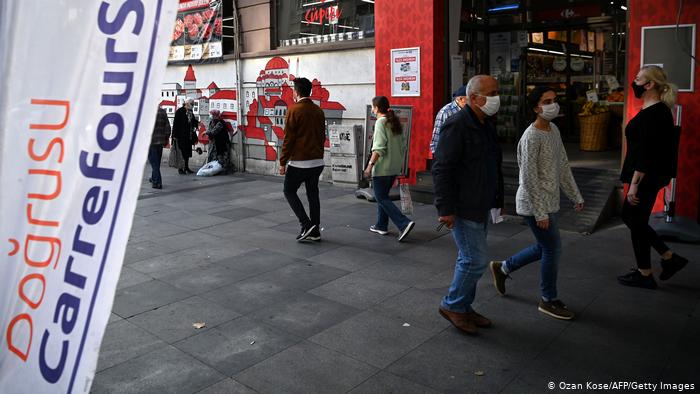
The Turkish leader has led calls for a boycott of French goods as tensions between Ankara and Paris escalate over cartoons of the Prophet Muhammad. DW examines what's at stake for the two economies.
Turkish President Recep Tayyip Erdogan has urged Turks to stop buying French goods in response to what he described as French leader Emmanuel Macron's "anti-Islam" agenda.
The Turkish leader has repeatedly rebuked the French president, saying he needed a mental health check after Macron vigorously defended the right of the French people to draw cartoons of Prophet Muhammad, which many Muslims consider offensive.
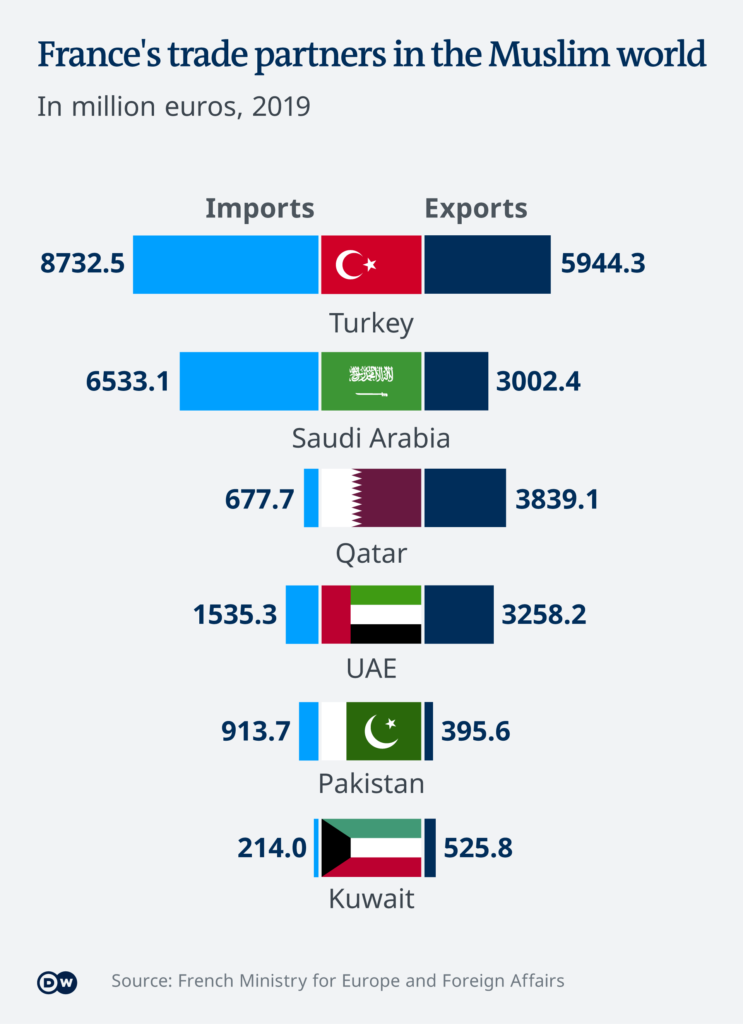
The boycott call is likely to test relations between the two countries, which count each other as major trade partners with a total trade volume of about €14 billion ($16.6 billion) per year. France has said it's not planning to hit back with a reciprocal boycott against Turkish products.
Erdogan has made similar boycott calls in the past, including one against US electronics goods. Many analysts have pointed out the futility of such moves, stressing their negative impact on local employment. Many of the products being shunned may be owned by foreign brands, but are made locally.
French cars in high demand
Turkey is France's 13th-largest global supplier and the 12th-largest customer, while France is Turkey's sixth-largest customer, receiving 4.3% of its exports, according to the French Ministry for Europe and Foreign Affairs.
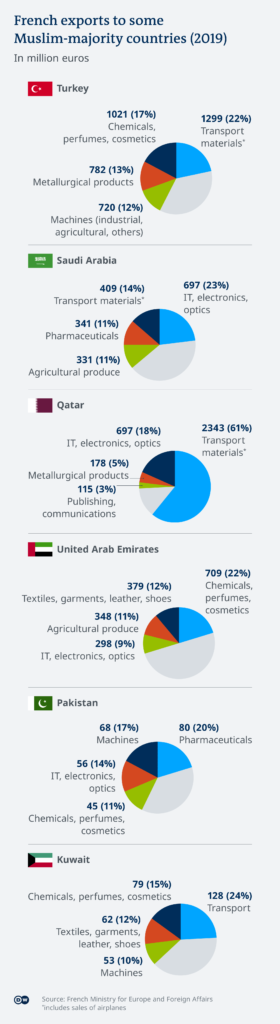
Planes, helicopters and automobile spare parts are among the main imports from France to Turkey, while Turkey mainly sells cars and other vehicles to France.
French autos are among the highest selling cars in Turkey, which is the eighth-biggest market for Renault.
The French carmaker has one of its largest production centers in Bursa, Turkey with an annual production capacity of nearly 400,000 cars and more than 900,000 engines. The plant employs more than 6,000 people.
Renault sold nearly 50,000 vehicles in the first six months of this year. PSA, which owns the Citroen and Peugeot brands, recently described Turkey as a bright spot in a market battered by the pandemic.
Boycotts target French firms in other Muslim countries
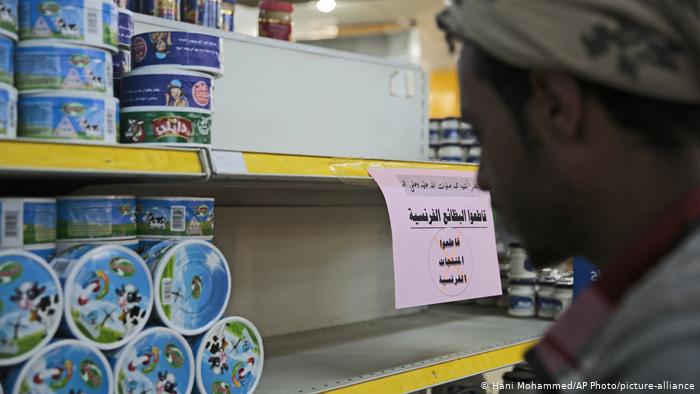
The Turkish leader's boycott call followed social media campaigns in other Muslim countries calling on consumers and stores to reject French goods and brands. Several supermarkets in Qatar and Kuwait are already reported to have pulled French goods like yogurts and bottles of sparkling water from their shelves.
French supermarket chain Carrefour has been one of the main targets of boycott calls in Saudi Arabia and the United Arab Emirates, prompting the owner of Carrefour stores in the Middle East to issue a statement stressing the brand is a wholly-owned and operated unit of Majid Al Futtaim, a UAE-based firm. A Carrefour representative in Paris told Reuters news agency that the firm had felt no impact so far from the boycott calls.
Several French companies, including energy giant Total and defense electronics group Thales, do major business with some of the Muslim-majority countries where the backlash against President Macron's support for the cartoons has been the most vehement.
Thales, which sells weapons, aeronautics technology and public transport systems, counts Saudi Arabia, the UAE, Turkey and Qatar among its customers. Qatar has also ordered French Rafale military jets. Total has major investments in exploration and production in the Gulf states.
French cosmetic and fashion labels and luxury brands like LVMH-owned Louis Vuitton and Chanel have stores across the Middle East, but the region is not a big moneymaker for them.
France-Turkey tensions weigh on lira
The Turkish currency plunged past 8 lira per dollar for the first time on Monday amid concerns over Turkey's economic woes emanating from the pandemic and geopolitical tensions between Ankara and the West. The lira has been among the worst-performing currencies this year, having fallen about 25% against the dollar.
The latest drop was mainly driven by the Turkish central bank's surprise decision to keep key interest rates on hold. Analysts had expected a rate hike to arrest the weekslong fall in the lira. The Turkish currency, however, fell further after Erdogan called for a boycott of French goods.
A weak lira could make it easier for many Turks to shun some of the French goods, especially luxury items, given a surge in their prices.
When Turkey boycotted the iPhone
It's not the first time that the Turkish leader has used economic levers to settle political scores. In 2018, he called for a boycott of US electronics products, with a special mention reserved for Apple's iPhone, amid heightened tensions between Washington and Ankara. The boycott call followed a sharp drop in the Turkish lira that Erdogan blamed on foreigners.
"Every product that we buy in foreign currency from outside, we will produce them here and sell abroad," Erdogan said. "We will boycott the electronics products of the US."
It's not clear how much impact the clarion call had on iPhone sales in the country. Sales drop in the following months were mainly blamed on a weak lira which had caused iPhone prices to go up. Apple continues to be one of the popular smartphone makers in Turkey. Erdogan himself was known to be an avid Apple user; it's not clear if that still remains the case.
Latest Stories
-
Ex-Spurs player Vega set to run for FIFA president
10 minutes -
Arteta signs new contract with champions Arsenal
20 minutes -
Former Man City player Silva comes out of retirement
29 minutes -
‘I have a screen in my office’ – Akandoh on real-time emergency bed tracking
34 minutes -
Government begins pilot of national emergency bed management system
55 minutes -
GRA forms 9-member committee to probe alleged missing containers at Tema Port
1 hour -
Foreign Minister inspects VFS Global Visa Centre, highlights commitment to service quality standards
2 hours -
Declan Rice close to agreeing new Arsenal deal
2 hours -
‘Draining’ few days for Gauff after online racist abuse
2 hours -
Media worker, journalist remanded over alleged GH¢800,000 fraud
2 hours -
PAC sends Ghana Water hearing back, demands Minister and MD appear over financial status
2 hours -
Foreign Affairs Minister inspects 20+ visa centres, demands better conditions for Ghanaian applicants
3 hours -
Guardiola set to attend Man City v PSG next week
3 hours -
GACL to hold full-scale emergency simulation exercise on October 15
3 hours -
327 entries submitted for 30th GJA Media Awards
3 hours