

Audio By Carbonatix
The creator of advanced chatbot ChatGPT has called on US lawmakers to regulate artificial intelligence (AI).
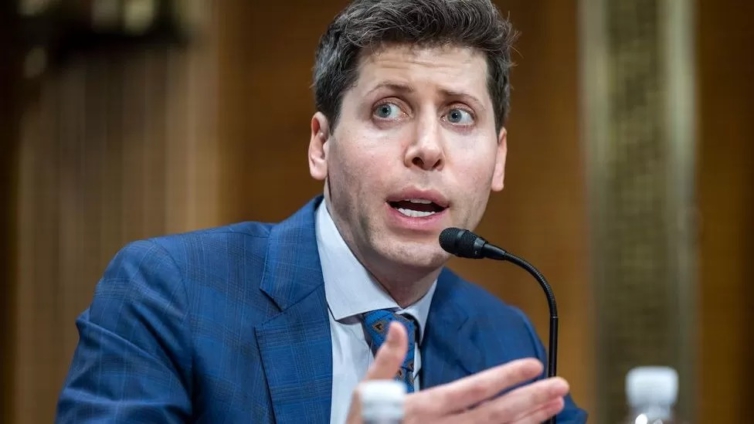
Sam Altman, the CEO of OpenAI, the company behind ChatGPT, testified before a US Senate committee on Tuesday about the possibilities - and pitfalls - of the new technology.
In a matter of months, several AI models have entered the market.
Mr Altman said a new agency should be formed to license AI companies.
ChatGPT and other similar programmes can create incredibly human-like answers to questions - but can also be wildly inaccurate.
Mr Altman, 38, has become a spokesman of sorts for the burgeoning industry. He has not shied away from addressing the ethical questions that AI raises, and has pushed for more regulation.
He said that AI could be as a big as "the printing press" but acknowledged its potential dangers.
He also admitted the impact that AI could have on the economy, including the likelihood that AI technology could replace some jobs, leading to layoffs in certain fields.
https://emp.bbc.com/emp/SMPj/2.49.2/iframe.htmlMedia caption,
Watch: Senator Richard Blumenthal uses ChatGPT to write his statement
"There will be an impact on jobs. We try to be very clear about that," he said.
However, some senators argued new laws were needed to make it easier for people to sue OpenAI.
Mr Altman told legislators he was worried about the potential impact on democracy, and how AI could be used to send targeted misinformation during elections.
He gave several suggestions for how a new agency in the US could regulate the industry - including giving out and taking away permits for AI companies.
He also said firms like OpenAI should be independently audited.
Republican Senator Josh Hawley said the technology could be revolutionary, but also compared the new tech to the invention of the "atomic bomb".
Democrat Senator Richard Blumenthal observed that an AI-dominated future "is not necessarily the future that we want".
"We need to maximize the good over the bad. Congress has a choice now. We had the same choice when we faced social media. We failed to seize that moment," he warned.
What was clear from the testimony is that there is bi-partisan support for a new body to regulate the industry.
However, the technology is moving so fast that legislators also wondered whether such an agency would be capable of keeping up.
Latest Stories
-
Gomoa Easter Carnival: Edem Agbana and Joy Prime fans shower festival with endorsements as masquerades and ‘street anthems’ ignite Day 3
2 hours -
Gov’t to overhaul free zones into manufacturing hubs for local production – Trade Minister
3 hours -
Ghana losing $2.5bn yearly from raw exports – Trade Minister reveals
3 hours -
President Mahama unveils plans for Kwahu Airport, Convention Centre
3 hours -
World’s oldest leader, Paul Biya to get a deputy for first time in 43-year rule
3 hours -
Search for missing US airman continues as Trump threatens ‘hell’ if Iran does not reach deal
3 hours -
US says it has arrested relatives of late Iranian general Qasem Soleimani
3 hours -
La Liga: Real Madrid’s title hopes hang in the balance as Mallorca snatch stoppage-time winner
3 hours -
FA Cup: Haaland hat-trick powers Man City past Liverpool into semi-finals
3 hours -
FA Cup: Chelsea thrash Port Vale to reach Wembley semi-final
4 hours -
Gov’t to boost tourism in coastal communities through infrastructure, sanitation – Vice President
4 hours -
Universities management urged to involve alumni in curricula development, career guidance to reduce unemployment after school
4 hours -
Vice President Opoku-Agyemang enstooled as Development Queen of Kedzi
4 hours -
Globen School @30: From humble beginnings to a hub of innovation and excellence
4 hours -
Children’s health and happiness take centre stage at 2026 Giggle Fun Fest in Peki Avetile
4 hours