

Audio By Carbonatix
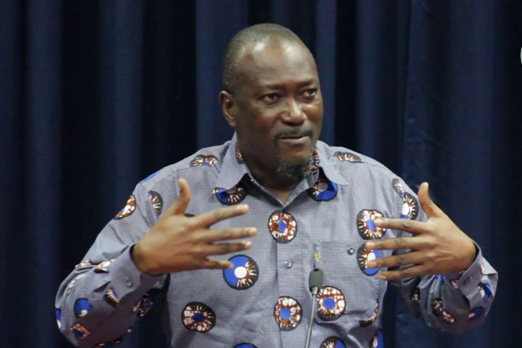
Professor Henry Kwasi Prempeh, Executive Director, Ghana Centre for Democratic Development, has expressed concerns about the secrecy of Article 146 of the 1992 Constitution concerning a Chief Justice’s (CJ) Removal Petitions.
In a statement, Prof Prempeh, who is also the Chairman of the Constitution Review Committee, noted that he had at least two problems with Article 146 in its present form.
He said the first was the secrecy or lack of transparency concerning the removal petition.
“Even if the removal proceedings must be held in camera, I believe that, at the minimum, the findings and outcome of the proceedings, including the grounds and supporting evidence behind the removal petition, must be made public after the fact–that is, whether or not the petition succeeds,” he stated.
“The public must not be kept in the dark as to why a removal petition failed or succeeded.”
Prof Prempeh reiterated that in the interest of justice, he believed the grounds and evidence in support of the Committee’s decision, whichever way must be made public, so that the public, too, could judge for themselves as to whether justice was served in the matter.
Touching on his second concern, Prof Prempeh said: “I think that, where the removal petition pertains to a Chief Justice, no sitting judge should be included in the five-person removal Committee that is constituted to hear the petition”.
“In other words, none of the CJ’s judicial peers must be made to sit in judgment on a removal petition involving their judicial colleague or “boss”, as they are likely to have an interest in the outcome of the case.”
He advocated that they could use retired jurists or other retired career public servants, preferably appointed by a special Committee of the Council of State, in place of sitting judges.
Prof Prempeh said the three other non-lawyer members of the removal Committee could also be selected through a more politically inclusive, diverse or neutral process, as opposed to being appointed, as Article 146 currently provides, by the President in consultation with the Council of State.
“Better to keep a President out of the removal process, except to implement, after the fact, the final outcome of the process as determined by an independent removal Committee,” Prof Prempeh said.
Latest Stories
-
Mahama honoured at 2026 World Health Summit in Berlin for global health leadership
2 minutes -
Breast cancer is not a death sentence – Besease Kontire Obaapanin, Magmina Foundation lead awareness campaign
4 minutes -
EcoBank invests in digital education of 4 Garisson School to mark 40 years in Africa
35 minutes -
AGI urges investment in skills and raw materials to strengthen local manufacturing
38 minutes -
GPL 2026/27: ‘We have to rectify our mistakes’ – Boadu reacts to Aduana FC defeat
39 minutes -
No disability access, no building permit – KMA declares
39 minutes -
Asantehene to lead environmental restoration effort at Jimi Land Reclamation Site
43 minutes -
Poor Ghanaians are being jailed because they cannot afford justice – Crime Check Foundation
44 minutes -
No conflict in appointing Emelia Agbenyo as Deputy EC Chair – NDC
45 minutes -
87-year-old man jailed 20 years for defiling 9-year-old girl at Ofankor
48 minutes -
Sankofa Gold targets 70kg output after 9-month shutdown
50 minutes -
Tamale, Bolgatanga had just one Legal Aid lawyer between them – Kwesimintsim MP
57 minutes -
PAC orders eviction of former irrigation company MD from official residence
1 hour -
Legal Aid Commission has offices in only 45 of Ghana’s 261 districts, needs 180 more staff
1 hour -
Challenging Heights welcomes Ghana’s Tier 1 ranking, calls for more anti-trafficking funding
1 hour