

Audio By Carbonatix
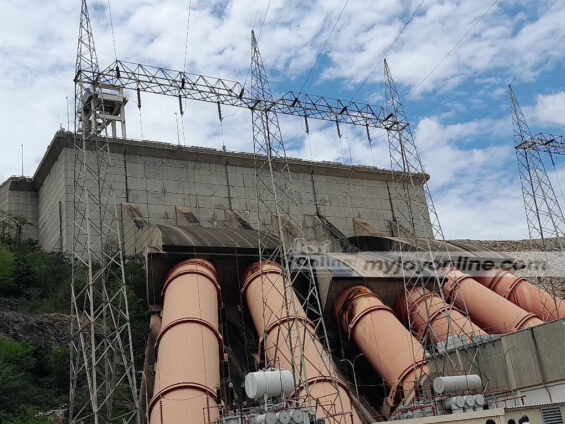
Ghana’s recent wave of intermittent power outages (dumsor) appears to stem less from technical faults and more from a significant shortfall in electricity generation, according to exclusive data obtained by JoyNews Research.
While energy sector leaders have attributed the disruptions to factors such as transformer upgrades and the recent fire at the Akosombo substation, the data points to a deeper structural challenge: the country is not generating enough power to meet demand.
The figures show that both thermal and hydro power plants are operating below expected production levels, leaving Ghana with an estimated 37% dependable capacity deficit.
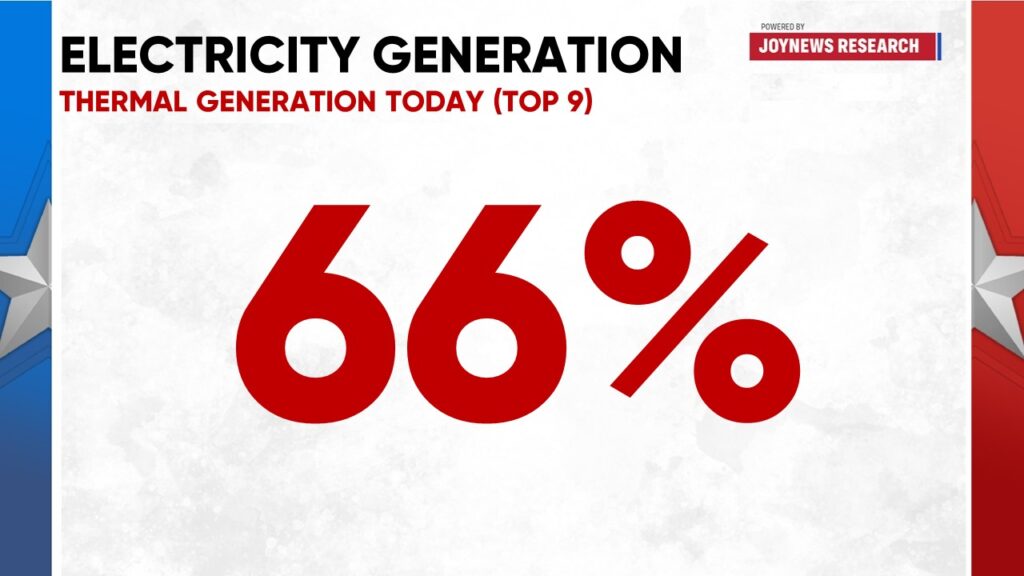
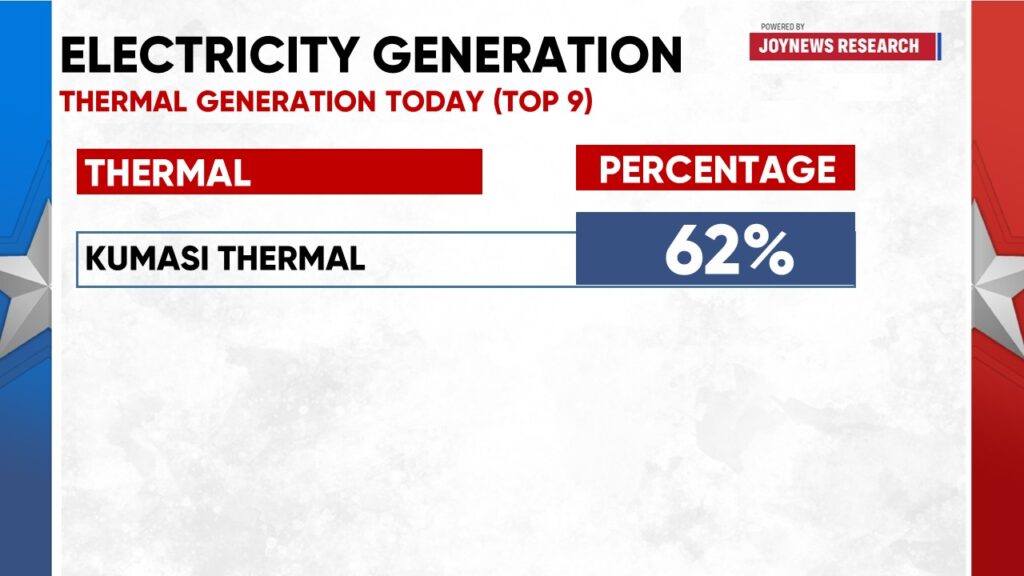
On the thermal side, the combined expected output of nine major plants stands at 2,551 megawatts, but current generation is 1,679 megawatts, representing 66% of expected capacity and a shortfall of 872 megawatts.
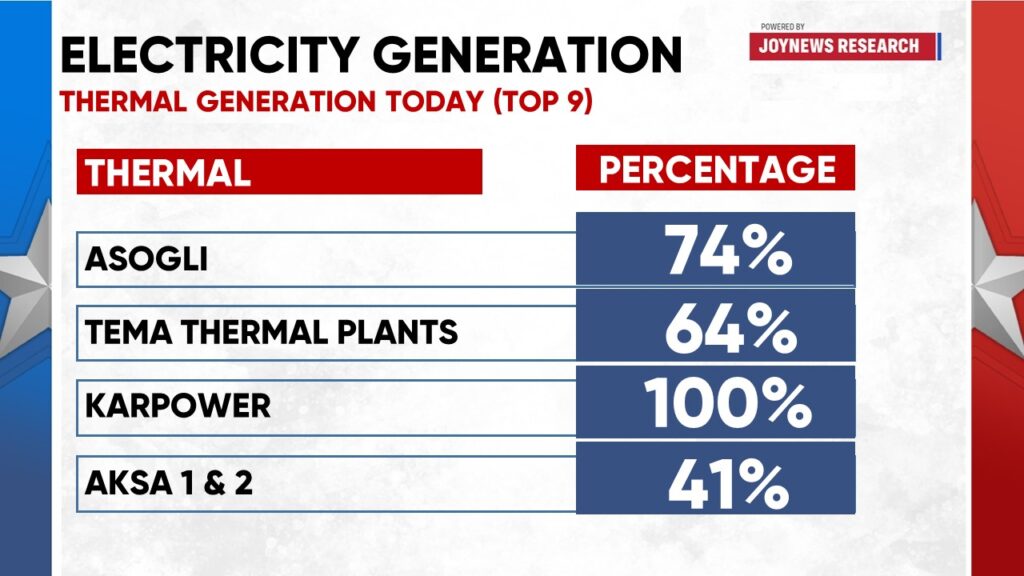
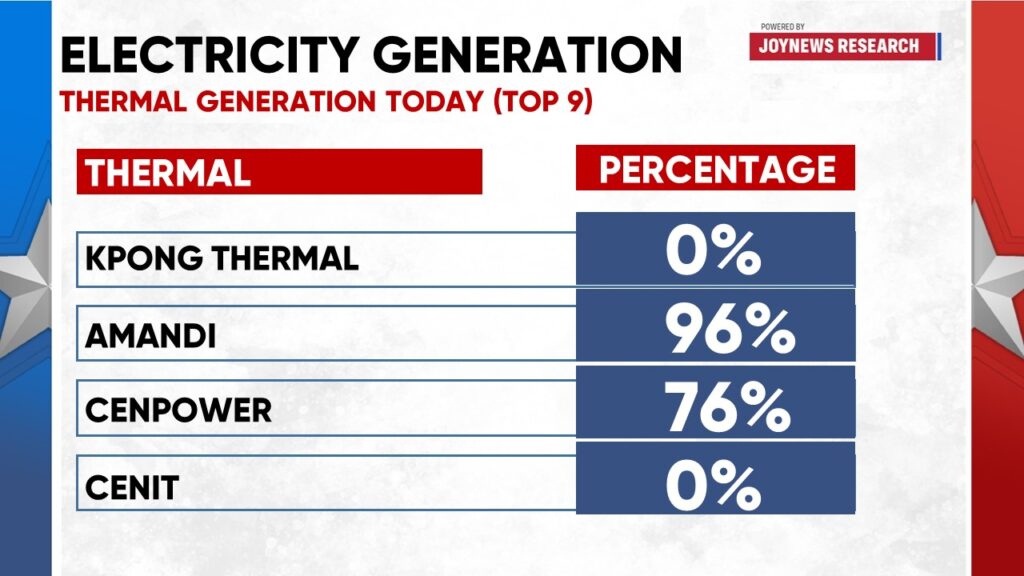
Several key facilities are underperforming. The Asogli plant is operating at 74 per cent capacity, while the Tema thermal plants are at 64 per cent. More concerning is that plants such as CENIT and Kpong Thermal are currently not generating power, according to the data. Others, including AKSA and Cenpower, are also producing significantly below capacity.
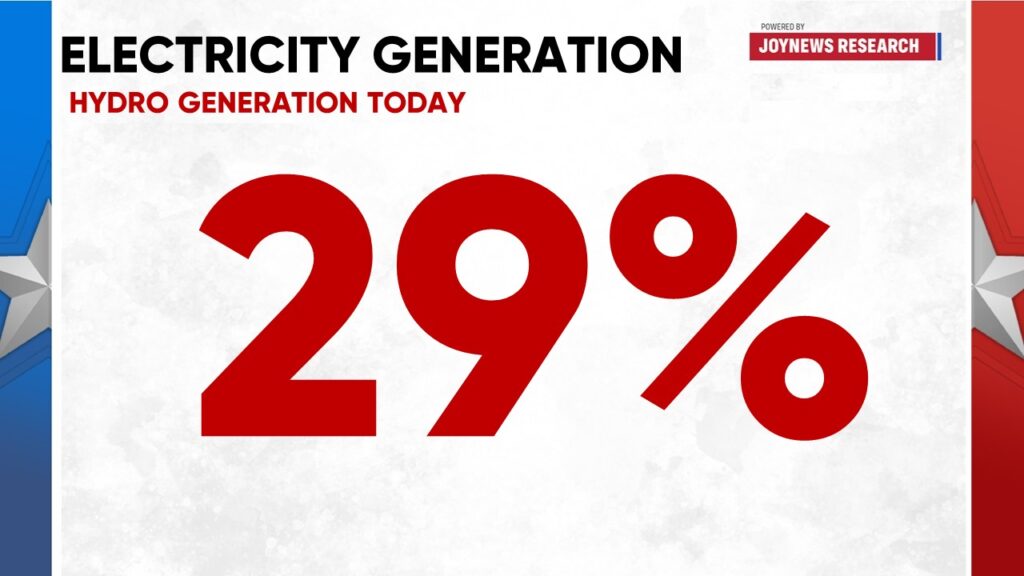
Hydropower generation presents an even more critical concern. Out of an expected 1,411 megawatts, only 403 megawatts are being generated, representing just 29 per cent of capacity and a deficit exceeding 1,000 megawatts.
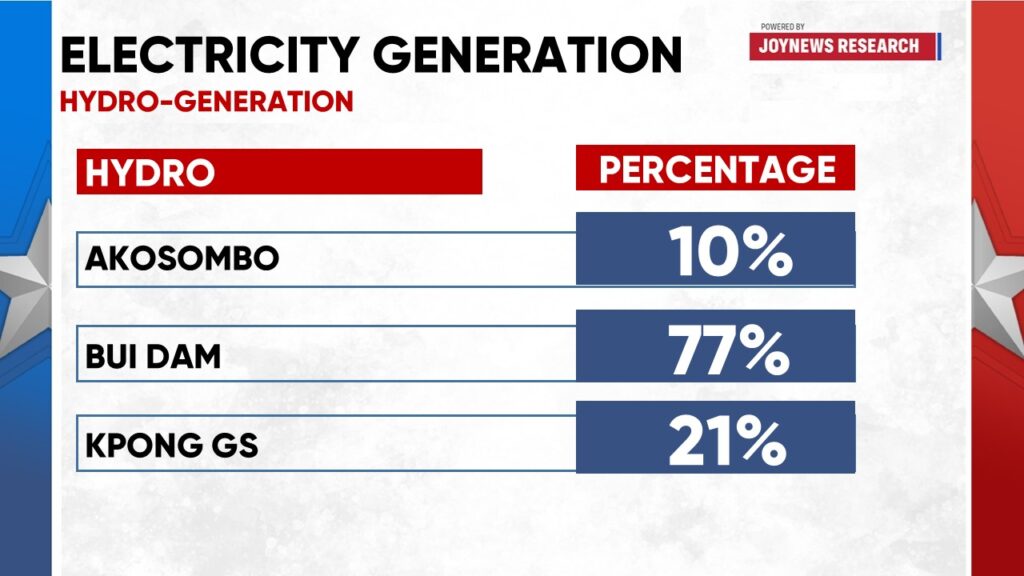
The situation at the Akosombo Dam is particularly difficult. Despite a dependable capacity of 900 megawatts, current output has dropped to just 86 megawatts, about 10 per cent of capacity, following the substation fire. Kpong is also operating at only 21 per cent, while Bui Dam is performing relatively strongly at 77 per cent.
In fact, data suggests Bui is operating close to maximum output. Under normal conditions, the plant runs one unit (110 MW) off-peak and up to two units (220 MW) during peak periods. In critical situations, all three units (330 MW) are deployed. The current output of 287 megawatts indicates that multiple units are running, underscoring the severity of the national supply gap.
Taken together, the data suggest that isolated technical challenges cannot fully explain the ongoing outages. Instead, they point to a broader supply-side constraint affecting the entire power system.
Even with a fully functional transmission network, reduced generation from both thermal and hydro sources means there is insufficient power to ensure a stable supply nationwide.
This widening generation gap is likely driving the return to an era of persistent power outages, as the system struggles to balance supply with demand. With hydro output sharply reduced and some thermal plants offline or underperforming, pressure on the national grid has intensified.
The findings raise critical questions about the underlying causes of the generation shortfall, particularly on the thermal side, including fuel supply, plant reliability, and operational efficiency.
For now, the evidence is clear: the current outages are not only the result of faults within the system but also a reflection of a deeper issue. Ghana is simply not producing enough power to keep the lights on consistently.
Latest Stories
-
Joseph Cudjoe writes: Ghana must break free from the dangerous mindset that natural resources are the foundation for wealth
5 minutes -
Children among 109 dead after boat capsizes off Djibouti, UN says
10 minutes -
OmniBSIC Bank’s 11th health walk promotes fitness and business growth
19 minutes -
2026 World Maritime Day: Danish Embassy organises “The Gulf of Guinea Speaks”
41 minutes -
New Economy will tackle unemployment and restore hope – Ato Forson
47 minutes -
IMMILAC president recounts personal losses as security women lead breast cancer awareness campaign in Wa
54 minutes -
University of Ghana postpones October 12 reopening as GAUA strike persists
1 hour -
Bahass Foundation launches vocational skills training to support mental health recovery in Wa
2 hours -
NPP orders parliamentary aspirants and their supporters to suspend campaign activities
2 hours -
Techiman unites against child marriage: Joy Impact Makers Awardee leads charge on International Day of the Girl Child
2 hours -
Ghana Psychological Association calls for greater involvement of people with lived experience in mental health care
4 hours -
Ablakwa says Ghana could evacuate more citizens from South Africa if the situation worsens
4 hours -
Violence against girls must be tackled through individual responsibility – Gender advocate
4 hours -
Ghana’s BRICS bid must be guided by national interest – International Affairs Analyst
4 hours -
Journalists look back on a decade of breast cancer reporting in Ghana
5 hours