

Audio By Carbonatix
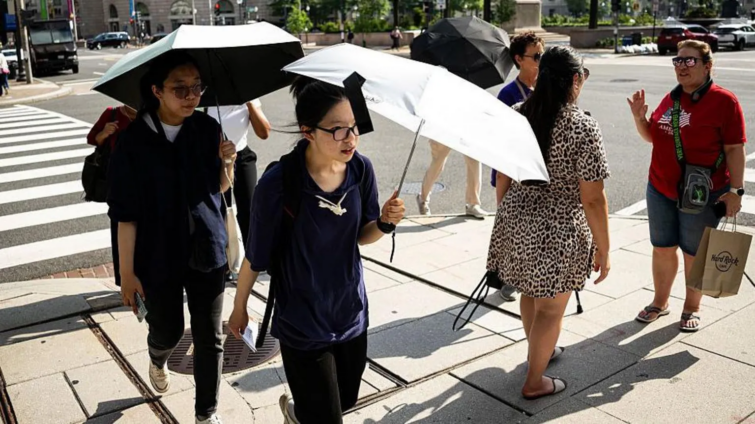
Millions of people across the US East Coast are sweltering under record temperatures as the Fourth of July holiday weekend gets underway.
The extreme heat will continue on Friday as the hottest spell of the year so far sends the mercury soaring to levels not seen, in some areas, in decades.
The heatwave could disrupt a busy weekend as US President Donald Trump hosts a celebration marking America's 250th birthday and multiple World Cup matches take place outdoors.
It follows an unprecedented spell of early summer heat across Europe, with record highs across the continent.
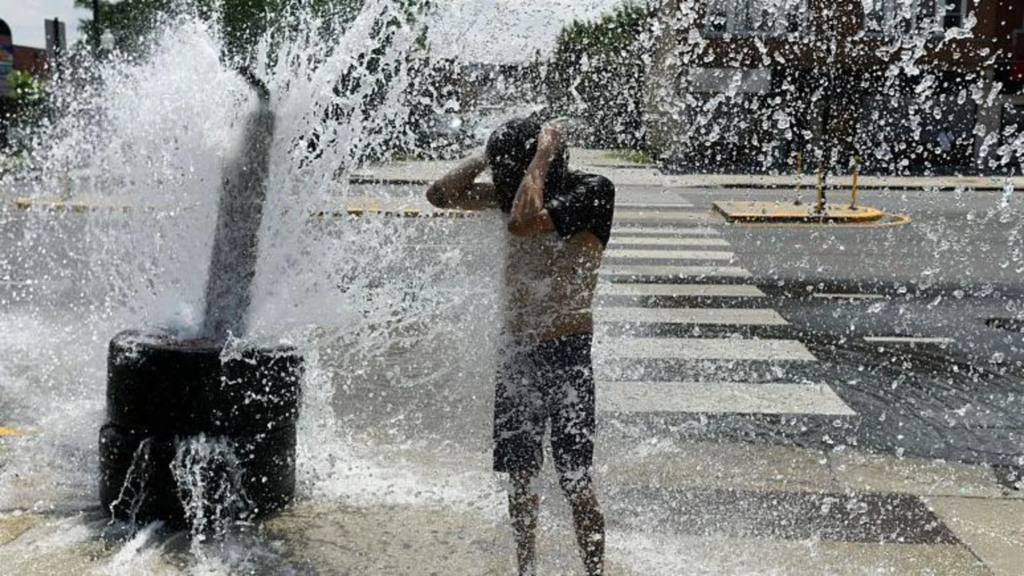
Searing heat and high humidity is not unusual across North America.
But the widespread nature of this event, affecting 25 million people across central and eastern areas on Friday and then the east for the weekend, sets it apart as potentially dangerous.
The 4 July holiday is traditionally characterised by lots of outdoors activities - barbecues in yards and on rooftops, community parades and fireworks at night.
"These are extremely dangerous conditions," said New York City Mayor Zohran Mamdani.
On Thursday, the city hit 100F (38C) degrees, its hottest day since 2012, and it could hit triple digits again on Friday. And Philadelphia recorded its highest temperature since 2011- 103F (39C).
Further south, in the nation's capital, the city could record four days in a row of 100F heat. This has only happened twice before.
Trump is expected to speak outside at a 4 July celebration on Saturday, despite the predicted high temperatures. The president has maintained that he wanted to gather outside for the celebration.
"I'm gonna make a really long speech just to show that I can do anything," he said.
Saturday might see the heat breaking in some central areas, but not in the east where it will be dangerously hot for those at outside events.
The other concern is severe thunderstorms on the northern plains, the Midwest and across to the Great Lakes. These will bring a dramatic end to the heat - damaging hail, destructive winds, flash flooding and even a few tornadoes.
By Sunday the heat will intensify in Virginia, the Carolinas and the southeast before building in western parts of the USA and Canada into next week.
America's northern neighbour, Canada, has also been seeing extreme heat this week, with temperatures in Ontario expected to hit mid 30s Celsius (over 90F).
Heat warnings are also in place across much of Quebec, including Montreal and Quebec City.
On Friday morning, more than 51,000 Hydro-Québec customers were still without power due to the aftermath of the thunderstorms. The Laurentians, Lanaudière, and Laval remained the hardest-hit regions.
In a statement to CityNews, Hydro-Québec spokesperson Audrey St-Pierre said that at its peak around 9 p.m. Thursday, more than 137,000 customers in the province were without power.
"Outages were caused primarily by strong wind and lightning," St-Pierre added.
Heatwaves have become more frequent, more intense, and last longer because of human-induced climate change. The world has already warmed by about 1.1C since the industrial era began and temperatures will keep rising unless governments around the world make steep cuts to emissions.
Temperatures in the north-east will drop a couple of degrees on 4 July with the threat of severe thunderstorms. Temperatures will still be well above average, though with a more significant drop on Sunday and Monday as cooler air moves down from the north.
Latest Stories
-
Four killed in helicopter crash near Montreal
2 minutes -
Ghana could have national airline back in skies within 18 months – Boeing to Mahama
10 minutes -
NDC suspends vetting exercise in Krowor constituency, reschedules to September 29
27 minutes -
Extractive firms urged to strengthen cyber defences as digital risks grow
40 minutes -
Photos: Mahama engages Ghanaian diaspora in New York on Ghana’s economic recovery
43 minutes -
Man jailed 10 years for defiling 11-year-old girl at Kpandai
1 hour -
At least 27 people killed in two shootings in South African township
2 hours -
Iranian minister says only negotiation can end conflict after Trump rejects Hormuz deal
2 hours -
Some Ghanaians use free speech to destroy reputations – Bobby Banson
3 hours -
Crowds, deals and home solutions as Republic Bank-JoyNews Habitat Fair enters final day
6 hours -
Fire Service finds only five functional hydrants in Ministries enclave
6 hours -
Government to sign 1,200MW gas power deal before end of 2026 – Mahama
6 hours -
West Mamprusi launches community-led WASH and livelihoods project across 100 communities
6 hours -
Iran says it will wait for official US response after Trump rejects Strait of Hormuz proposal
6 hours -
90 Oti communities to benefit from government electrification project
6 hours