

Audio By Carbonatix
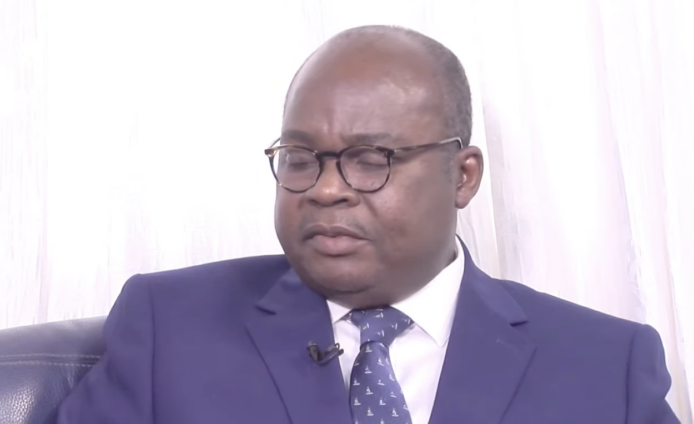
The Governor of the Bank of Ghana (BoG), Dr Ernest Yedu Addison, provided a detailed account of the banking sector crisis that plagued Ghana in 2017.
He recounted the drastic measures taken to salvage the sector and establish a more robust financial ecosystem.
A sector on the Brink
“When I took office in 2017, the banking sector was in a near state of collapse,” Dr. Addison revealed.
“People were queuing to withdraw their money. The International Monetary Fund (IMF) flagged this as the most pressing crisis facing the country at the time.”
The severity of the situation demanded swift and decisive action, he explained, with the immediate priority being to stabilize the sector and restore public confidence.
License revocations and clean-up
One of the first steps involved the revocation of licenses for two banks, Capital Bank and UT Bank, in August 2017.
“This was part of the prior actions to address the sector’s insolvency,” Dr Addison noted. Over the following years, additional weak and insolvent institutions were removed from the system.
“By 2019, the sector had been cleaned up,” he said.
“We had removed all the weak institutions and those that remained met the new capital requirement of ¢400 million. These banks had stronger capital, adhered to new corporate governance directives, and were being properly supervised.”
Dr. Addison highlighted some of the issues that necessitated these license revocations, including insider trading, related-party transactions, and non-compliance with prudential rules.
“These practices undermined the stability of the banking system, but through stricter scrutiny and governance reforms, we have addressed them,” he affirmed.
A Stronger Sector, Yet New Challenges
Despite the strides made, Dr. Addison acknowledged that the post-cleanup era presented new challenges.
“The banks were in a much better place by 2019, with stronger capital to support growth. Interest rates had come down from 28% to around 21%, creating an environment conducive to lending to the private sector,” he explained.
However, the onset of the COVID-19 pandemic disrupted this trajectory. “Suddenly, the government became the main borrower in the economy.
The banks, instead of lending to the private sector, channelled their recapitalized resources into acquiring government bonds,” Dr Addison said.
Debt Exchange and Its Impact on Banks
The government’s rising debt levels and eventual inability to secure further borrowing from capital markets triggered a debt crisis, further complicating matters for banks. “The debt exchange program resulted in significant losses for the banks,” Dr. Addison admitted.
Despite these setbacks, he maintained that the reforms initiated during the crisis have left the banking sector in a stronger position to navigate economic challenges. “The decisions we made were difficult, but they were necessary to restore stability and create a banking sector that can withstand shocks,” he stated.
Looking Ahead
Dr. Addison stated that the lessons learned from the crisis have informed ongoing reforms to strengthen the financial sector.
“Our focus remains on ensuring that banks are well-capitalised, properly managed, and capable of supporting sustainable economic growth,” he concluded.
Latest Stories
-
Power restoration fault suspected in Kumasi Central Market fire
4 hours -
The 7-foot giant of Ngleshie Amanfro: Seven-foot Ghanaian Ephraim Saawa dreams of joining the national basketball team
5 hours -
Government promises support for Kumasi Central Market fire victims
5 hours -
Vibes The Movie: Big Ghun’s Ghanaian film earns five nominations at 2026 REFFA
5 hours -
MamaCare CEO warns unresolved conflicts among health workers could undermine maternal and neonatal care
6 hours -
Health professionals urged to translate medical knowledge into practice to save mothers
6 hours -
Conflicts among care providers linked to maternal, neonatal deaths – Expert
7 hours -
GIS marks 10th TIME conference, champions improved teaching practices
7 hours -
BRICS Or Balance? What Ghana’s bid really means
8 hours -
GPRTU wants full TRAFFITECH-GH implementation to start in 2027
8 hours -
Mahama announces plans to import electric wheelchairs for PWDs
8 hours -
KGL U17 Colts 2026: Western beat Prempeh Elite Academy to set up final final with Greater Accra Region
8 hours -
Late Solanke strike salvages 10-man Spurs draw at Man United
9 hours -
Gender Ministry to monitor welfare of Nana Akua Addo’s children amid domestic violence case
9 hours -
Benedict Okyere Yeboah: Ghana’s football problem goes beyond sacking a coach
9 hours