

Audio By Carbonatix
The Consortium of Academic and Research Libraries in Ghana (CARLIGH) is urging the government to step in and absorb part of the cost of accessing academic resources, warning that dollar-denominated subscription fees are making it increasingly difficult for universities to access essential research materials.
Chair of the CARLIGH Management Committee, Dr Theresa Adu, said the reliance on foreign publishers—who charge in dollars—has placed a heavy financial burden on member institutions.
“A lot of these publishers give us quotes in dollars, and so we have to pay in dollars, and it’s very difficult for our members to raise those amounts,” she said. “One of the things the government can do to help us would be to take up the payment of some of these resources.”
CARLIGH, which plays a central role in supporting research and academic work across Ghana’s universities, is facing mounting pressure as exchange rate fluctuations widen the affordability gap for institutions already operating within tight budgets.
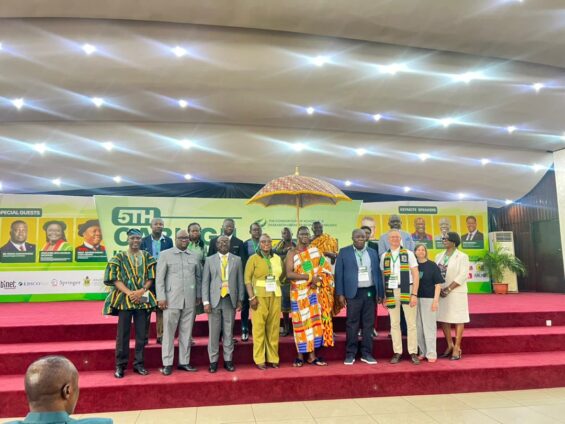
The concerns were raised at the 5th CARLIGH International Conference, held under the theme “The open movement in times of urgency and rapid change.” The event brought together local and international stakeholders to explore ways of expanding access to knowledge through open science, open data, and open educational resources.
Dr Adu stressed that limited access to scholarly materials undermines research and innovation, particularly in developing countries where institutions struggle to meet subscription costs.
“If there is knowledge and you do not have access to that knowledge, it means that you’re powerless,” she noted. “There is a lot of knowledge being developed, but access is often impeded by paywalls on materials we are supposed to use.”
Participants at the conference also highlighted the importance of open access systems as a long-term solution to the challenge. These systems aim to make academic content freely available, reducing dependence on costly subscriptions.
A Technical Advisor at the Ministry of Education, K. T. Oduro, emphasised the need to strengthen community libraries, especially in rural areas where access to information remains limited.
“Equipping these libraries with digital infrastructure, training and open educational resources is not an investment in buildings or books; it is an investment in people,” he said.
He added that well-resourced libraries can help bridge the knowledge gap, promote lifelong learning, and support participation in Ghana’s growing digital economy.
The call from CARLIGH adds to broader conversations about equitable access to knowledge, as institutions across Africa continue to grapple with the high cost of academic resources and the need for sustainable funding models.
Latest Stories
-
T-bills auction: Government exceeds target marginally; yield on 91-day bill remains unchanged
2 hours -
GPL 2026/27: 10-man Aduana hand Kotoko defeat in Kumasi
2 hours -
GPL 2026/27: Medeama ease past Basake Holy Stars
3 hours -
Appiah Adomako writes: Why DVLA must stop treating every expired licence holder as delinquent
3 hours -
Localization must transfer decision-making power, not just project responsibilities
3 hours -
Modernising Ghana’s traditional markets through the 24-Hour Economy markets initiative
3 hours -
New economy will boost local production and create jobs – Finance Minister
3 hours -
Real-Time VAT on cross-border digital services – not a new tax and does not violate double taxation principle
4 hours -
Digitalisation, AI key to Ghana’s tourism transformation – GHATOF
4 hours -
Stronger GTA-private sector partnership needed to grow tourism – GHATOF
4 hours -
Amazon eyes Ghana for broadband expansion after talks with Mahama
5 hours -
National Investment Quiz 2026: Six schools qualify for quarter-finals
5 hours -
‘Do not let Russia pay for its madness with lives of your people’ – Zelensky to Ghana, 46 other countries
5 hours -
6,079 promotion cases fully processed and paid – CAGD says amid nationwide teachers’ strike
6 hours -
Teacher unions to meet government Monday over nationwide strike
6 hours