


Audio By Carbonatix
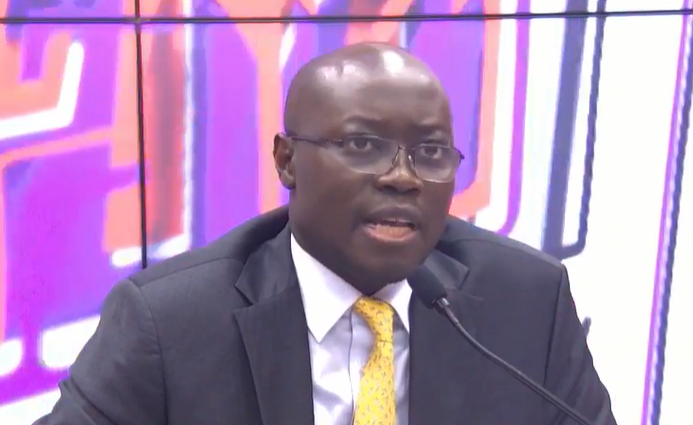
Former Deputy Finance Minister, Dr Cassiel Ato Forson says the Electronic Transfer Levy (e-levy) was bound to fail before its implementation.
According to him, all indicators pointed to failure, so he warned government about the policy's estimated ambition.
“They failed to recognise that mobile money is a choice and there are some elasticities, and it is important that when coming out with the revenue estimation, they would have to factor in the behaviour of customers when taxes are imposed at that high level,” he explained.
The controversial revenue measure was introduced by government in the 2022 budget, with some ¢4.9 billion expected to be collected by the end of the first year.
It was expected to replenish government’s revenue sack and shield the country from a possible IMF bailout.
But close to two months of implementation, the levy has generated less than ¢60 million, according to a leading member of the New Patriotic Party (NPP), Gabby Otchere-Darko.
He said the levy has failed to live up to the expectations of the government.
“What options are open to the government? The question should be: what option, if adopted, will re-inject investor confidence in our economy?
"Even if we find the $3 to 5 billion required, will that help? E-levy, which was to have given us some ¢600 million by now, has done less than ¢60 million,” he said in a tweet on Monday, June 27.
In an interview on Joy FM’s Top Story on Monday, he said that the structural design of the levy is very ‘problematic’ and, therefore, not surprised at the outcome.
Dr Forson added that he had questioned the policy from its initial stage, and “I have said that e-levy in itself was bound to fail from the beginning.”
The Ranking Member on Parliament's Finance Committee urged government to embrace the economic support from the International Monetary Fund (IMF).
Meanwhile, Associate Professor at the University of Ghana Business School (UGBS), Prof. Lord Mensah, has said it is too early for anyone to rate the Electronic Transactions Levy (E-levy) performance.
He argued that government should wait till the end of the year to decide on the performance of the levy.
“Probably it might be too early because normally when you issue a levy of that form, you are going to get reactions from the market, so we may have to give ourselves some time before we can decide that we want to go to the IMF or not.
“Not making up to the expected revenue of the E-levy, I would say that is too early. Let us wait; we have more time. If we think E-levy is the ultimate, let us hold on and then make sure that by the end of the year, we come out to say whether it is performing or not,” he said.
Latest Stories
-
Stakeholders demand action against foreign-led illegal mining in Ahafo Region
19 minutes -
Ghana handed tricky draw at 2026 Amputee World Cup
27 minutes -
2024 Nyankpala election violence: Youth group petitions authorities over slow probe
31 minutes -
Ghana, UNICEF strengthen partnership to advance child protection
55 minutes -
Day Two of 3rd Republic Bank-JoyNews Habitat Fair ends with great homeownership offers and financing solutions
59 minutes -
Guinness Ghana DJ Awards 2026 Pub Fest celebrates Ghana’s DJ culture as Accra turns up the energy
1 hour -
10th woman found dead in South Africa’s string of killings
1 hour -
French Embassy trains Ghana Police CTU in counter-terrorism operations
2 hours -
UPSA uncovers mass results manipulation involving 178 students, over 500 results compromised
2 hours -
ECG announces planned power outages in parts of Tema from Sept. 29 to October 1
3 hours -
Sylvester Mensah urges Latenu FM to promote trade, export opportunities in Ga
3 hours -
Ga language under threat of decline as children shy away from speaking it – Sylvester Mensah
3 hours -
‘Let every Ga child you raise know the Ga language and story’ – Sylvester Mensah
3 hours -
‘We are not deterred’ – Ablakwa responds to backlash over South Africa evacuation
3 hours -
Day Two: Republic Bank-JoyNews Habitat Fair gains momentum at Junction Mall
4 hours