

Audio By Carbonatix
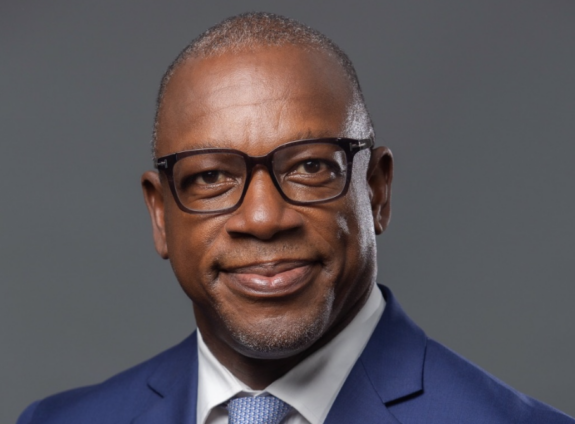
Edward Effah, founder of Fidelity Bank Ghana, has called for a structured and ambitious partnership between Ghana's business community and government.
He believes this will drive the next phase of the nation's economic transformation — one that moves beyond macroeconomic stability and delivers sustained growth, industrialisation, and jobs at scale.
Mr Effah made the call as keynote speaker at the 10th Ghana CEO Summit, held on May 28, under the theme "The CEO-Government Compact 2026: Accelerating Ghana's Economic Transformation."
Speaking before an audience that included President John Dramani Mahama, ministers of state, the Governor of the Bank of Ghana, and private sector leaders from across the country, he argued that Ghana stands at a rare convergence of favourable conditions — and that the cost of inaction would be high.
"There is a tide in the affairs of men, which, taken at the flood, leads on to fortune," he said.
"The tide is here. We have macroeconomic stability, demographic pressure, a regional opportunity, a technology window, and a government willing to lead. We can either take this moment, or watch it pass."
Mr Effah acknowledged the significant ground Ghana has covered, noting that the country's GDP has grown from $56 billion in 2016 to an estimated $115 billion today, making it the eighth largest economy in Africa.
Inflation stood at 3.3% and gross international reserves had reached USD 13.8 billion — conditions he described as remarkable and hard-won.
But he was equally direct about what remains unresolved. "Today there are 1.5 million young Ghanaians who are not in employment, education or training," he said.
"To transform our economy and to create jobs, we, the private sector and the government, urgently need to work together."
The compact Mr Effah proposed is structured around two tiers.
The first is a National Economic Transformation Council, chaired by the President, to set national targets, remove bottlenecks, fast-track reforms, and monitor delivery.
The second is an operational Transformation Delivery Unit, professionally staffed and organised around sectoral platforms covering agribusiness, technology and digitalisation, industry and manufacturing, energy and infrastructure, and financial services.
He proposed that the Unit be established by an Act of Parliament to ensure it outlasts any single administration, pointing to Singapore's Economic Development Board and Rwanda's Development Board as models built to endure.
The investment ambition underpinning the compact is substantial.
Mr Effah called for the mobilisation of approximately $25 billion into priority sectors over the next five years through a deliberately blended financing model that draws on commercial banks, local development finance institutions, international development finance partners, and direct investment.
"If we are to absorb half a million new labour market entrants each year, sustain seven to 10 per cent economic growth, and double our export base, the investment envelope must be of that order of magnitude," he said.
Mr Effah was clear that the private sector was ready to meet the government at the table.
He pointed to past examples of private sector mobilisation, including the COVID-19 Private Sector Fund led by Fidelity Bank, which raised GH¢48 million and delivered the Ghana Infectious Disease Centre within 100 days, and the Energy Sector Levies Act, which resolved GHS 10 billion in sector indebtedness — as evidence of what coordinated private sector commitment can achieve with the right conditions in place.
"With a clear transformation agenda which identifies priority areas, investment needs and returns for investors, the private sector will step up to the plate, work with government and deliver, as it always does," he said.
Latest Stories
-
Five-member committee to search for new Black Stars coach after Sports Ministry-GFA meeting
4 minutes -
Pinktober: Breast cancer survival exceeds 90% when detected early – Breast Society of Ghana
11 minutes -
TCDA to adopt Upper West’s MATCO mango farm as northern prototype, issues warning against felling shea trees
21 minutes -
Fear delegates tag: Afoko touts genuineness among delegates ahead of NPP delegates conference
24 minutes -
John Boadu: The leader our party needs at this time – Amb. Edward Akwasi Boateng
30 minutes -
Baffour Awuah: EOCO effected an arrest, detained MP after hours of waiting, questioning – Afenyo-Markin
47 minutes -
EOCO court warrant authorised search of Baffour Awuah’s law firm, not residence – Afenyo-Markin
1 hour -
NPP delegates conference: 3,000 to 4,000 police personnel deployed for security in Kumasi – Anthony Karbo
1 hour -
KGL Foundation commits $200,000 to support juvenile football for the next two years
1 hour -
UNDP invites Mahama Ayariga to Northern Peace Conference in Tamale
1 hour -
Afoko can give NPP ‘new identity’ ahead of 2028 to overcome NDC – Political scientist, Dr Amakye-Boateng
2 hours -
2 injured amid gunshots during raid at Nawara Mining office at Nsuapemso
2 hours -
St Augustine’s College retains 2026 National Investment Quiz title
2 hours -
KNUST Nursing and Midwifery School staff recognised at 2026 Health Ministry Excellence Awards
2 hours -
JoyNews’ Esther Esi Nkrumah selected for UK Media Excellence for Emerging Technology Fellowship
2 hours