

Audio By Carbonatix
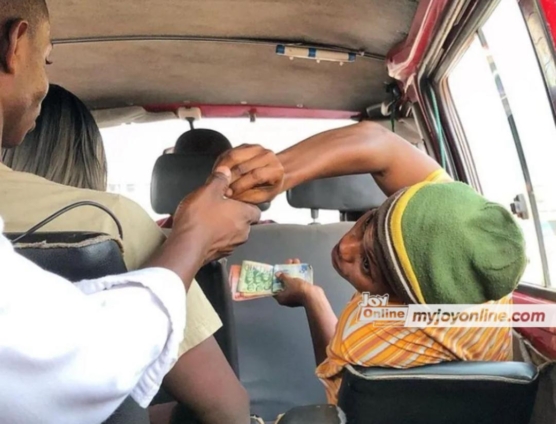
In recent weeks, Ghana’s public transport sector has faced a wave of confusion—one rooted not in policy failure, but in miscommunication. When the Ghana Private Road Transport Union (GPRTU) announced a 15% fare reduction, the public assumed it applied across the board, but if PROTOA, and other drivers’ unions were left out in the decision process to reduce the fares, they may not comply.
And it’s fair enough, their needs weren’t taken into consideration to arrive at a convenient fare to benefit all. What many commuters still don’t realize is that the reduction only applies to GPRTU members then, if PROTOA and the other unions were left out, because no driver union is sovereign over the other union, or exercises authority on the other and so GPRTU doesn’t have the authority to reduce transport fares for all drivers.
What’s more, some drivers themselves are unaware that the issue stems from this very misconception. This disconnect between what was announced and what was understood has resulted in avoidable tension between passengers and drivers.
Rather than blaming either side, it’s crucial to diagnose the core problem: a fragmented and poorly coordinated transport communication system. With multiple unions (like PROTOA and other unaffiliated drivers) operating independently, fare announcements—whether increases or reductions—often don’t reflect a sector-wide consensus. The result is distrust, inconsistency, and daily misunderstandings on our roads.
But the fare issue is just the tip of the iceberg. Commuters in parts of Kumasi, such as Ajamasu, Dominase, Pakyi, and Ofoase Kokoben, as well as areas in the Suame Municipality like Kronum, Buoho, and Afrancho, face much deeper transport challenges.
These include limited availability of vehicles, especially at night, artificial scarcity created by some drivers, and inflated fares in the absence of competition or regulation. Many are left stranded or forced to pay exploitative rates just to get home. It’s a situation that repeats daily—with little recourse for passengers.
What’s clear is that we need both short-term clarity and long-term structural solutions.
In the immediate term, the Ministry of Transport and GPRTU should collaborate to issue a public clarification—using radio, community announcements, social media, and in-terminal signage—to explain that the 15% reduction is union-specific. This communication must be multilingual and widespread to reach both drivers and passengers in urban and peri-urban areas.
But beyond communication lies the urgent need for systemic transport reform. Ghana must invest in expanding state-owned transport systems like STC and Metro Mass to run regular inter-town and intra-city services, especially on underserved routes.
Adding night buses and smaller feeder buses would help decongest terminals and ensure more consistent service in communities like Ajamasu and Buoho. Government and GPRTU could also co-develop new terminals in strategic towns to reduce the current monopolies and standardize fare enforcement to regulate the behavior of some private drivers who inflate fares or create artificial scarcity, government investment in reliable, state-owned alternatives is crucial.
Expanding services by STC and Metro Mass—especially in underserved towns—would introduce competition, stabilize fares, and restore fairness. These buses can serve as a check on private operators by ensuring commuters are no longer at the mercy of informal fare hikes or poor service.
Finally, a central transport coordination body—perhaps a “Transport Fare Council”—could help harmonize communication among unions and ensure that any fare adjustment is clear, binding, and fair to all parties involved.
At its heart, this issue is about access, transparency, and governance. If Ghana is serious about inclusive development, we must ensure that public transport works not just in Accra, but in every town and community across the country. Clear communication and policy-backed infrastructure investment are the next steps forward.
Let’s fix the communication gap, address local commuter struggles, and make Ghana’s transport system work—for everyone.
I think we as media people have to engage the other unions to understand why they’re not complying to the fare reductions, if it stems from what have been discussed because this is my own observation and analysis
Latest Stories
-
Keta MP lays mother to rest
29 minutes -
We must put an end to cocoa politics – Victoria Bright
53 minutes -
There is a cabal in electricity sector determined to rip off Ghanaians – Prof Agyemang-Duah
1 hour -
NSA pays January 2026 allowance to National Service Personnel
1 hour -
24-Hour Economy not just talk — Edudzi Tamakloe confirms sector-level implementation
2 hours -
Four arrested over robbery attack on okada rider at Fomena
2 hours -
NDC gov’t refusing to take responsibility for anything that affects Ghanaians – Miracles Aboagye
2 hours -
Parental Presence, Not Just Provision: Why active involvement in children’s education matters
3 hours -
24-Hour economy policy fails to create promised jobs – Dennis Miracles Aboagye
3 hours -
Ghana Embassy in Doha urges nationals to take shelter after missile attack
3 hours -
Government’s macroeconomic stability commendable, but we need focus on SME growth – Victoria Bright
3 hours -
Macro stability won’t matter without food self-sufficiency- Prof. Agyeman-Duah
3 hours -
How Virtual Security Africa is strengthening safety at Mamprobi Polyclinic
4 hours -
Ghana on right track macroeconomically, but structural gaps remain – Fred Dzanku
4 hours -
ADB MD honoured for impactful leadership at PMI Ghana engagement
4 hours