

Audio By Carbonatix
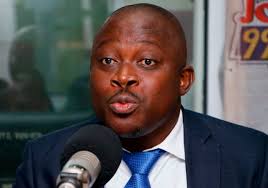
A Member of Parliament’s Mines and Energy Committee, Edward Bawa has noted that contrary to speculations by the ruling New Patriotic Party (NPP) in relation to energy sector debt, the country has not gotten to the stage where it needs to pay for excess capacity.
Mr Bawa explained that since 2001, the country has never had a situation where its available capacity went up to 3,700 megawatts.
According to him, given that the country’s available capacity is not up to the aforementioned level and government’s peak demand hovers around 3,480 megawatts, it shows that the country has never had the occasion to pay capacity charges.
The committee member defined excess capacity as when the generator declares availability which the off-taker cannot take.
According to him, there has been no instance of declaration of availability to which the off-taker cannot gain access.
“If you look at between 2001 to today, I tell you that to a very large extent, we have actually not gotten to a state where we have to pay excess capacity. If you look from 2001 to 2003 as we speak now, we have not had a situation where our available capacity had gone up to 3,700.
"So if you have a situation where your available capacity is not up to 3,700 and your peak demand is around 3,480, taking into consideration that you also need redundancy in your system, what it simply means is that we have not had the occasion to pay capacity charges,” he said on JoyNews’ Newsfile on Saturday.
Mr. Bawa therefore said that there is room to believe that the government has not been transparent in its argument on the capacity charges, warning that until there’s transparency the challenges facing the energy sector will persist.
Ghana’s energy sector is facing a debt crisis
The NPP has accused the NDC of signing some harsh Power Purchase Agreements which have become a burden on them.
Country Director for World Bank, Piere Laporte also made the same claim while speaking on the debt crisis bedeviling the sector.
The NDC has argued that even the NPP MPs at the time the PPAs were signed also appended their signatures to the same measure.
In 2021, Finance Minister, Ken Ofori-Atta while before parliament disclosed that the government paid a total of $937.5 million to independent power producers (IPP) for excess capacity charges between 2017 and 2020.
The total debt owed IPPs presently hovers around $1.58 billion. The power producers have also rejected a proposal from the government to restructure the debt.
Latest Stories
-
Joyce Bawah Mogtari urges women leaders to build strong support networks
34 seconds -
Bawumia engages GUTA over import duties, VAT and rising business costs
1 minute -
Fuel prices begin to fall as Star Oil cuts petrol to GH¢16.45
3 minutes -
GoldBod supplies banks with US$282m in weekly forex sales
4 minutes -
Joyce Bawah Mogtari says Obaasima Conference should help women connect and learn
5 minutes -
Nzema East launches Responsible Cooperative Mining Programme to tackle environmental destruction
34 minutes -
Ghana included in WHO lead-testing programme as questions remain over local exposure risks
42 minutes -
2026 Amputee World Cup: We will win the trophy – Samson Deen
51 minutes -
Controller and Accountant-General pays promotion arrears to 56,003 GES teachers ahead of deadline
51 minutes -
2026 Amputee World Cup: We want to make the continent proud – Black Challenge coach
55 minutes -
International Day of the Girl: Central Region Education Directorate calls for action to tackle child marriage, teenage pregnancy
1 hour -
The Eyes of Ghana: iShowSpeed joins Obamas as producers of Chris Hesse documentary
1 hour -
FirstBank Ghana pledges action on customer feedback at service week forum
2 hours -
Sahara Group urges journalists to look beyond fuel prices in energy reporting
2 hours -
Today’s front pages: Friday, October 16, 2026
2 hours