

Audio By Carbonatix
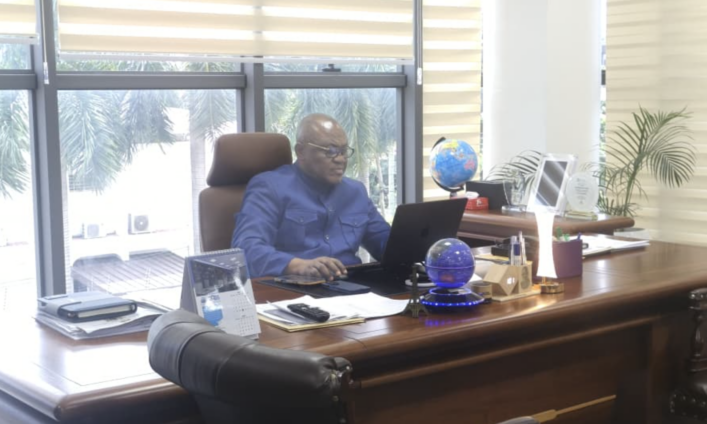
The Fair Wages and Salaries Commission (FWSC) has projected a 90 per cent or higher reduction in public sector strike actions once Ghana’s new Independent Emoluments Commission becomes fully operational.
Dr George Smith-Graham, the Chief Executive Officer (CEO), disclosed that the Commission, when functional, would implement a new national pay policy, concurrently being developed, and expected to be passed before the end of 2026, to resolve salary disparities.
He said the Commission had identified political interference as the most troubling flaw in the current Single Spine Salary Structure, introduced in 2010, as politicians had repeatedly made compensation decisions outside proper institutional channels.
Dr Smith-Graham said such a situation would end with the new public sector pay policy and other proactive interventions, prioritising genuine disputes on pay determination over political interference and implementation failures that often resulted in strikes.
“Our aim is to make sure that there is total industrial harmony, and we are targeting 90 per cent and above strike-free, once we are looking at having a better salary or wages for our workers,” he assured.
He noted the development of a service charter for the Commission to give hope to all stakeholders in processing and delivering result for every labour submission within a time frame, saying: “Once all these things are done with an understanding of the unions, we expect that strike actions will be reduced.”
The Independent Emoluments Commission, currently declared an institution in transition by the President, is expected to have its enabling bill passed by Parliament around October 2026, with a zero draft of the legal instrument currently undergoing internal review.
Dr Smith-Graham said the bill would go through extensive consultations involving the Judiciary, Executive, Legislature, Organised Labour, and state-owned enterprises (SOEs) before proceeding to the Attorney General’s Department, Cabinet, and Parliament.
He acknowledged the widespread abuse of allowances, with workers attaching occupational labels to routine duties to claim extra pay, practices that distorted the pay system.
“There’s a certain perception in the public service that once one institution gets an allowance, every institution will need to get similar allowance but thankfully there’s an opportunity to correct some of these things,” he noted.
He said the new policy would carry fiscal costs, recalling that the Single Spine doubled Ghana’s wage bill from six to 12 per cent of Gross Domestic Product (GDP), adding that lessons had been learned for the Commission to operate within a defined national compensation envelope.
“It shouldn’t be the reverse – that you pay salaries and after you pay all the bills you realise there’s nothing left in the coffers,” he said, urging the Government to ensure fiscal prudence, guided by what the country could sustainably afford.
The Commission’s CEO disclosed an upcoming national productivity roundtable, before end of year, which would establish parameters linking pay to performance, alongside a separate forthcoming policy on performance and productivity.
He also encouraged stakeholders to pool their experiences from the single spine era to ensure a smooth transition, saying: “At the end of the day the country will have a pay policy that stands the test of time and that is also sustainable.”
Latest Stories
-
Power restoration fault suspected in Kumasi Central Market fire
20 minutes -
The 7-foot giant of Ngleshie Amanfro: Seven-foot Ghanaian Ephraim Saawa dreams of joining the national basketball team
58 minutes -
Government promises support for Kumasi Central Market fire victims
1 hour -
Vibes The Movie: Big Ghun’s Ghanaian film earns five nominations at 2026 REFFA
2 hours -
MamaCare CEO warns unresolved conflicts among health workers could undermine maternal and neonatal care
2 hours -
Health professionals urged to translate medical knowledge into practice to save mothers
2 hours -
Conflicts among care providers linked to maternal, neonatal deaths – Expert
4 hours -
GIS marks 10th TIME conference, champions improved teaching practices
4 hours -
BRICS Or Balance? What Ghana’s bid really means
4 hours -
GPRTU wants full TRAFFITECH-GH implementation to start in 2027
5 hours -
Mahama announces plans to import electric wheelchairs for PWDs
5 hours -
KGL U17 Colts 2026: Western beat Prempeh Elite Academy to set up final final with Greater Accra Region
5 hours -
Late Solanke strike salvages 10-man Spurs draw at Man United
5 hours -
Gender Ministry to monitor welfare of Nana Akua Addo’s children amid domestic violence case
5 hours -
Benedict Okyere Yeboah: Ghana’s football problem goes beyond sacking a coach
5 hours