

Audio By Carbonatix
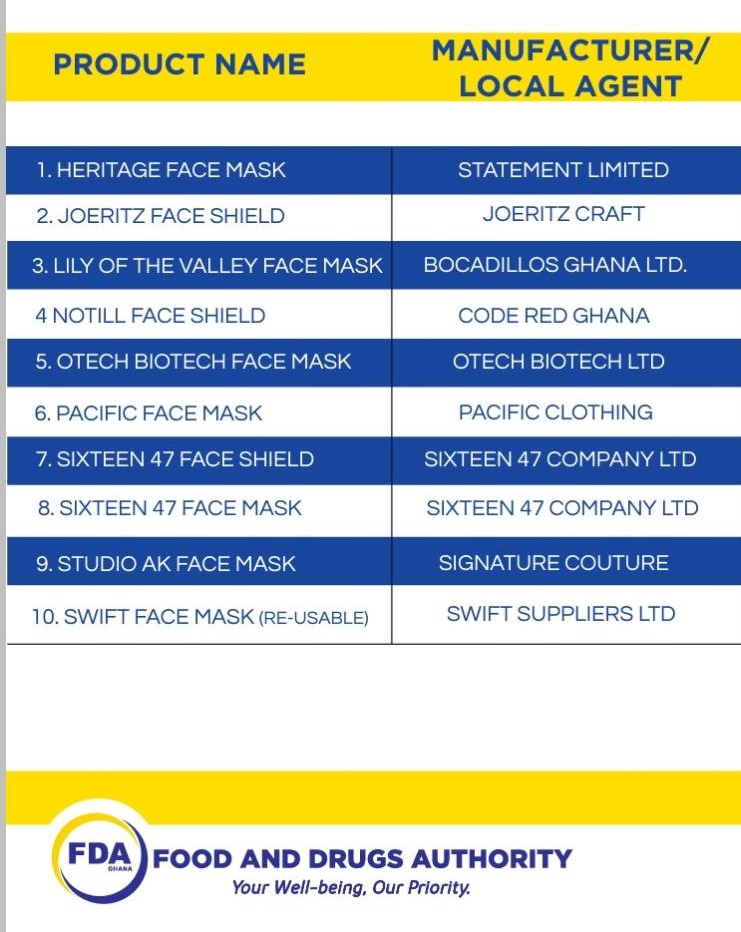
The Food and Drugs Authority (FDA) on Sunday listed 10 registered and approved face masks and shield for public use to help contain the Covid-19 pandemic.
They are Heritage Face Mask, Joeritz Face shield, Lily of the Valley Face Mask, Notill Face Mask, Otech Biotech Face Mask, Pacific Face Mask, Sixteen 47 Face Shield, Sixteen 47 Face Mask, Studio AK Face Mask, and Swift Face Mask (Re-Usable).
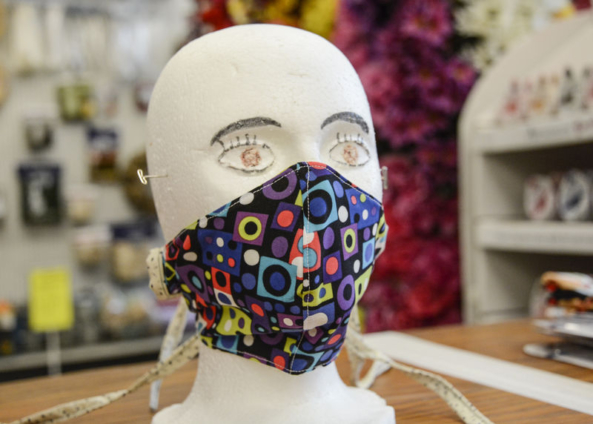
The FDA has urged the public to go by the recommended three-layered face masks to effectively help in curbing the spread of the global pandemic.
In an interview with the Ghana News Agency, Mr Joseph Yaw-Bernie Bernnie, the FDA Head of Medical Devices, said most of the locally produced facemasks posed health risks to citizens rather than protecting them.
He said most of the local ones were either single or double-layered cloth and sewn with treated materials, which in itself may pose danger to the user.
The FDA, therefore, appealed to the public to desist from using un-recommended face masks, stressing that in an attempt to contain the spread of the disease, many were producing it locally, the efficacy of which could not be ascertained.
Mr. Bernie said face masks generally must be able to filter out particles and still be easy to breathe through.
He said in the absence of propylene, which is the common material used for medical-grade face masks, 100 per cent cotton or cotton blends possessed good material characteristics for homemade face masks.
He said recent studies and evaluations undertaken by the FDA on viable materials for face masks production established that Calico-Stiff (Hard/Medium)-Calico (three layers) combination was ideal for a reusable homemade COVID-19 face mask.
Mr Bernnie said there must be no chemicals in the materials used for producing masks as they may have health implications.
He said the FDA was carrying out market surveillance to rescue the system, educating both producers and users to stop producing and using face masks there were not recommended.
He said face masks were for protecting the wearer from others or vice versa but wearing those not recommended would rather expose the wearer to danger because of the false sense of security.
Latest Stories
-
High data costs threaten Africa’s participation in AI revolution – Bawumia
9 minutes -
Africa risks missing another tech revolution without urgent AI adoption – Bawumia
11 minutes -
No bed syndrome is result of systemic failures, not lack of beds – Aurum Institute Ghana Director
13 minutes -
Black Stars technical team needs to sit up – Augustine Ahinful
37 minutes -
No bed syndrome: People have classified this as a location issue rather than a holistic one – Dr Bonney
40 minutes -
Ghana, Zimbabwe hold inaugural joint commission talks to deepen bilateral cooperation
59 minutes -
Forestry Commission, Terraformation deepen partnership to boost climate resilience and job creation
1 hour -
Not all Big Push projects were awarded through sole sourcing – Alhassan Suhuyini
2 hours -
Our request for Big Push contracts records was denied until we appealed – Sulemana Braimah
2 hours -
Big Push sole-sourced contracts: NDC has ‘reset’ Ghana for the worse – Baffour Awuah
2 hours -
Roads Minister’s response to our report was ‘hollow’ – Sulemana Braimah
2 hours -
NDC committed to ending sole-sourcing abuse – Alhassan Suhuyini
2 hours -
Big Push is government’s biggest intervention to fix Ghana’s roads – Alhassan Suhuyini
2 hours -
A firm awarded sole-sourced Big Push contract has 4 workers; another has just one – Sulemana Braimah
3 hours -
One firm awarded a Big Push sole-sourced contract was created in January 2025 – Sulemana Braimah
3 hours