

Audio By Carbonatix
Every cedi invested in improving Ghana's waste management and sanitation systems could generate as much as GH¢556 in annual economic benefits if the country increases spending to levels recommended for lower-middle-income economies, according to a new policy brief by the Institute of Statistical, Social and Economic Research (ISSER).
The study, titled Waste or Wealth? The Economic Returns to Sanitation Investment in Ghana, argues that sanitation should be viewed as a high-return economic investment rather than merely an environmental or public health obligation.
It estimates that increasing investment in waste management from the current average of GH¢38.78 per tonne of waste to GH¢1,028 per tonne—the average for lower-middle-income countries—would significantly reduce disease, boost productivity and save billions of cedis annually.
According to the researchers, Ghana's current spending on waste management already delivers economic returns, with every GH¢1 invested generating an estimated GH¢180 in discounted annual benefits.
However, they argue that adopting the higher investment benchmark would more than triple those returns, producing an estimated GH¢556 in benefits for every GH¢1 spent.
The report projects that under this "best-case" investment scenario, sanitation-related illnesses would decline sharply.
It estimates that sanitation-related morbidity would fall by 97.4 per cent, while deaths attributable to poor sanitation would reduce by 81 per cent.
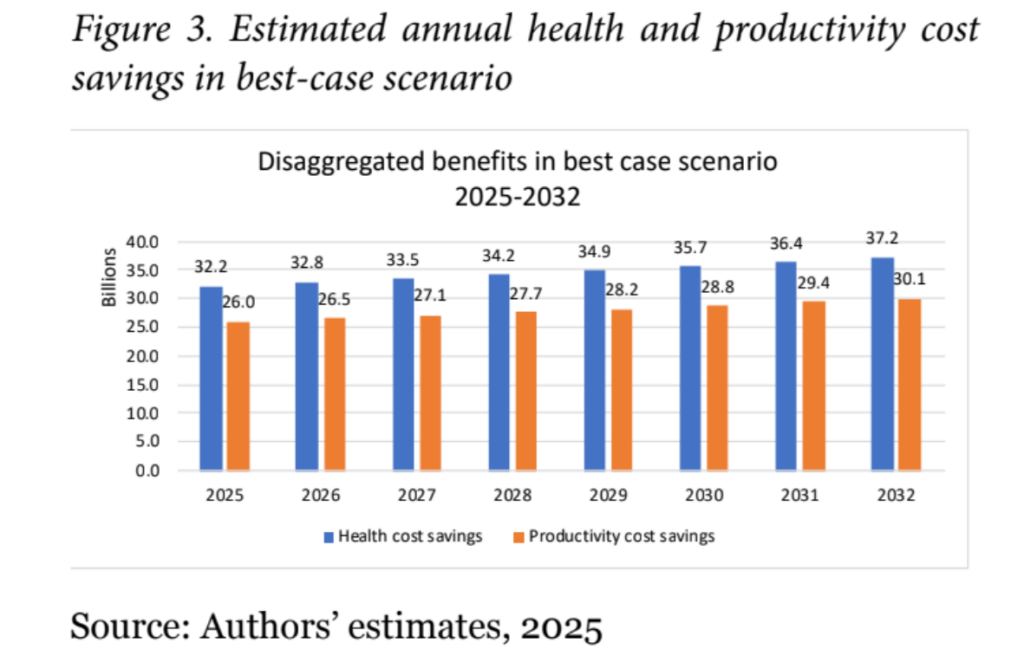
These improvements, the study says, would translate into annual economic benefits ranging from GH¢58.1 billion in 2025 to GH¢67.2 billion by 2032, driven largely by savings in healthcare costs and productivity gains.
ISSER found that approximately 55.3 per cent of the projected economic gains would come from reduced healthcare expenditure, while the remaining 44.7 per cent would result from productivity improvements, including fewer premature deaths, reduced absenteeism from work and school, and lower levels of reduced work performance caused by illness.
The researchers argue that the country's current approach to sanitation financing is economically unsustainable, noting that inadequate investment continues to impose avoidable costs on households, businesses and government.
Rather than treating sanitation as a recurrent expenditure, the report urges policymakers to recognise it as an investment capable of strengthening public health, improving labour productivity, supporting economic growth and creating employment opportunities.
"Strategic and scaled-up investment in waste and sanitation transcends being just another expenditure. Rather, it represents a high-yield opportunity to boost public health and enhance economic productivity," the report states.
The study concludes that closing Ghana's sanitation investment gap would not only improve environmental conditions but also strengthen human capital, stimulate innovation in the circular economy and improve the overall quality of life for citizens.
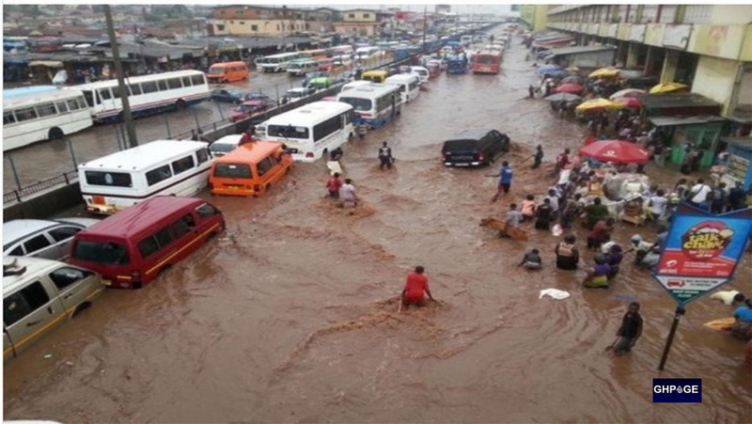
As Ghana once again counts the cost of devastating floods—measured in lives lost, homes submerged, businesses destroyed and infrastructure damaged—the ISSER report offers a compelling argument that better sanitation is not merely an environmental obligation but an economic necessity.
By investing substantially in waste management, the country stands to reduce flooding, prevent disease, save billions of cedis and turn a long-standing national vulnerability into an opportunity for sustainable growth.
Read the full report below.
Latest Stories
-
BoG cautions public against 20 unlicensed mobile loan apps
5 minutes -
Mahama urges tougher enforcement of building regulations over recent collapses
9 minutes -
FWSC denies reports of salary deductions for striking teachers
13 minutes -
Rooted like a tree, responsive like a river: Dr Amin Adam calls for new model of Imamship to meet modern realities
21 minutes -
La Traditional Council secures suspension of SSNIT’s La Pleasure Beach redevelopment plans
26 minutes -
Joy FM listeners support mother seeking treatment for 3-year-old daughter after alleged sexual abuse
30 minutes -
German Unity Day celebrated with music, art and Ghana-Germany friendship in Accra
33 minutes -
MEHSOG and GFD build capacity of Ashanti Region journalists on inclusive disability reporting
35 minutes -
A woman should not have to choose between being fed and being safe
39 minutes -
“Wontumi doesn’t like where he is”– Palgrave Boakye
48 minutes -
The Labadi shoreline demolitions: Who owns the beach?
58 minutes -
Cedi will continue to be stable – Deputy Finance Minister
59 minutes -
Minority urges full probe into World Cup visa allegations after Ampofo Ankrah’s removal
59 minutes -
Asiedu Nketiah backs greater church role in running mission schools
1 hour -
Galamsey activities redirect Mankran Stream, destroy farms, and threaten flooding in Okroase
1 hour