

Audio By Carbonatix
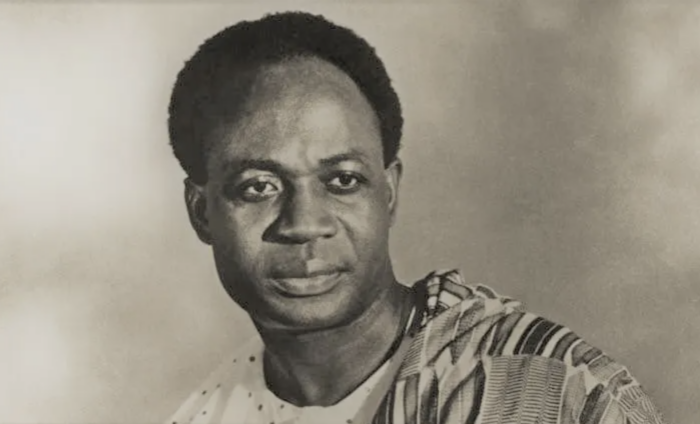
Ei, Ghanaians! Here we are again, celebrating another Independence Day—this time, the grand 68th anniversary. If Ghana were a human being, by now, it would have grandchildren who keep borrowing its money without paying back. But let’s leave that matter and focus on the man who brought us independence—Osagyefo Dr. Kwame Nkrumah!
Ah, Nkrumah! The man who dreamed of Ghana before Ghana even knew how to dream for itself. If Ghana were a house, Nkrumah was the landlord who built it with his own hands, only for some tenants to conspire and kick him out. They threw his statue down as if concrete could erase a man’s legacy. But as we all know, the moon does not disappear just because clouds try to cover it. Today, those who toppled him are forgotten, but Nkrumah remains as famous as Ghana Jollof!
"More Spectacular Than the Fall of Satan"
Some people actually danced when Nkrumah fell in 1966. Ei! Nii Okai Pesemaku III of the Gbese Traditional Area even said his fall was more spectacular than the fall of Satan. Satan himself must have been stunned by the comparison. Imagine Satan sitting somewhere, minding his own business, only to hear, “Chaley, they say somebody’s fall is worse than mine!”
But today, whose face is on our money? Who has a public holiday in his name? And whose speeches still make sense even though he said them over 60 years ago? Certainly not the coup plotters!
But let’s be fair—Nkrumah was not a saint. The intoxicating spirit of power got into his head small. Sometimes, he didn’t have patience for his opponents. He ruled with an iron fist, but at least, he used the iron to build industries, schools, and hospitals. Nowadays, some leaders rule with an iron fist and use the same iron to open bank accounts abroad. Power in the wrong hands is like giving a machete to a child—it can only end in disaster.
"Nkrumah Never Dies"—His Name Stands Tall Like a Baobab Tree
If Ghana were a hospital, Nkrumah would be the doctor who built it. If it were a farm, he would be the farmer who planted the first seeds. And yet, some people treated him like an unwelcome guest in his own home.
But like a great baobab tree, his name stands tall no matter how many storms come. Walk anywhere in Ghana, and you will find something named after him—Nkrumah Circle, Nkrumah University, Nkrumah this, Nkrumah that. Meanwhile, some of the people who fought him, if you Google their names, even Google will ask, “Did you mean someone else?”
Even the Akosombo Dam he built is still our main source of electricity—sixty years later! Meanwhile, some roads constructed last year are now existential death traps riddled with potholes that claim human lives on a daily basis. And let’s not forget the Tema Motorway—the only road in Ghana that still believes in longevity. You see, when Nkrumah built something, he built it to last. These days, by the time they finish cutting the ribbon for a new project, the project itself has already started collapsing. If you build with weak materials, don’t be surprised when the rain washes it away.
Agyapadie? What’s That?
Now, let’s talk about money. In Ghana, some politicians see leadership as their family’s personal business. They come to power and, before you know it, their cousins, uncles, in-laws, and even their cats have government contracts. But Nkrumah? He ruled Ghana with absolute power, yet he didn’t leave behind stolen lands or secret bank accounts. His children didn’t inherit mansions, oil fields, or government contracts. In fact, if inheritance were a school subject, Nkrumah’s children would fail the exam.
Today, some politicians have more houses than Nkrumah had factories. Their grandchildren have Swiss bank accounts before they even get their first teeth. And yet, we wonder why we are still struggling. When leaders eat all the food meant for the village, they shouldn’t be surprised when the children go hungry.
Posterity, the Ultimate Judge
Today, history has spoken. Nkrumah’s ideas are still shaping the world. Africa recognizes him as its greatest leader. The world respects him. Even in Ghana, where we like to criticize our own more than necessary, his name still carries power. Why? Because true greatness does not fade—it only shines brighter with time.
So, on this 68th Independence Day, let’s raise a calabash of palm wine (or sobolo, for the health-conscious) and toast to the man who saw a great Ghana before Ghana even knew its own potential. A man who built, fought, and sacrificed. A man who, even in death, refuses to be forgotten.
Kwame Nkrumah never dies! Like well-seasoned kontomire stew, his legacy remains rich and satisfying, no matter how many years pass.
Long live Ghana! Long live the spirit of Nkrumah! We die, but we do not perish!
Latest Stories
-
UBIDS claim second win at Honda Football Championship 2026
1 minute -
NAIMOS confirms safekeeping of seized excavators and weapons
4 minutes -
Panic in Banka-Busuafise as three killed, two beheaded in two weeks
6 minutes -
Augustine Manasseh wins top prize at PGA Heritage Cup in Tema
6 minutes -
BoG Governor warns US-Israel-Iran conflict could hit Ghana’s liquidity, assures preparedness
13 minutes -
ECOWAS Court admits late state defence in Gertrude Torkornoo human rights case
17 minutes -
Photos: VIP bus, cargo truck collide at Konongo; two injured
27 minutes -
Orchids and Wealth: Standard Chartered’s unique gathering for affluent female clients
29 minutes -
GEXIM@10: Experts examine role of DFIs in Africa’s economic development
31 minutes -
Spain reaffirms support as KAIPTC hosts National Dialogue on illegal mining crisis
32 minutes -
Ibrahim Mahama, Police commander to meet IGP over alleged assault case
40 minutes -
We’re not out to bring gov’t down – Sulemana Braimah on Big Push report
42 minutes -
Gov’t releases 2026 salary payment schedule for public sector workers
44 minutes -
When strength becomes a burden: Rethinking manhood through the lens of men’s health
46 minutes -
Minority accuses Majority of sabotaging PAC’s GH¢68bn audit probe
49 minutes